Introduction
Are you looking for commercial space real estate in Dubai in 2026? You are not alone. The market is moving fast, and the opportunity is huge.

Right now, the UAE commercial real estate market is worth over USD 53 billion. Cite Mordor Intelligence. And commercial property rents in Dubai have jumped by more than 78% over the past year. Cite Sunrise Developers.
These numbers tell a clear story. There is strong demand for offices, retail spaces, and warehouses. Whether you are a business owner, an investor, or a landlord, there are good opportunities right now.
But here is the real challenge. The information you need is spread across too many websites. Comparing properties takes forever. Then you hit the legal side. Free zones, mainland rules, RERA, and Ejari. It gets confusing fast. And finding a trustworthy agent? That takes even more time.
We built this guide to fix that problem. We bring the best market data into one place. We explain the legal steps in plain English. And we give you simple actions you can take today.
Whether you need property commercial for sale, commercial industrial real estate, or a new office to lease, you will find useful advice here. For a complete walkthrough of the process, take a look at our guide on how to buy or lease office and industrial property in 2026.
Ready to find the right space for your business? You do not have to figure this out alone. Contact an Agent today for free, personalized advice on the Dubai commercial market.
Market Overview: Demand and Supply Trends for Commercial & Industrial Space in 2026
So what is really happening in Dubai’s commercial property real estate market right now? The short answer is strong demand across the board. But the details matter more than the headline.
The momentum from Expo 2020 has not faded. If anything, it has grown. Dubai’s economy keeps expanding, and that pulls more businesses into the city. The numbers back this up. The UAE commercial real estate market is now worth over USD 53 billion in 2026, and analysts expect it to keep growing at a steady rate. Cite Mordor Intelligence.

Commercial property rents have surged by more than 78% over the past year according to Dubai Land Department data. Cite Sunrise Developers.
Here is the thing though. Not every area is the same. The market splits into clear segments.
Where demand is highest right now:
- DIFC and Business Bay. These remain top choices for financial services, consulting, and tech firms. Rents here are premium, but so is the foot traffic and prestige.
- Dubai South and industrial zones. This is where commercial industrial real estate shines. Warehouses, logistics hubs, and light manufacturing spaces are in high demand thanks to the Al Maktoum International Airport expansion and Expo City’s ongoing activity.
- Retail spaces in high-traffic areas. Locations like Dubai Mall, Mall of the Emirates, and City Walk still command strong interest, but secondary retail spots have seen softening.
Vacancy rates tell a mixed story. Prime office space in Grade A buildings is scarce. Many landlords are asking top dollar. In older buildings though, you might find more room to negotiate. Cite Engel & Voelkers shows that rental prices overall are expected to stabilize or grow moderately through 2026 as new supply enters the market.
What about new supply?
A lot of new commercial space is coming online. Developers are building more offices, warehouses, and mixed-use complexes. That is good news for tenants and buyers. More supply means more choice and better pricing power for you. But the best spots will still go fast.
The D33 factor.
The Dubai Economic Agenda D33 is a big deal. The government wants to double the city’s economy by 2033. That means more foreign companies setting up here, more free zones expanding, and more demand for every type of commercial space real estate. If you are looking for property commercial for sale or a long-term lease, this is the right time to act.
Want a full walkthrough of the buying and leasing process? Check out our guide on how to buy or lease office and industrial property in 2026.
The market is strong, but it rewards people who move fast and know where to look. If you are ready to find your space, Connect with Ayaz Salman on Whatsapp for a free consultation today.
Now that you see where the market is heading, the next step is understanding how to legally set up your business in Dubai. The rules around leasing or buying commercial space real estate depend on whether you choose a free zone or the mainland. Each path has different ownership limits, visa rules, and tax treatment.
Mainland vs. Free Zone: the big differences
In a free zone, you can own 100% of your company and enjoy simplified visa processing. You also avoid the 5% customs duty if your goods never enter the UAE onshore market. Mainland vs Free Zone comparison explains that free zone companies have traditionally been limited to operating inside the zone, but that has changed.
In 2025, Dubai passed Executive Council Resolution No. (11), which allows free zone companies to expand into the mainland with approval from the Department of Economy and Tourism. BSA Law and James Berry Law both cover this major shift. So if you want commercial industrial real estate in a free zone but also need a mainland presence, you now have more flexibility.
Mainland companies are regulated by the DED (Department of Economy and Tourism). They can trade anywhere in the UAE and often require a local partner, though recent reforms have allowed 100% foreign ownership in many sectors. VAT treatment is similar in both setups, but free zones offer specific tax benefits if your business qualifies as a "qualifying activity" under the new 2026 corporate tax rules. Consult Kumar breaks down the 2026 free zone shake-up and how it affects tax benefits.
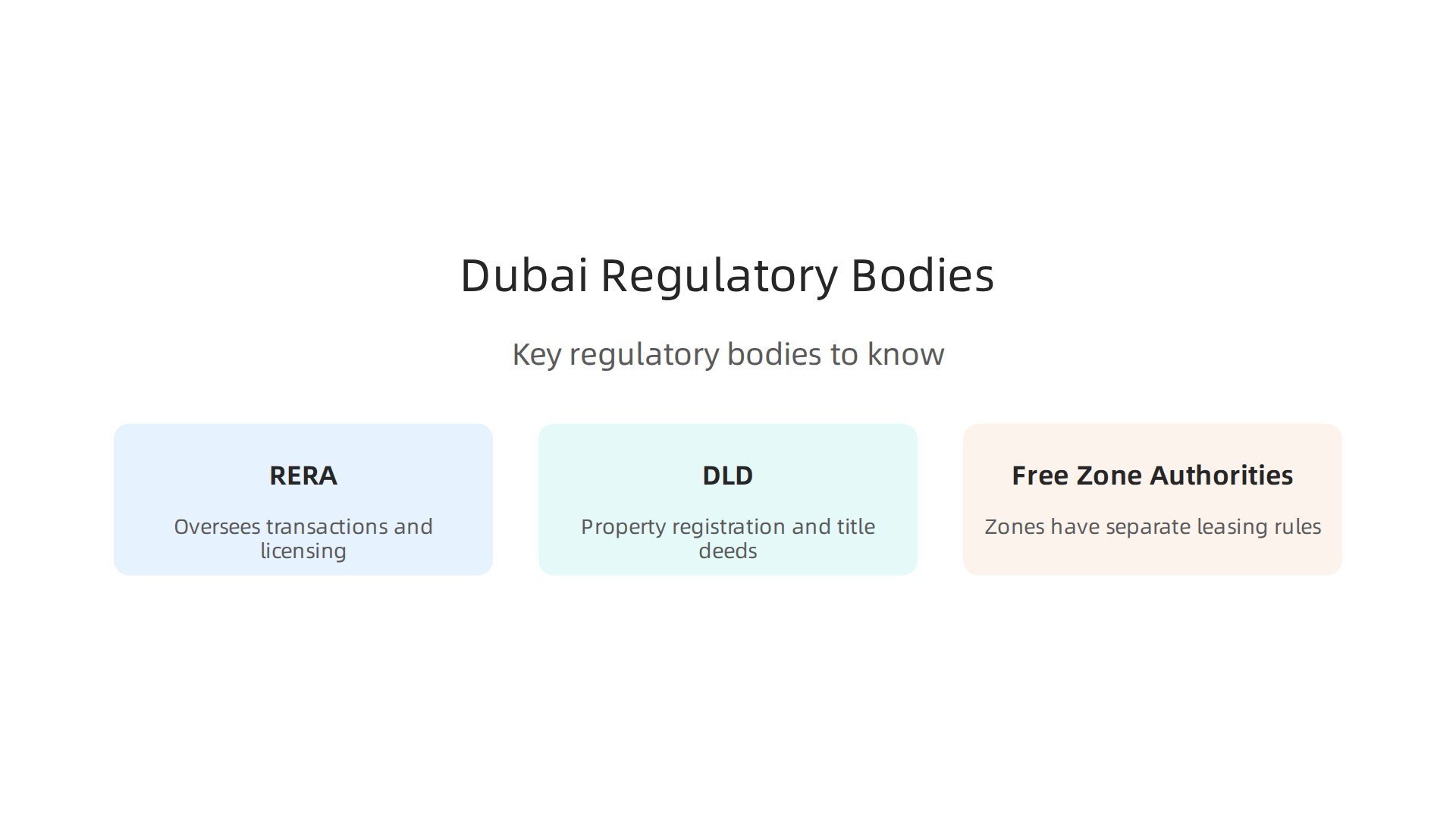
**Key regulatory bodies you need to know
**
- RERA (Real Estate Regulatory Agency) – oversees all real estate transactions, licensing of agents, and tenant-landlord disputes.
- DLD (Dubai Land Department) – handles property registration, title deeds, and market data.
- Free zone authorities – each zone (like DIFC, JAFZA, Dubai South) has its own rules for leasing commercial property real estate.
Essential registrations for any commercial tenant
Before you can operate, you must register these:
- Ejari – a mandatory tenancy registration system with RERA for all leased properties.
- Makani – a location addressing system that helps with logistics and service delivery.
- Trade license – issued by either DED (mainland) or the free zone authority, depending on your setup.
All of this can feel overwhelming. That is why having a clear guide helps. For a full walkthrough of the buying and leasing process, check out our guide on how to buy or lease office and industrial property in 2026.
If you are ready to find the right property commercial for sale or lease and need expert help navigating the legal side, Connect with Ayaz Salman on Whatsapp for a free consultation today.
Key Lease Terms and Negotiation Strategies for Commercial Tenants
The legal setup is only half the battle. Once you choose your jurisdiction and get your licenses, you still need to sign a lease for your commercial space real estate. Most commercial leases in Dubai run for 2 to 5 years. That is a big commitment. So you need to understand a few key terms before you sign.
Watch the rent escalation clause closely. Landlords often want a fixed yearly increase. But Dubai law ties rent hikes to the RERA rental index. You should never accept a blank percentage. Ask for a clause that follows the official guidelines. You can also negotiate renewal options. A 5 year lease with a 5 year renewal option locks in your space and controls your costs. Free zone companies now have more flexibility to acquire and hold mainland real estate assets, as noted in the 2026 UAE free zone setup guide from Kayrouz & Associates. This means you can negotiate for properties in more locations than before. If this feels complex, you can always contact an agent for personalized advice on your lease terms.
Many parts of the lease are negotiable. You just have to ask.
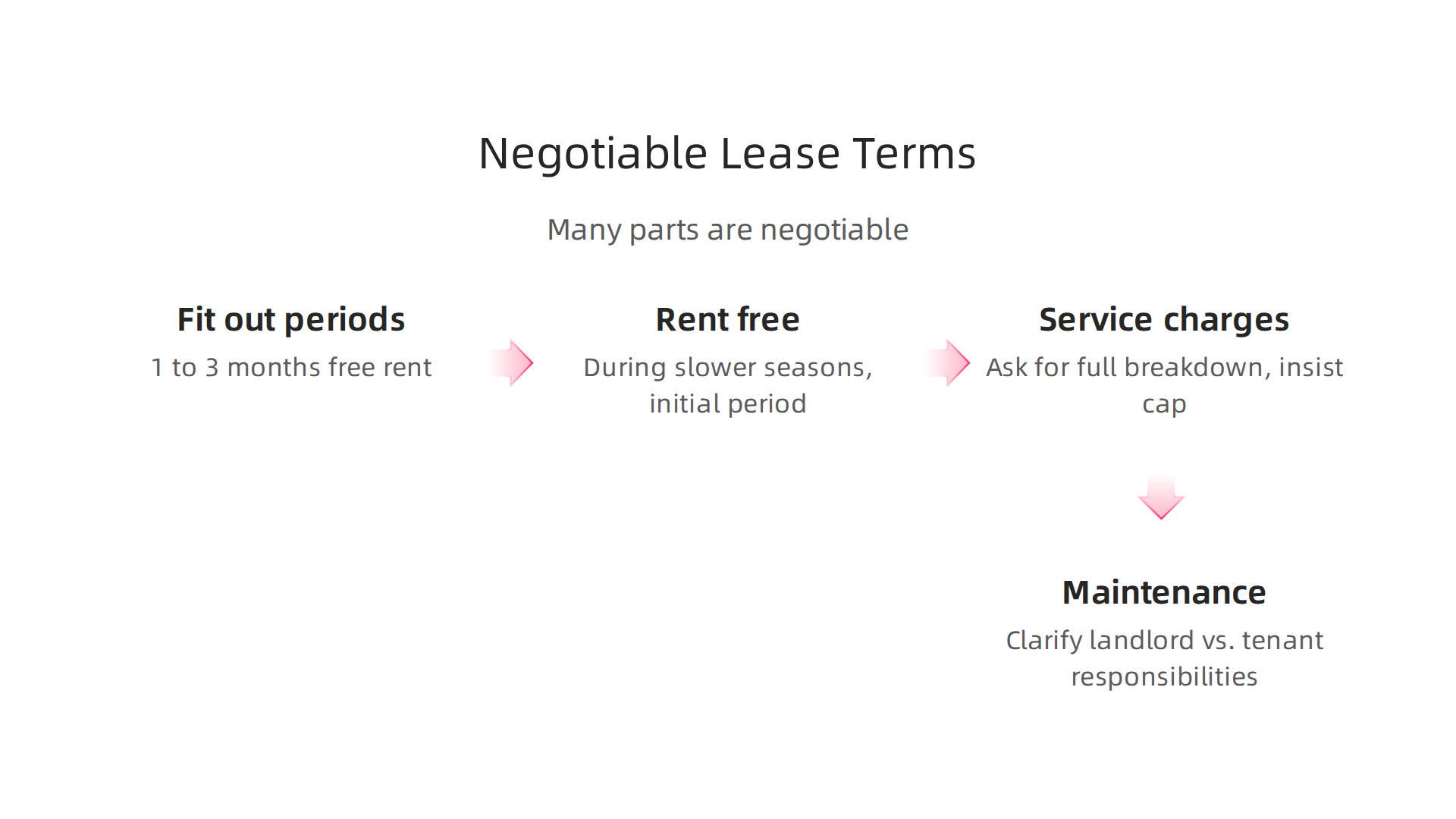

Fit out periods are common for commercial industrial real estate. Ask for 1 to 3 months of free rent at the start to build out your office or warehouse. Some landlords also give you a few months of rent free during slower seasons. Service charges are another big cost. Always ask for a full breakdown. Insist on a cap, like 5% maximum increase per year. Maintenance responsibilities must be clear too. The landlord handles structural repairs inside and outside. You handle day to day upkeep.
Avoid these common pitfalls. First, watch out for ambiguous termination clauses. If the landlord sells the building, can they kick you out? If so, ask for a longer notice period or a share of the sale proceeds. Second, do your due diligence on the landlord’s title. Verify they actually own the property with the Dubai Land Department. Third, do not skip Ejari registration. It is a legal requirement and it protects your rights as a tenant.
Leasing commercial property real estate in Dubai requires careful planning. For a full walkthrough of the entire buying and leasing process, read our comprehensive guide on how to buy or lease office and industrial property in 2026.
When you are ready to start negotiating, you do not have to go it alone. Connect with Ayaz Salman on Whatsapp for a free consultation today.
Evaluating Investment Potential: Cap Rates, ROI, and Long-Term Value
Signing a lease or buying a property is one step. But how do you know if that commercial space real estate is actually a good investment?

You need to look at three things: cap rates, total costs, and long-term value.
Cap rates are your first clue. A cap rate tells you the expected return on a property before financing. In Dubai, these vary by location and type. For example, in Business Bay, office and retail spaces often show cap rates between 5.5% and 9.9% (source: Mitchells Commercial Realty). Industrial properties usually have higher rates because they offer stable cash flow. You want to compare cap rates across submarkets to find the best deal.
But don’t stop at the cap rate. Look at the total cost of ownership. Dubai commercial properties come with extra fees. Service charges can eat into your returns. So can utilities, municipal fees, and periods when the space sits empty. These costs add up fast. The Dubai Commercial Property Developers and Investment Guide explains how controlling these costs improves your asset valuation. Always ask for a five-year cost projection before you commit.
Long-term appreciation depends on bigger trends. Infrastructure projects, zoning changes, and Dubai’s economic diversification all affect commercial property real estate values. Areas near new metro lines or free zones often grow faster. Keep an eye on market reports from firms like JLL to spot emerging hotspots.
Want to see how this fits into the full buying or leasing process? Read our comprehensive guide on how to buy or lease office and industrial property in 2026 for step-by-step strategies.
When you are ready to evaluate a specific property commercial for sale, do not guess. Get expert advice. Contact an Agent for a personalized consultation today.
Industrial Property Opportunities in Dubai: Warehouses, Logistics, and Light Industrial
The previous section showed you how to evaluate any property deal. But here is where the numbers get even more interesting. Commercial industrial real estate in Dubai is booming right now.
Why? Two big reasons. First, e-commerce has exploded. People want everything delivered fast, and that needs warehouses close to the city. Second, Dubai is already a global trade hub. Goods flow through here to Africa, Asia, and Europe every single day.
So where should you look for commercial space real estate in the industrial sector? Three zones stand out in 2026.
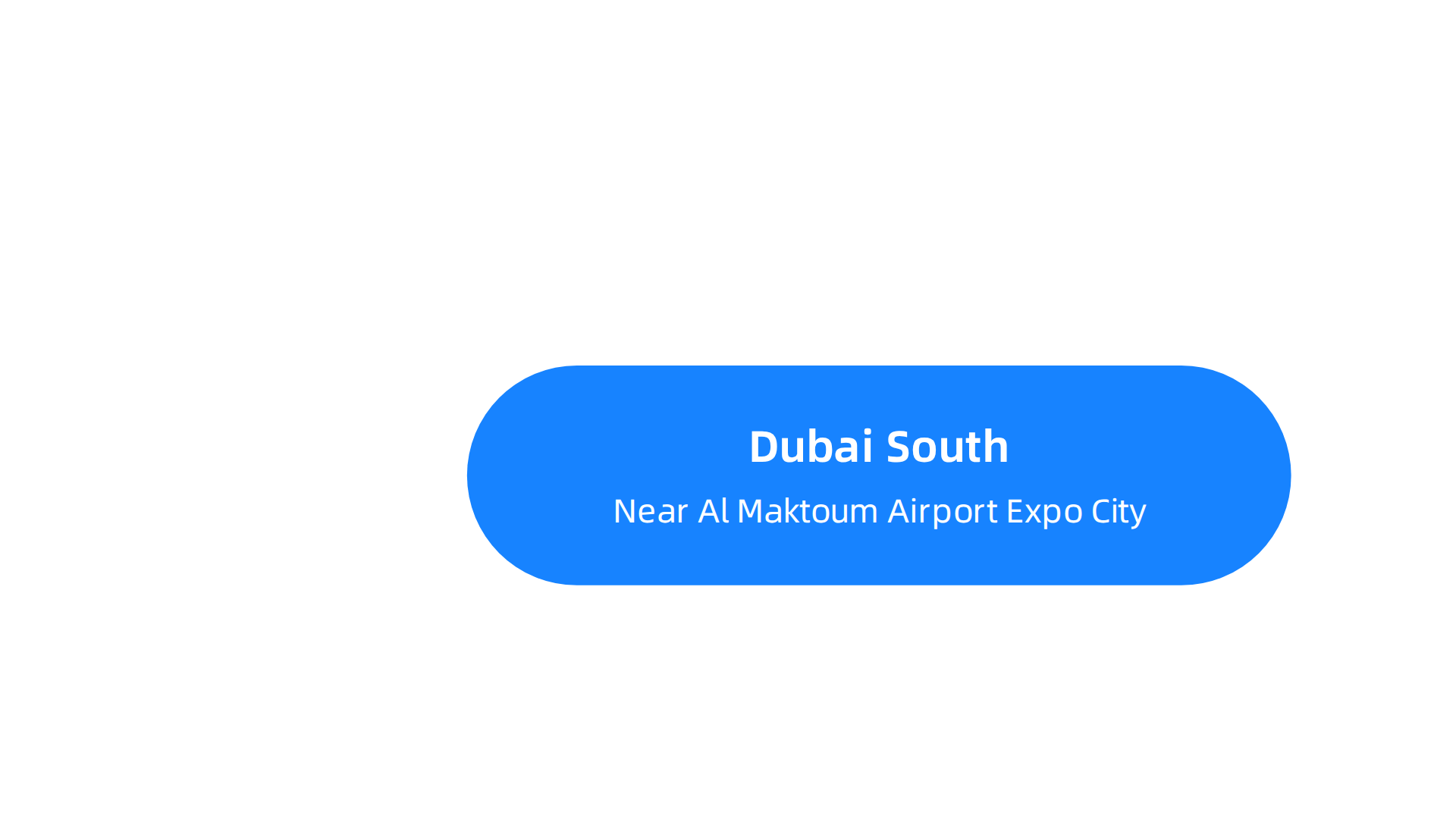
Dubai South is the future. It sits right next to Al Maktoum International Airport and Expo City. Big logistics players are already there. Dubai Industrial City offers larger plots for light manufacturing and storage. And Jebel Ali Free Zone (JAFZA) remains the king because of its direct port access. If your business needs to ship goods by sea, JAFZA is hard to beat.
Now for the investment side. Industrial lease yields in Dubai are typically higher than office yields. You often see returns in the 8% to 11% range, depending on location and the quality of the building. That beats most office buildings in Business Bay or DIFC.
But remember what we covered earlier about total costs. Service charges in industrial zones are usually lower than in office towers, but connectivity matters. A warehouse 10 minutes from a major port or airport is worth more than one that is 30 minutes away. Check the JLL market reports to see which industrial corridors are growing fastest.
One tip: look for property commercial for sale in zones that have room to expand. Land availability in Dubai is not infinite. As the city grows, well-located industrial land will only become more valuable.
If you are serious about finding the right industrial space, do not try to figure it all out alone. The zones, lease terms, and free zone rules can get tricky. Connect with Ayaz Salman on Whatsapp for a free consultation. He can walk you through the latest inventory and help you compare yields across these key zones.
Want a complete walkthrough of the entire buying or leasing process? Check our comprehensive guide on how to buy or lease office and industrial property in 2026 for step-by-step advice.
How to Verify and Choose a Trustworthy Commercial Real Estate Agent
You now know the most promising industrial zones in Dubai. But finding the right property is only half the battle. The other half is finding the right agent. A bad agent can waste your time and money. A good one saves you both.
So how do you tell the difference?
Start with credentials. Every legal real estate agent in Dubai must pass the RERA exam and hold a valid broker card. This training and certification process is mandatory. Their company also needs a proper license from Dubai Land Department. Ask to see their RERA card. If they cannot show it, walk away.
Watch for red flags. An agent who pushes you into a deal fast without answering your questions is a warning sign. So is someone who only talks about residential properties when you need commercial property real estate. Commercial deals work differently. Leases are longer. Fit-out costs are higher. A residential agent may not understand the numbers. Also, if they refuse to give you references from past commercial clients, find someone else.
Follow these best practices:
- Interview at least three agents before choosing one. Ask about their experience with commercial industrial real estate specifically.
- Check online reviews on Google and property portals like Property Finder or Bayut. Look for mentions of commercial transactions.
- Request case studies or examples of recent deals they closed in the zones you are targeting. A good agent will be happy to share.
One more thing. The agent you choose should help you compare options across the market, not just push one listing. They should know the differences between free zone and non-free zone properties, and how that affects your business setup.
If you want to skip the trial and error, you do not have to hunt for a good agent alone. Connect with Ayaz Salman on Whatsapp for a free consultation. He has years of experience in commercial space real estate and can guide you to the right agent or handle your search directly.
For a full step-by-step process on buying or leasing, check our comprehensive guide on how to buy or lease office and industrial property in 2026.
Step-by-Step Transaction Process for Leasing or Buying Commercial Real Estate
Now that you have a trustworthy agent lined up, let us walk through the actual steps of getting into a commercial property. Whether you need a small office or a large warehouse, this applies to all commercial property real estate. Here is what to expect in 2026.
Phase 1: Needs Assessment and Budgeting
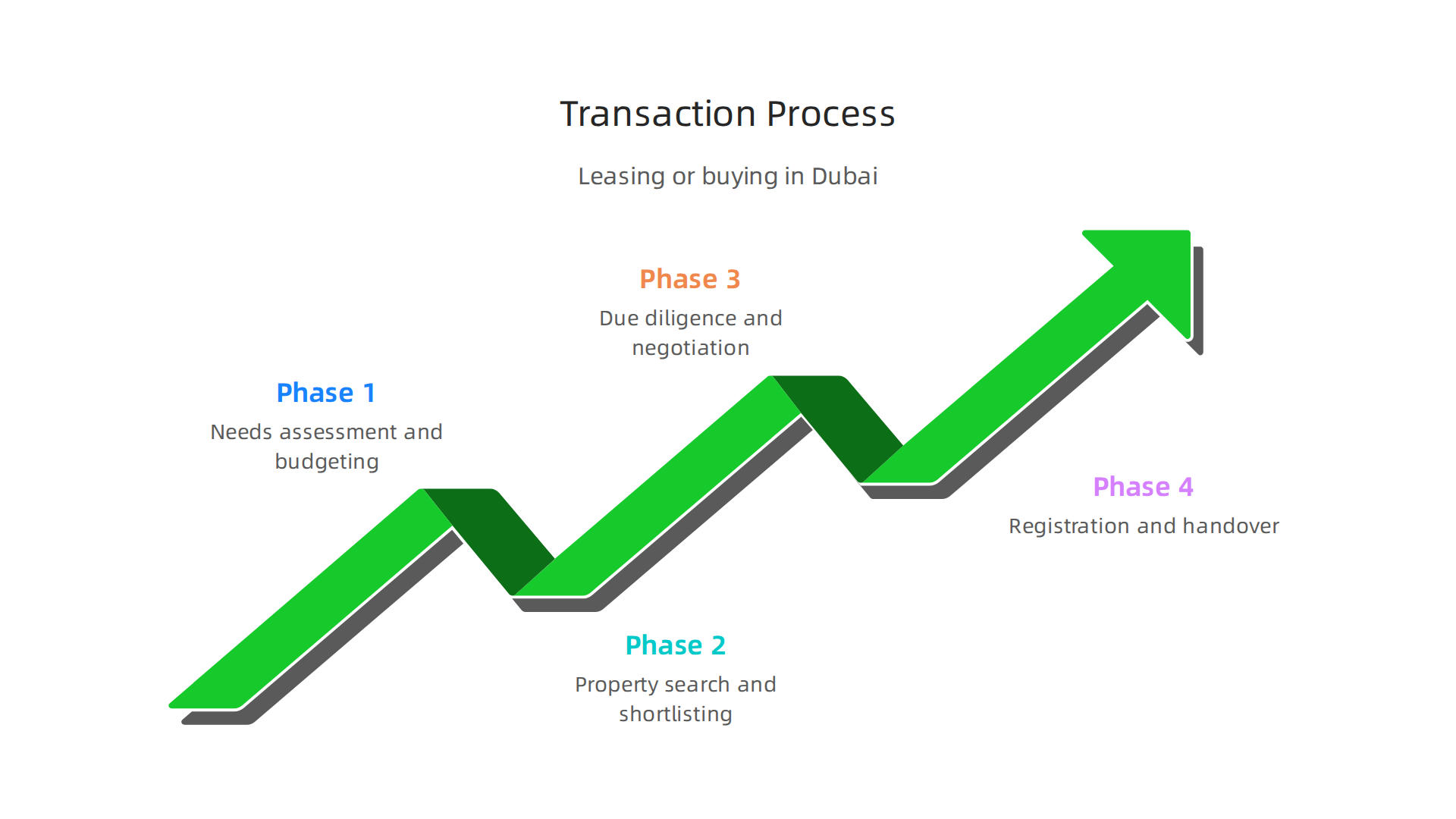
Start by defining exactly what you need. How much space do you require? Which zone works best for your business? What is your total budget including fit-out costs, service charges, and VAT? Write it all down. This phase saves you time later by focusing your search on properties that actually fit.
Phase 2: Property Search and Shortlisting
Your agent will use online portals like Property Finder and Bayut along with their own network to find available commercial space real estate. You will visit shortlisted sites and compare them. Look at accessibility, infrastructure, and surrounding businesses. For commercial industrial real estate, check ceiling height, loading docks, and power supply.
Phase 3: Due Diligence, Negotiation, and Contract Signing
Before signing anything, verify the title deed, existing Ejari registration, and any No Objection Certificate (NOC) from the landlord. If you are buying, check ownership details for any property commercial for sale. Negotiate rent, lease term, and fit-out period. Get everything in writing. A good agent handles these details for you.
Phase 4: Registration with RERA/DLD and Handover
Once both parties agree, the contract must be registered with the Real Estate Regulatory Authority and Dubai Land Department. This step protects both tenant and landlord. The Dubai Land Department sets the rules for registration. After registration, you get the keys and move in.
For a complete breakdown of each phase, read our comprehensive guide on how to buy or lease office and industrial property in 2026.
If this process sounds complex, you do not have to figure it out alone. Contact an agent for personalized support from start to finish.
Comparison Tools and Technology for Finding the Right Commercial Space
Searching for commercial space real estate in Dubai can feel overwhelming. With so many listings scattered across different websites, how do you know where to start? In 2026, the right tools can save you hours and help you compare properties side by side.
Let us look at the top online portals and some newer tech that makes finding commercial property real estate much easier.
Three Main Portals to Know
According to traffic data, the most visited real estate websites in the UAE are Dubizzle, Bayut, and Property Finder. Each has its own strength for commercial searches.
- Bayut offers a huge inventory of commercial space real estate for rent and sale across the UAE. Its filters let you narrow down by use type, size, and price quickly.
- Property Finder is known for clean listings and detailed photos. It also has a dedicated commercial section where you can search for offices, warehouses, and retail.
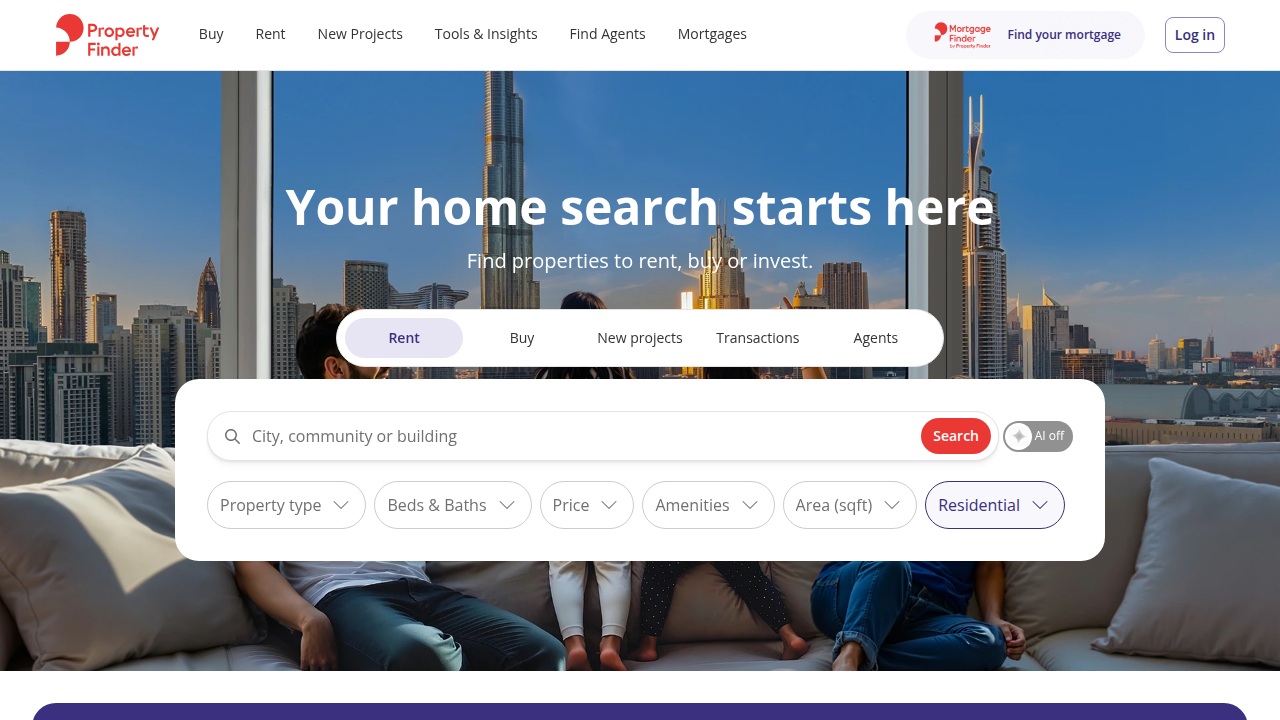
- Dubizzle is great for finding smaller units or more flexible lease terms, especially for businesses on a tighter budget.
Advanced Filters That Save Time
Don’t just type "warehouse for rent" and scroll through hundreds of results. Use the advanced filters:
- Use type: Office, retail, industrial, or mixed-use.
- Size in sq. ft.: Set a minimum and maximum to avoid wasting time on spaces too big or too small.
- Price range: Include service charges and VAT in your budget.
- Lease duration: Some portals let you filter by short-term or long-term leases.
These filters turn a messy list into a short, relevant list of commercial industrial real estate options that actually fit your needs.
New Tech in 2026: AI and Virtual Tours
Emerging tools are changing the game. Some portals now offer AI-powered matching: you answer a few questions about your business, and the system suggests properties you might like. You can also take virtual tours of many listings without leaving your desk. Rent comparison dashboards show you average prices for similar spaces in the same area, so you can spot a good deal.
Want to see these tools in action? For a complete walkthrough of the search process, read our comprehensive guide on how to buy or lease office and industrial property in 2026.
If you’d rather skip the scrolling and get a list of vetted property commercial for sale or lease options, let an expert do the heavy lifting. Contact an agent for a personalized property shortlist today.
Summary
This article is a practical guide to Dubai commercial real estate in 2026, explaining why the market is booming, which submarkets lead demand, and how recent policy changes affect buyers and tenants. It covers market data and trends, the difference between free zones and the mainland, required registrations like Ejari and trade licences, and the key lease terms you must negotiate. You will learn how to evaluate deals using cap rates and total cost of ownership, where industrial and logistics opportunities are strongest, and how to verify an experienced commercial agent. The piece also walks through the step-by-step transaction process from needs assessment to DLD registration, and highlights tools and portals that speed up property searches. Read this to make faster, better-informed decisions when buying, leasing, or investing in Dubai commercial property in 2026.