
So you are looking to master the real estate and commercial property market in Dubai. That is a smart move, but you have probably already noticed something. The market is incredibly dynamic. And it is also very fragmented.
Here is what we mean by that. On one hand, the numbers are massive. In 2025, total dubai real estate transactions across all sectors hit record highs. The commercial market alone saw sales values surge by 38.4% to AED 58.6 billion in just the first half of the year, according to the Engel & Völkers Commercial Market Report. The momentum continued into Q4 2025, with the highest quarterly sales value ever recorded at AED 43.42 billion, as reported by Morgan’s International Realty.
But here is the challenge. All that activity creates noise. If you are a business owner or an investor, getting a clear picture of what is the real estate market actually doing right now is tough.

Information on market trends, legal rules, fair valuations, and trustworthy agents is scattered everywhere. You end up spending more time searching for answers than making smart decisions. And in a fast-moving market like this, delay can cost you good opportunities.
This guide changes that. We wrote it to give you a single, consolidated resource. We cover the essential market trends, explain the legal frameworks, help you understand how to value a commercial property real estate, and show you how to pick the right agent.
For a deeper look at the specific steps for leasing or buying offices and industrial property this year, check out our 2026 Guide to Leasing and Buying Office and Industrial Property. It will help you act fast but with confidence. If you prefer to get personalized advice tuned to your exact needs, you can Contact an Agent for a free consultation.
Dubai’s Commercial Real Estate Landscape in 2026
So now let us zoom in on what is actually happening on the ground. The numbers from the last section show just how big this market is. But a big market does not always mean a simple market. In 2026, the real estate and commercial sector in Dubai is driven by three big forces: a steady flow of tourists and new residents, the long lasting impact of Expo 2020, and strong foreign investment.

Let us break that down.
What is driving the market?
The total dubai real estate transactions for all types of property hit around AED 917 billion in 2025, with over 270,000 deals registered, according to Fam Properties. That includes homes and businesses. The residential side alone saw 200,814 transactions worth AED 543.9 billion, as reported by Metropolitan Real Estate. When more people move here for work, they need places to live. That creates demand for shops, offices, and warehouses too.
The Expo legacy is also real. Areas like Dubai South and around Expo City are turning into active business zones. Add in new visa rules like the Green Visa and expanded Golden Visa, and you have a steady stream of entrepreneurs and skilled workers coming in. All of them need commercial property real estate.
How do the main sectors compare?
Not every sector is moving at the same speed. Here is a simple look:
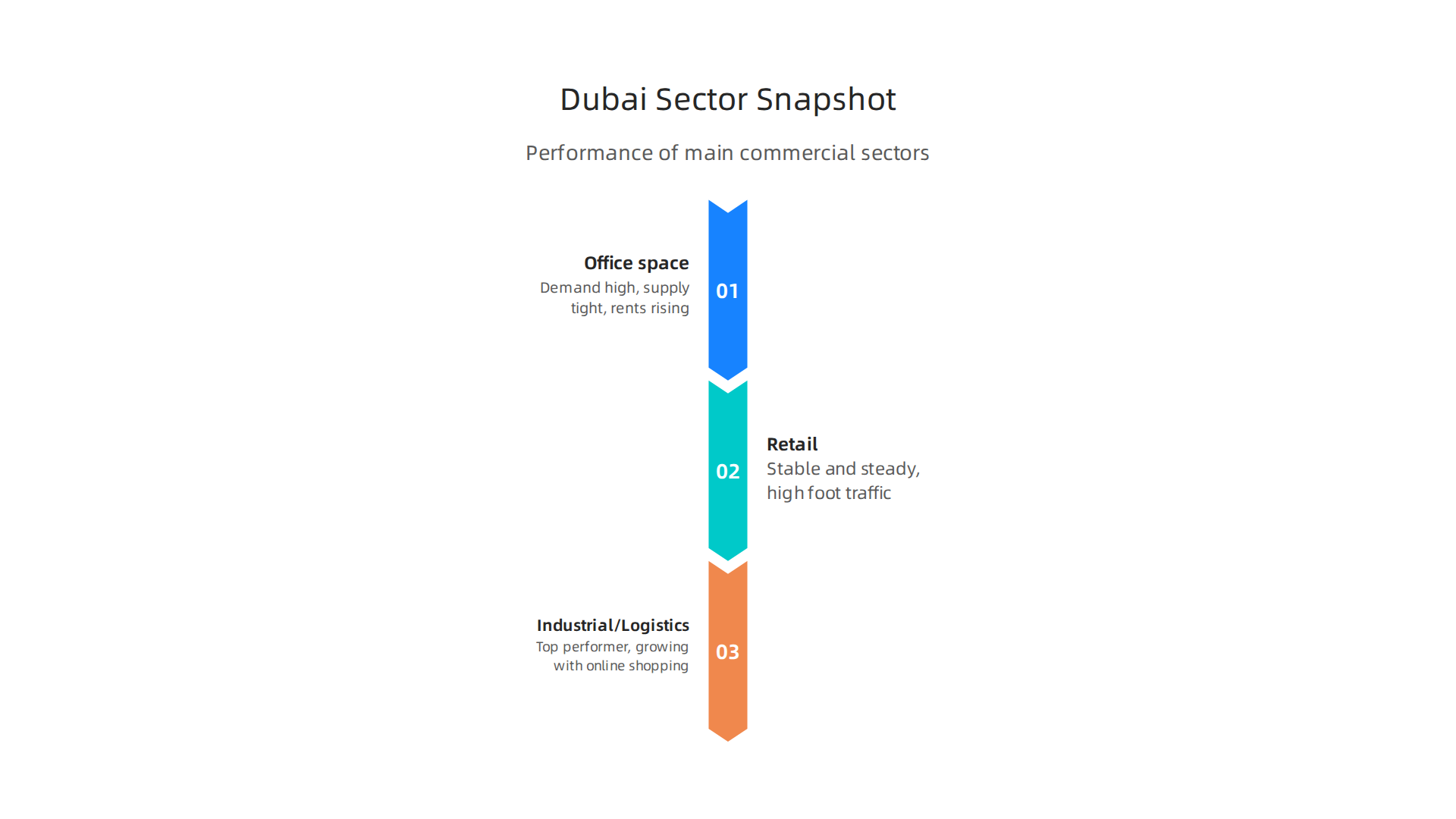
- Office space. Demand for high quality offices (called Grade A) is very high. Supply is tight. That means rents keep going up in popular areas like DIFC and Business Bay.
- Retail. This sector is stable and steady. Foot traffic from tourists and residents keeps shops busy. Malls are still a huge draw in Dubai.
- Industrial and logistics. This is a top performer. Online shopping is growing fast. Companies need more warehouses, cold storage, and delivery hubs. Chestertons reports that income producing properties like these now make up 65% of total transaction value. That tells you where the smart money is going.
New rules are helping too.
The government keeps making it easier to set up and run a business. Free zones keep expanding. They offer tax benefits and full ownership. For investors and business owners trying to understand what is the real estate opportunity right now, the picture is clear. There is strong demand. There is government support. And there are real opportunities in the right sectors.
The tricky part is knowing where to look and who to trust. That is exactly what we cover next.
For a deeper look at the specific steps for leasing or buying offices and industrial property this year, check out our 2026 Guide to Leasing and Buying Office and Industrial Property. It will help you act fast but with confidence. If you prefer to get personalized advice tuned to your exact needs, you can Contact an Agent for a free consultation.
Key Legal Frameworks and Regulatory Bodies
Now that you see the market opportunity, here is the part that catches many people off guard. The rules. Dubai has a very clear legal system for commercial property real estate. You just need to know who runs it and what you must do to stay protected.
The Dubai Land Department (DLD)
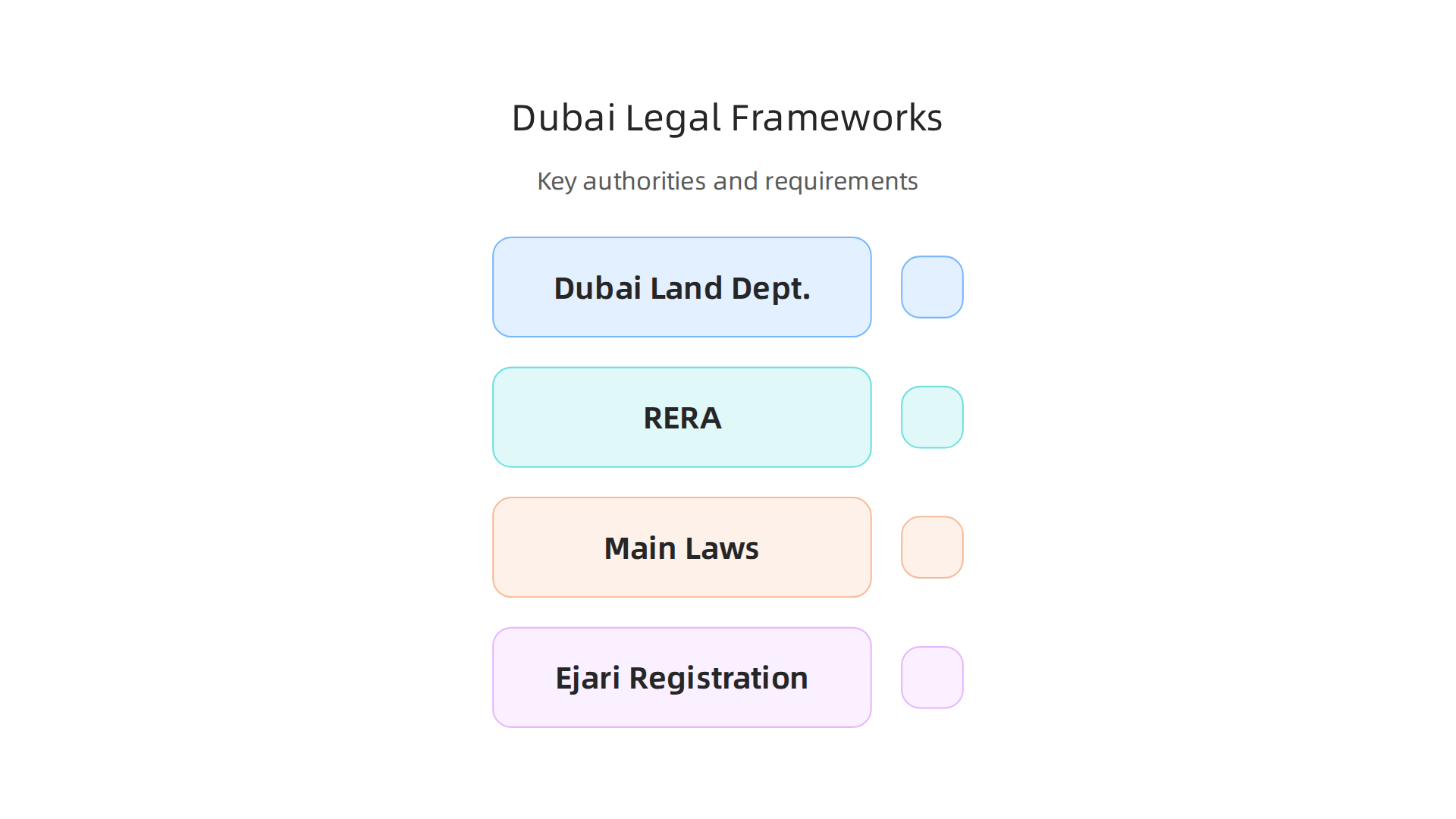
Think of the DLD as the main authority for all property matters in Dubai. This government body oversees everything from land registration to investor protection. The DLD’s own rules and regulations set the foundation for the entire real estate and commercial sector. If you want to understand what is the real estate system in Dubai, start with the DLD.
The Real Estate Regulatory Authority (RERA)
RERA works under the DLD. It creates and enforces the rules for every property transaction in the city. According to Engel & Völkers, Dubai rental laws are regulated by RERA to protect both landlords and tenants. This adds a layer of safety for anyone dealing with commercial property here.
The main commercial property laws
Dubai’s tenancy laws, administered by the DLD, protect the rights of both landlords and tenants, as noted by CRC Property. Law No. 26 of 2007, along with later amendments, created the legal framework that governs commercial property today. This law defines the relationship between landlords and tenants and sets clear rules for contracts, rent increases, and dispute resolution.
Ejari registration: not optional
Here is the most practical thing you need to know. Every commercial lease in Dubai must be registered on the Ejari system. Ejari means "My Rent" in Arabic. It is an online system introduced by RERA to regulate all rental agreements. According to Driven Properties, all rental contracts must be registered through Ejari. This is not a suggestion. It is a legal requirement.
The Al Tamimi law firm confirms that RERA accepts leases with terms up to 5 years for Ejari registration. Registering your lease makes it legally valid and protects you if any dispute comes up later. It also lets tenants check the history of a property before signing, as Betterhomes explains.
For a complete walkthrough of the leasing and buying process this year, check out our 2026 Guide to Leasing and Buying Office and Industrial Property. It covers everything from legal checks to final signatures. If you prefer personalized help working through these rules, Contact an Agent for a free consultation.
How to Compare Commercial Property Listings Effectively
So you understand the rules. Now comes the fun part. Finding the right space for your business. But scrolling through listings can feel overwhelming without a clear plan. Let’s fix that.
The major listing platforms you need to know
The big players in Dubai are Property Finder and Bayut. These two sites hold most of the city’s property inventory.

As Gaia Realty explains, between them they cover the vast majority of listings. You should check both.
For commercial-specific searches, try niche portals like Dubai Commercial and OffPlan Market. According to REM App’s 2026 guide, platforms such as Bayut, Zameen, and PropSearch also provide area-level pricing data and rental yield trends right alongside listings. Luxhabitat confirms that different portals serve different segments, so using multiple sites gives you the full picture.
Key metrics to compare side by side
Don’t get distracted by fancy photos. Focus on the numbers that actually matter for your business.
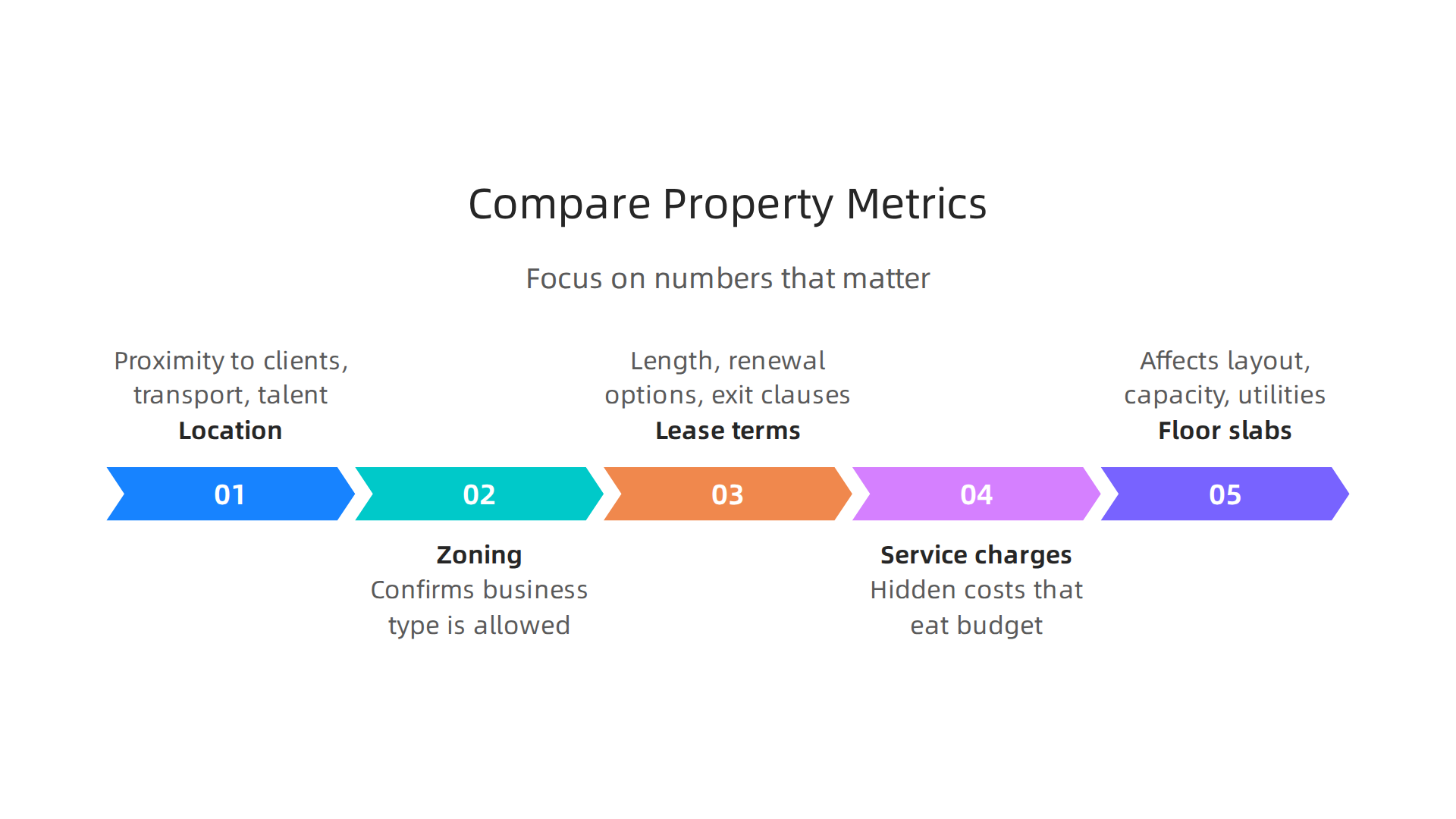
| Metric | Why It Matters |
|---|---|
| Location | Proximity to clients, transport, and talent |
| Zoning | Confirms your business type is allowed |
| Lease terms | Length, renewal options, and exit clauses |
| Service charges | Hidden costs that eat into your budget |
| Floor slabs | Affects layout, capacity, and utilities |
The Betterhomes MLS platform notes that over 50% of Dubai real estate deals happen in the secondary market. This means resale listings often offer better value than new builds. Keep that in mind when you compare.
Tools to make comparison easier
You can use property scoring tools to get a numerical rating on a listing. Oliva explains that these tools score properties based on yield potential, location caliber, developer track record, and market conditions. This helps you cut through the noise fast.
Create a simple spreadsheet with the metrics above. Add columns for asking price, deposit required, and any fit-out included. This makes your Dubai real estate transactions much smoother.
For a complete walkthrough of the whole process this year, check out our 2026 Guide to Leasing and Buying Office and Industrial Property. It covers everything from listing comparisons to final signatures.
Need help comparing properties for your specific business needs? Contact an Agent for a free consultation.
Evaluating Fair Market Value and Investment Potential
You have a shortlist of properties that look good on paper. Now comes the hard question. Is the price fair? And will this space grow in value over time? Here is how to answer both.
Three ways to value commercial property
Professional valuers use three main methods to figure out what a property is really worth.
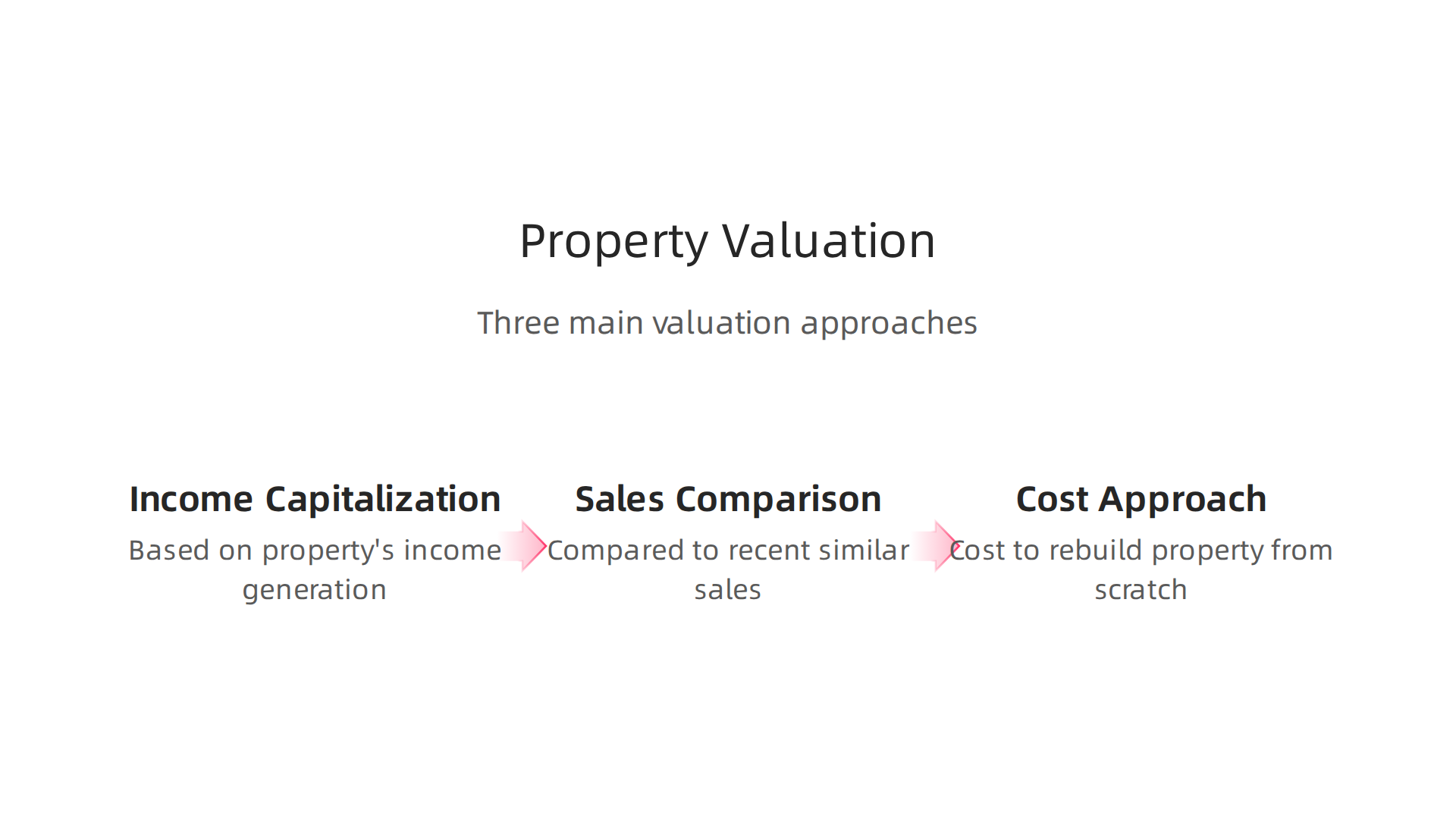
The Engel & Völkers guide on commercial property valuation in Dubai breaks them down clearly.
The income capitalization approach is the most popular for commercial property real estate. It looks at how much income the property can generate. You take the annual net operating income and divide it by the cap rate. Simple math, powerful insight.
The sales comparison approach looks at recent sales of similar properties nearby. This works best when there are plenty of comparable deals to study.
The cost approach figures out what it would cost to rebuild the property from scratch. It is useful for newer buildings or unique spaces.
Cap rates in Dubai right now
Cap rates vary by property type. In the current market, office spaces in prime areas typically trade between 7% and 9%. Retail spaces often sit slightly higher. Industrial and warehouse properties can go above 10% depending on location.
The market has been moving fast. Morgan’s International Realty reports that total commercial transaction value hit AED 43.42 billion in Q4 2025 alone. That record activity means you need up-to-date data to get the real picture.
What drives long term value
A property’s future worth depends on things beyond the building itself. Infrastructure plans matter a lot. New roads, metro lines, and business zones can push values up fast.
Foreign direct investment (FDI) is another big factor. Chestertons Mena notes that commercial properties dominate the market and drive most transaction value. Areas near new government projects or free zones tend to see stronger growth over time.
The income approach is especially useful here. As CRC Property explains, this method focuses on potential rental income. That gives you a clear picture of future returns.
Getting a professional valuation
For serious transactions, you want an official valuation. The Dubai Land Department offers a property valuation service through trustee centers. This is the gold standard for dubai real estate transactions.
Once you have a solid value estimate, the rest of the process gets easier. For a complete walkthrough from valuation to signing, check out our 2026 Guide to Leasing and Buying Office and Industrial Property. It covers every step.
Not sure how to value a specific property? Contact an Agent for professional guidance on what your target space is really worth.
The Role of a Trustworthy Commercial Real Estate Agent
You have done the hard work on valuations and market analysis. Now you need someone on the ground to find the right deal and guide you through the process. But not every agent has your best interests at heart. Picking the wrong person can cost you time and money.
Why commission-only agents may not always align with you
Many agents in Dubai work on pure commission. They only get paid when a deal closes. That sounds fair, but here is the catch. An agent focused on a quick paycheck may push you toward a property that moves fast, not one that fits your long term plan. They might skip important checks or rush you through decisions.
You need an agent who sees your success as their success. Someone who will show you both the good and the bad about a property.

That takes experience and the right ethical standards.
RERA certification and professional designations matter
Dubai regulates real estate agents through the Real Estate Regulatory Authority (RERA). Every licensed agent must complete a training course and pass an exam to get their RERA card. You can check an agent’s license on the Dubai Land Department website. Always ask for their broker registration number (BRN) and verify it is active. The Oliva guide on the RERA license process explains exactly how to confirm an agent is certified.
Beyond the basic license, look for advanced designations. The Certified Commercial Investment Member (CCIM) credential shows deep expertise in commercial investment analysis. The Certified Real Estate Agent (CREA) designation also signals higher training. Agents with these certifications have studied valuation, market analysis, and ethics more thoroughly.
Red flags to watch for
A bad agent often shows clear warning signs. Be careful if they:
- Withhold information about a property’s condition or ownership history
- Pressure you to make an offer without showing you comparable data
- Cannot provide recent market reports or rental yield trends for the area
- Avoid answering questions about their license or past transactions
A trustworthy agent will share everything openly. They will provide market data from reliable sources like Property Finder or Bayut. They will also give you time to think and consult your own advisors.
The right partner makes all the difference
When you find an agent who is RERA certified, commission aligned with your timeline, and transparent about data, you have a real asset. They can help you navigate dubai real estate transactions smoothly and avoid costly mistakes.
For a full breakdown of the entire process, from choosing an agent to signing a contract, check out our 2026 Guide to Leasing and Buying Office and Industrial Property. It covers everything you need to know.
Ready to work with a professional who puts your goals first? Connect with Ayaz Salman on Whatsapp for a free consultation. No pressure, just honest advice on your next commercial property move.
Navigating Lease Terms, Contracts, and Tenant/Landlord Rights
You have found a trustworthy agent. Now comes the real work. The lease agreement in front of you is a legal document that will shape your business for years. Understanding the key parts can save you from expensive surprises.

Standard lease terms to watch closely
Commercial leases in Dubai usually run for one to five years. The Al Tamimi & Company article on lease registration notes that RERA accepts leases up to five years for registration on the Ejari system. Shorter terms give you flexibility, but longer terms lock in your rent and location.
Rent escalation is a major area where tenants get caught off guard. Dubai’s rental laws set clear caps on how much a landlord can increase the rent each year. The CRC Property guide on commercial leasing explains that these laws provide guidance on the maximum allowable increase. Your agent should show you the RERA rental increase calculator before you sign.
Maintenance responsibilities are another sticking point. Under Dubai’s tenancy law, the landlord is generally responsible for maintaining the property and fixing any defects. The SK Legal Firm guide on tenant rights confirms this. But commercial leases often shift some maintenance duties to the tenant, especially for interior repairs and fixtures. Make sure you know exactly who pays for what before you commit.
Dispute resolution: the Rental Dispute Settlement Centre
Conflicts happen. Maybe the landlord refuses to make needed repairs. Maybe you disagree on a rent increase. In Dubai, the Rental Dispute Settlement Centre (RDSC) handles these cases. It is a specialized court under the Dubai Land Department. The RDSC can resolve issues quickly without the high costs of regular court. Knowing this option exists gives you peace of mind.
Subleasing and assignment clauses
Many businesses grow faster than expected. A subleasing clause lets you rent out part of your space to another business. An assignment clause lets you transfer the entire lease to someone else if you move. These are not automatic rights. You must negotiate them into your contract. The Elnaggar Legal overview of commercial tenancy contracts explains that the law regulates the relationship between landlords and tenants, but specific clauses depend on what you agree to. Without these clauses, you could be stuck paying rent on space you no longer need.
Ejari registration is non-negotiable
Every commercial lease in Dubai must be registered with RERA through the Ejari system. The Driven Properties guide on RERA states this is a mandatory step that formalizes your contract and protects your rights. Never take possession of a property before your lease is registered. Without Ejari, you have no legal standing if problems arise.
For a complete walkthrough of all the documents and steps involved, our 2026 Guide to Leasing and Buying Office and Industrial Property covers every detail from start to finish.
Still unsure about a clause or term in your lease? Contact an Agent for personalized advice on your specific situation.
Summary
This guide consolidates everything a business owner or investor needs to navigate Dubai’s fast-moving commercial real estate market in 2026. It explains the market drivers—tourism, Expo legacy and foreign investment—then compares performance across offices, retail and industrial sectors and highlights where demand is strongest. The article lays out the legal framework you must know (Dubai Land Department, RERA and mandatory Ejari registration), shows how to compare listings using key metrics and tools, and explains the three valuation approaches used by professionals. It gives practical cap-rate ranges, warns about common agent pitfalls, and lists the lease clauses to negotiate, from rent escalation to subleasing. After reading, you will know how to shortlist properties, check legal compliance, get a professional valuation, and pick an agent who protects your interests so you can act quickly and confidently.