Dubai’s commercial real estate market is on fire in 2026. In the first quarter alone, commercial property sales hit AED 37.9 billion, marking a 32% jump compared to the same period last year, according to the latest Dubai Commercial Real Estate Report for Q1 2026. Offices, retail spaces, and warehouses are all seeing strong demand from local and international investors.
But here’s the thing. Behind those big numbers, many buyers run into a wall. Finding the right financing for a commercial property in Dubai is not simple.
Information is scattered across different sources. Regulations change often. And loan structures for the UAE market can feel confusing if you have not dealt with them before.
This guide is here to change that. We break down how commercial real estate loans work in Dubai for 2026. You will learn about the different loan types, what banks look for, and how to put together a strong application. For a deeper look at the financing process itself, read our detailed walkthrough on how to secure commercial financing in Dubai.
Ready to take the next step? Get your FREE Dubai Real Estate Consultation with an experienced advisor who knows the local market inside out.
Why Commercial Real Estate Loans in Dubai Are Different
Now that you see how strong the market is, you might wonder what makes getting a commercial real estate loan in Dubai so unique. It is not like borrowing money in most other cities. A few key things set it apart.
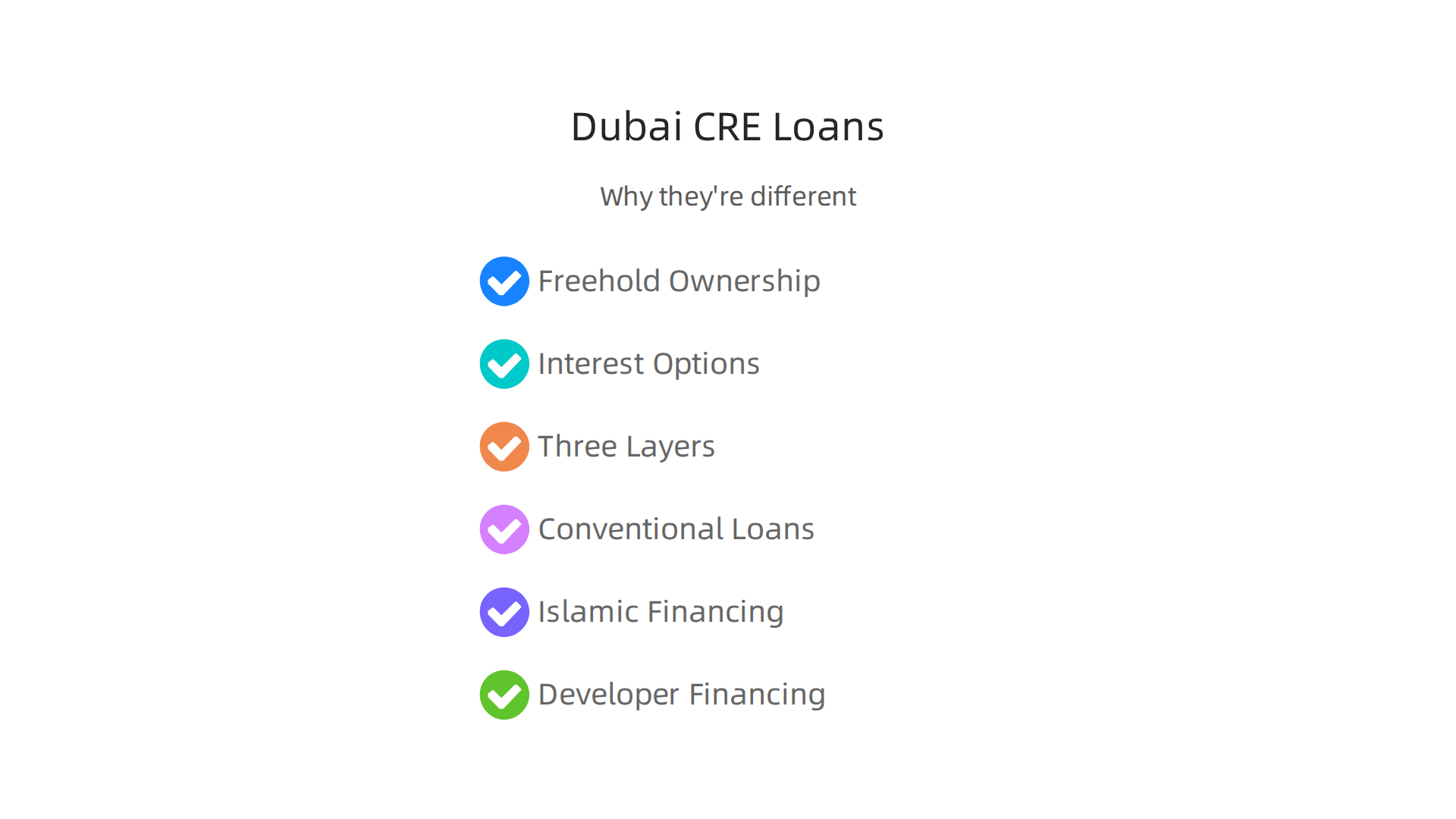
First, Dubai’s freehold ownership laws let foreigners buy property in designated areas. This is a big deal. And if your property is worth enough, you can also qualify for an investor visa. Banks factor this into their decisions. They know that a visa-linked property makes you more committed to the market. That can affect the terms you get.
Second, the way interest works is different. In Dubai, you have two main options. You can go with a conventional bank loan that charges interest. Or you can choose Islamic financing, which follows Sharia law. Islamic products like Murabaha (cost-plus financing) and Ijara (lease-to-own) do not charge interest. Instead, the bank buys the property and sells it to you at a profit, or leases it to you. The loan-to-value (LTV) ratios for commercial properties are generally lower than for homes, often around 50% to 60%. Interest rates can vary a lot. In April 2026, banks offered rates from 3.9% all the way up to 7.2%, with the median at 4.3% according to an analysis of April 2026 Dubai real estate financing data.
Third, three layers of rules control commercial real estate loans. The UAE Central Bank sets broad monetary policy and lending guidelines. The Dubai Land Department (DLD) handles property registration and transfers. And individual freehold zones like Dubai Multi Commodities Centre (DMCC) or Dubai International Financial Centre (DIFC) have their own rules for properties inside them. You need to understand how all three work together before you apply. For a bigger picture of the market and what to expect, check our Dubai commercial real estate market guide for investors.
Understanding these differences early can save you time and get you better loan terms.
Key Types of Commercial Real Estate Financing in Dubai
Now that you understand why commercial real estate loans in Dubai are different, let’s look at the actual financing options available to you. Banks and developers offer several paths, and the right one depends on your goals and situation.
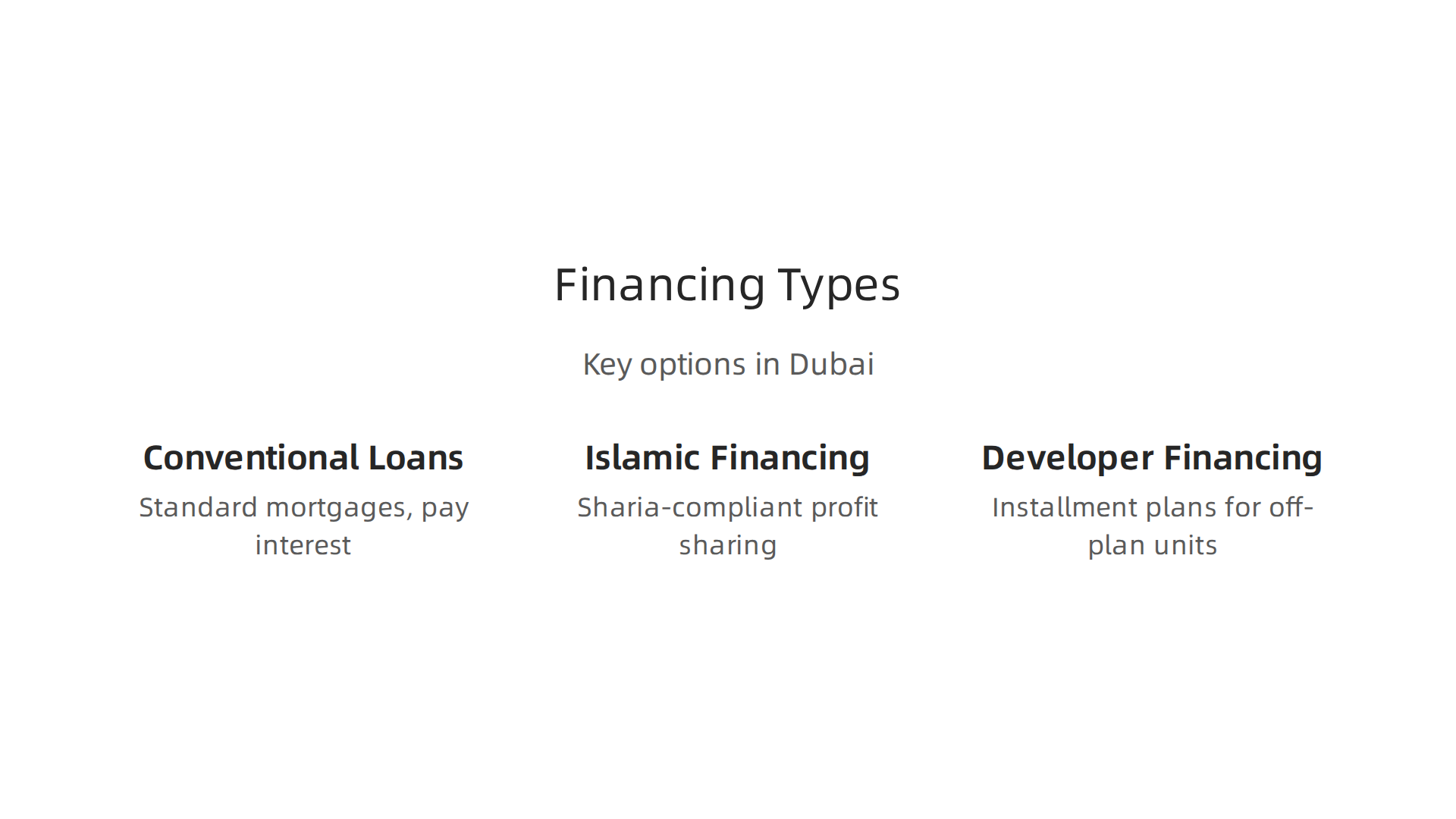
The first big choice is between conventional loans and Sharia-compliant financing. Conventional loans work like standard mortgages. You borrow money and pay interest over a fixed term, usually up to 15 years for commercial properties. These loans are straightforward and widely available from major UAE banks. For example, Emirates NBD offers tailored commercial property loans with competitive rates and flexible repayment schedules. You can get a loan of up to AED 7 million with a maximum of 15 years to repay it.
The second option is Islamic financing, which follows Sharia law. Instead of charging interest, the bank uses structures like Murabaha (cost-plus financing) or Ijara (lease-to-own). In a Murabaha deal, the bank buys the property and sells it to you at an agreed profit margin. With Ijara, the bank leases the property to you, and ownership transfers after you complete all payments. Both options are fully Sharia-compliant and popular among Muslim investors. You can explore the full details of Commercial Property Finance from Dubai Islamic Bank to see how these structures work in practice.
The third key option is developer financing. Many Dubai developers offer flexible payment plans for off-plan commercial units. This means you pay in installments during construction instead of taking a full bank loan upfront. These plans often have lower upfront costs and can be easier to qualify for, especially if you are buying a unit in a new development. However, you still need to check the developer’s reputation and the terms carefully.
Each option has different costs, terms, and eligibility rules. Conventional loans tend to have stricter documentation and higher down payments for expats. Islamic financing may have slightly different cost structures due to the profit calculation method. Developer financing can be more flexible but might come with higher total costs over time.
Before you pick a path, take time to compare what each option offers for your specific situation. For a deeper look at how to get funding with confidence, read our guide on secure commercial financing real estate in Dubai with confidence.
Ready to move forward with your commercial property purchase? Get personalized help from an expert who knows the Dubai market inside out. FREE Dubai Real Estate Consultation
Conventional Bank Loans
Conventional bank loans are a straightforward way to secure commercial real estate loans in Dubai. Both local and international banks offer them, and they work just like standard mortgages. You borrow a lump sum and pay it back with interest over a fixed term.
The interest rate on a real commercial real estate loan is typically tied to the Emirates Interbank Offered Rate (EIBOR) plus a margin set by the lender. You can choose between a fixed rate for the first few years or a variable rate that moves with EIBOR. In 2026, many buyers in Dubai are locking in fixed rates to protect themselves from future rate increases. You can stay updated on the latest market trends by reading about mortgage trends in 2026.
For commercial properties real estate, the down payment is usually higher than for homes. Most banks ask for 20% to 30% down, especially for expat investors. This is because lenders view a commercial real estate loan as higher risk. A helpful guide on residential versus commercial mortgages explains that lenders have stricter rules for commercial properties due to market fluctuations and business risks.
To get approved, you will need strong business financials, a clear plan for the property, and a good personal credit history. The bank wants to know your business can cover the repayments. Understanding the full 2026 commercial real estate market in Dubai can help you prepare a stronger application.
Because the process involves many moving parts, from documentation to comparing offers, having the right support makes all the difference.
Are you thinking about buying commercial property in Dubai? Get personalized help from an expert who knows the market inside out. FREE Dubai Real Estate Consultation
Islamic Finance (Murabaha, Ijara, Musharaka)
Not every buyer wants a conventional loan. If you follow Islamic law, paying or receiving interest (riba) is not allowed. But you can still get commercial real estate loans through Islamic finance. These structures follow Sharia law and use profit sharing instead of interest.
The most common model is Murabaha. Here is how it works. The bank buys the property you want. Then it sells it to you at a marked up price. You pay that fixed amount over time in installments. No interest. Just a clear cost plus profit. This makes Murabaha popular for commercial real estate loan arrangements in Dubai.
Another option is Ijara. This is an Islamic lease to own model. The bank buys the property and leases it to you. Your monthly payments are rent. When you finish paying, the ownership transfers to you. It works like a lease with a promise of sale. Many investors choose Ijara for commercial properties real estate because the payments stay predictable.
Dubai Islamic Bank offers both Murabaha and Ijara for commercial property. Their commercial property finance solutions include flexible terms up to 15 years and financing up to 70% of the property value. You can learn more about their Sharia compliant options on the Dubai Islamic Bank page.
For real commercial real estate financing, Islamic structures give you a clear path without breaking your beliefs. The paperwork takes more steps because the bank must own the property first. But the trade off is peace of mind.
If you want to understand more about how different financing options compare, check out this guide on securing commercial financing in Dubai.
Developer Financing and Payment Plans
Here is another financing path that many investors overlook. Instead of going to a bank for commercial real estate loans, you can work directly with the property developer. This is especially common for off-plan commercial units.
Developers in Dubai often offer their own payment plans with very low down payments. We are talking about 5 to 10 percent upfront. That is much lower than the 20 to 30 percent deposit you need for a standard mortgage.
The payment schedule usually has two phases. First, you pay in installments during the construction period. Then after you get the keys, you pay the remaining balance over the next three to five years. This post-handover phase gives you time to start earning rental income before the big payments arrive.
Some developers even offer interest free or deferred payment options. But here is the catch. The property price is often higher to make up for this. You pay a premium for the convenience. So compare the total cost against a commercial real estate loan before you sign.
This model works great if you have limited cash upfront but strong future income. It also helps foreign investors who may not qualify for local bank financing right away. For a full look at how traditional mortgages compare to developer plans, read this guide on residential vs commercial mortgages.
If you want to explore all your options for commercial properties real estate in Dubai, you can browse our commercial real estate market guide for more insights.
Unsure which financing route fits your needs best? Book a FREE Dubai Real Estate Consultation with a local expert who can walk you through the numbers.
Eligibility Criteria for Commercial Real Estate Loans in Dubai
So you have your eye on a commercial property in Dubai. Developer payment plans sound good, but maybe you want the traditional route of a bank loan. Before you apply, you need to know what banks actually look for. Getting approved for commercial real estate loans is not the same as getting a home mortgage. The rules are stricter.
Banks in Dubai check three main things when you apply for a commercial real estate loan: your creditworthiness, your business financials, and the property’s ability to generate income. They want to see that you can repay the loan and that the property itself will bring in enough cash flow.
Here are the common requirements you need to meet:
- A positive credit score. Banks pull your credit report from the local bureau. If you have been in Dubai for more than six months, you will have a file. Late payments or defaults can hurt your chances.
- Audited financial statements. If you run a business, you need to show at least two years of audited accounts. Self-employed applicants need profit and loss statements and bank statements covering several months.
- A viable business plan. For new businesses or startups, banks want to see a clear plan showing how the property will help your business grow and how you will make the payments.
- Minimum income levels. Many lenders expect a monthly income of at least AED 25,000, especially for non-residents. Your debt burden ratio, which is your total monthly debt payments divided by your income, must stay below 50 percent.
Non-resident investors face tougher rules. You might need a down payment of 30 to 40 percent of the property value. That is higher than the 20 percent for residents. You also need more paperwork, like proof of foreign income, bank statements from your home country, and sometimes a Premier or Private banking relationship with the lender.
Banks also look at the property itself. They will order an independent valuation to check the market value. If you pay more than the valuation, the bank only lends based on the lower number. That means you need to bring extra cash to cover the gap.
The whole approval process usually takes four to eight weeks. So plan ahead.
For a deeper breakdown of what banks require, check out this guide on commercial mortgages in UAE. It covers eligibility factors like business income and company structure.
If you want to understand how different property types affect loan terms, read about commercial property types in Dubai. Knowing the asset class helps you pick the right financing strategy.
Meeting the eligibility criteria is doable, but you need to prepare your documents early. Start gathering your financial statements, credit reports, and business plan now. It will save you time and stress later.
Loan-to-Value (LTV) Ratios and Interest Rates
Now that you know what banks look for, let’s talk about numbers. Two big factors determine your monthly payment: the loan-to-value ratio and the interest rate.
The loan-to-value ratio, or LTV, is the percentage of the property’s value the bank lets you borrow. The UAE Central Bank sets the rules. For commercial real estate, the maximum LTV for UAE residents is 70 percent. That means you need at least a 30 percent down payment. Non-residents face lower LTV caps, often 50 to 60 percent. This is explained in this guide on commercial mortgages in the UAE, which notes the Central Bank’s LTV limits.
Here is a quick look at typical LTV caps for commercial real estate loans:
- UAE resident: up to 70% LTV (30% down payment)
- Non-resident: up to 50% to 60% LTV (40% to 50% down payment)
- Off-plan commercial property for non-residents: often 50% LTV
These caps apply to the lower of the purchase price or the bank’s valuation. So if you agree to buy at AED 5 million but the bank values it at AED 4.5 million, the bank lends based on AED 4.5 million. You bring the difference.
Now for interest rates. Commercial real estate loan rates in Dubai are higher than residential ones. In 2026, rates typically fall between 4 percent and 7 percent. The median rate offered by banks in April 2026 was 4.3 percent. Your exact rate depends on your profile, loan amount, and whether you choose fixed or variable.
Fixed rates lock in your rate for a set period, usually one to five years. This gives you predictable payments. Variable rates change with the market. If rates drop, you benefit. If they rise, your payments increase. Many borrowers start with a fixed rate for stability and then switch to variable later.
To see how these numbers apply to your situation, you can read more about secure commercial financing in Dubai with the right guidance.
If you are ready to move forward, get a FREE Dubai Real Estate Consultation to discuss your financing options with an expert who knows the market.
Step-by-Step Guide to Applying for a Commercial Real Estate Loan
Now that you understand the numbers, let’s walk through the actual process.
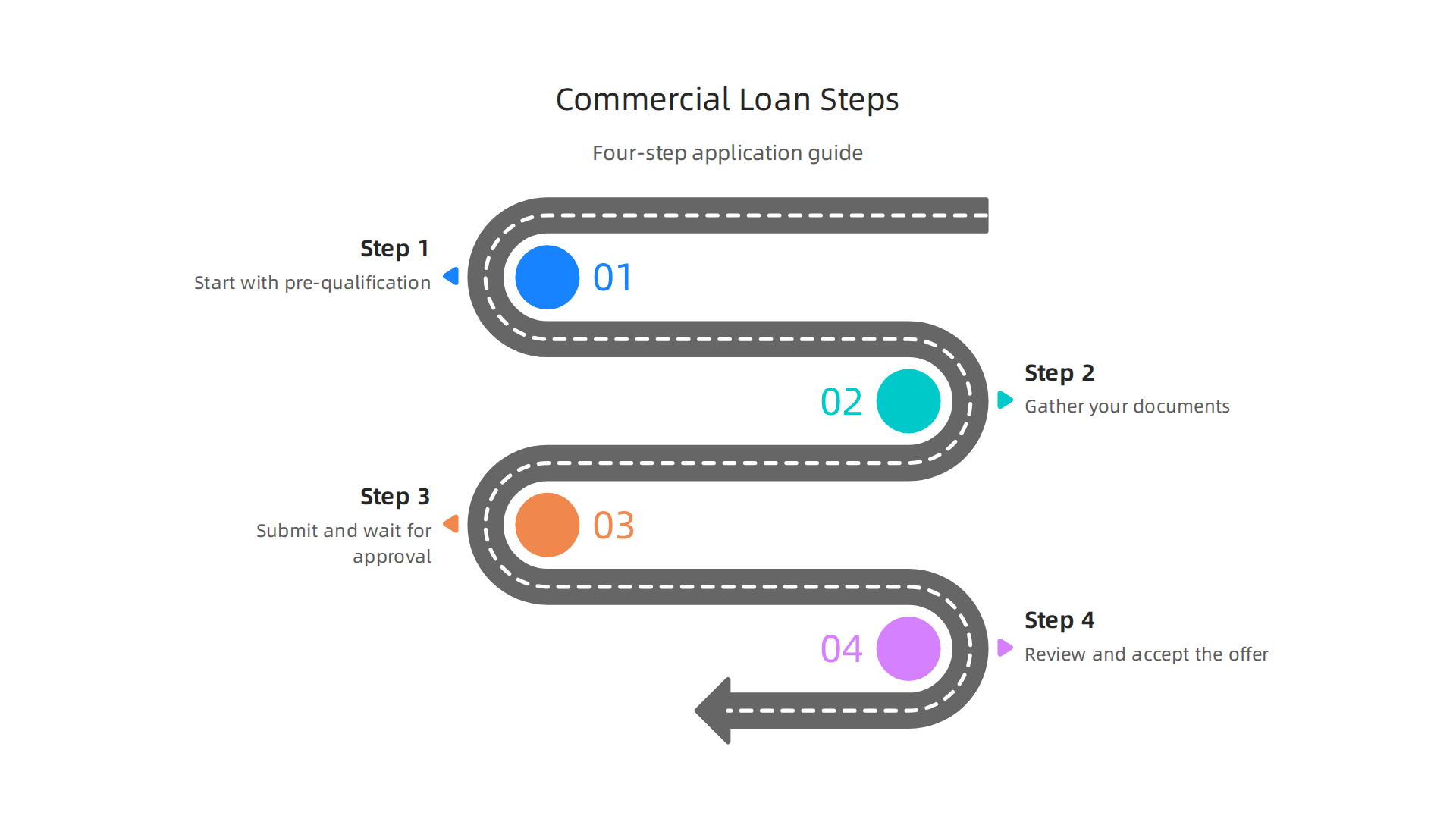
Applying for commercial real estate loans in Dubai looks different from getting a home mortgage. But it does not have to be confusing.
Step 1: Start with pre-qualification.
Before you look at properties, talk to a bank or a broker. They can check your finances and tell you how much you can borrow. This step saves time. You do not want to fall in love with a warehouse worth AED 8 million if the bank only lets you borrow AED 4 million. It is also smart to order an independent property valuation early. That way you know what the market says a property is worth before the bank does its own check. You can read a full overview of the process to get a mortgage on a commercial property in Dubai for more detail.
Step 2: Gather your documents.
Banks want proof. They want to see that you can pay them back. Here is what you typically need:
- For salaried applicants: passport, visa, Emirates ID, salary certificates, and bank statements for the last six months.
- For self-employed or business owners: trade license, Memorandum of Association (MOA), audited financials for the last two years, and company bank statements.
Missing a single document can slow your application by weeks. So double-check everything before you submit. The step-by-step guide on how to obtain a mortgage on your commercial property in Dubai lists exactly what lenders look for.
Step 3: Submit and wait for approval.
Once your documents are in, the bank reviews your profile, checks the property value, and decides if the loan makes sense. This takes between four and eight weeks. It is not fast. But it is thorough. Banks run legal due diligence on the property to make sure the title is clean and no disputes exist.
Step 4: Review and accept the offer.
If approved, you get a formal loan offer. Read the fine print. Look at the interest rate, the repayment schedule, and any hidden fees. Once you sign, the bank registers the mortgage with the Dubai Land Department, and the money transfers to the seller.
Working with someone who knows the market helps a lot throughout these steps.

That is why many buyers choose to work with a trusted advisor. Knowing how to choose real estate brokerage companies in Dubai for commercial property can make the whole process smoother.
If you want personalized help with your application, reach out for a FREE Dubai Real Estate Consultation to talk through your options with an expert.
Risks and How to Mitigate Them
Every loan comes with risk. And commercial real estate loans are no different. But knowing what can go wrong is the first step to protecting your money. Here are the main risks you need to watch for and how to handle them.
Interest rate volatility
Most commercial loans have variable rates. That means your monthly payment can go up if the UAE Central Bank raises rates. Because the UAE dirham is tied to the US dollar, changes from the US Federal Reserve hit you too. This is a real issue when you are using leverage. To protect yourself, ask your bank about fixed-rate options or rate caps. You can also keep a cash buffer for unexpected payment jumps. The latest analysis on how interest rate changes are affecting real estate investment in Dubai shows that flexible investors handle rate hikes best.
Property market downturns
Commercial property values can drop. And if your tenants leave, your rental income shrinks. That makes it harder to cover your loan payments. Banks look closely at your Debt Service Coverage Ratio (DSCR) for this reason. To stay safe, choose properties with strong, long-term tenants. Avoid relying on one big renter. And always run conservative numbers when you estimate future rent. A property that "just covers the loan" is risky. Aim for a safety margin.
Legal risks
Dubai has clear rules, but you need to follow them exactly. Make sure the property has a clean title with no disputes. Work with a lawyer who knows commercial real estate law in Dubai. Also, register your mortgage properly with the Dubai Land Department. The fee is 0.25% of the loan amount plus AED 290. Skipping any legal step can delay your loan or cost you money.
How to stay protected
The best way to handle these risks is to prepare before you sign.

Work with experienced advisors. Look at the lender’s history during tough markets. And always get professional help with legal checks and valuations. For a complete walkthrough of what to watch for, check out this guide on how to secure commercial financing real estate in Dubai with confidence.
Understanding the risks does not have to scare you. It makes you a smarter investor.
Expert Tips for First-Time Commercial Property Investors in Dubai
Jumping into your first commercial property deal is exciting. But without the right guidance, small mistakes can cost you big. Here are three practical tips to help you start strong.
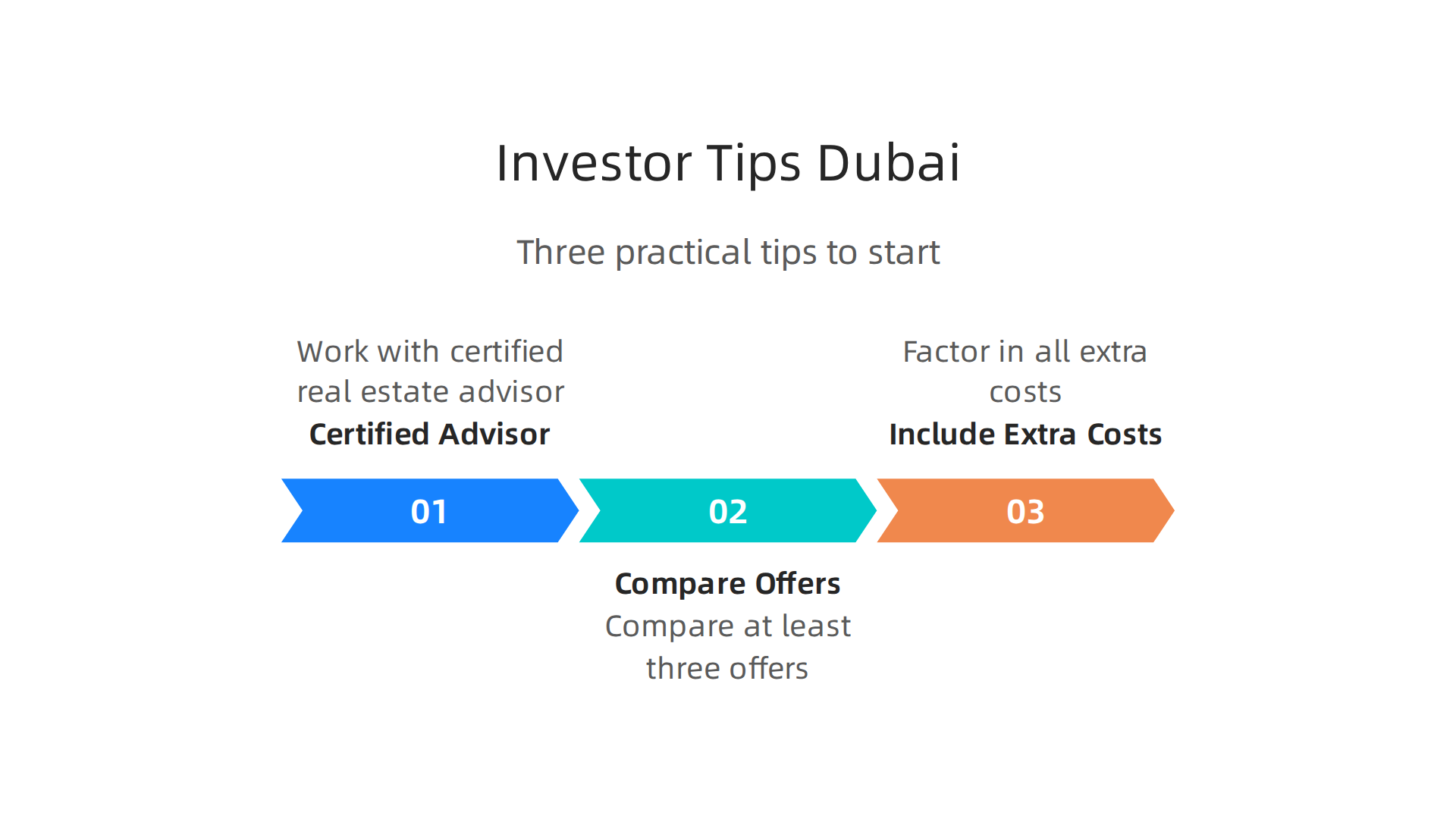
Tip 1: Work with a certified real estate advisor
A good advisor knows the Dubai market inside and out. They can find properties that match your budget and goals. They also know which areas are growing and which ones have hidden problems. Look for someone who specializes in commercial properties, not just residential homes. A certified expert will also help you avoid paperwork delays and legal traps. For a closer look at what to expect, read this detailed walkthrough of the commercial mortgage process in the UAE. And if you want to pick the right partner, check out this guide on how to choose real estate brokerage companies in Dubai for commercial property.
Tip 2: Compare at least three financing offers
Never take the first loan offer you get. Banks in Dubai offer different rates, fees, and terms. You have three main options: conventional bank loans, Islamic financing (Sharia-compliant), and developer financing. Each one works differently. For example, conventional rates in 2026 range from about 4.5% to 5.5% for fixed terms, while variable rates are tied to EIBOR plus a margin. Islamic financing uses a cost-plus or lease structure. Developer financing may have lower rates but stricter rules. Spend time comparing the total cost, not just the interest rate. A detailed breakdown of commercial mortgage rates and fees in Dubai can help you see the differences clearly.
Tip 3: Factor in all the extra costs
The purchase price is only part of the story. You will also pay a 4% transfer fee to the Dubai Land Department. That alone can be tens of thousands of dirhams. Then add agency commission (usually 2% to 5%), valuation fees (AED 2,000 to AED 5,000), and legal fees (AED 5,000 to AED 15,000). These extras add up fast. If you are not ready for them, you might run out of cash before closing. The guide on mortgage for commercial properties in the UAE lists many of these costs in detail. Plan for them upfront so you are never caught off guard.
Taking these steps now will save you time, money, and stress. If you want personal help finding the right property and financing, connect with an expert. FREE Dubai Real Estate Consultation Buying, selling, renting, or investing in Dubai? Connect with Ayaz Salman for a free consultation and get clear answers tailored to your situation.
Conclusion: Secure Your Commercial Real Estate Loan with Confidence
You now have a clear picture of what it takes to get a commercial property mortgage in Dubai. The market offers real opportunities, but success depends on how well you prepare.
Dubai has many financing options for different types of investors. Whether you are a UAE resident or a non-resident, banks and lenders have products designed for your situation. The key is matching your needs with the right lender. A good starting point is understanding the full process by reading this guide on how to obtain a mortgage on your commercial property in Dubai.
Thorough preparation is your best tool. Gather your documents early. Know your numbers. Understand the fees involved. Most lenders expect a business plan, financial statements, and proof of income. The approval process usually takes four to eight weeks, so plan your timeline carefully. Getting a professional valuation of the property ahead of time can also help avoid surprises when the bank does its own assessment. A detailed overview of the commercial mortgage process in the UAE gives you a step-by-step look at what to expect from start to finish.
Working with a specialist matters more than most investors realize. Commercial real estate loans are more complex than residential mortgages. A certified advisor or mortgage broker can match you with the right lender, handle the paperwork, and save you from costly mistakes. They also know which banks are most active in the commercial space and can negotiate better terms on your behalf.
Here is a quick summary of what you need to do next:
- Review your financial situation and credit profile
- Gather all required documents, including your business plan and bank statements
- Research at least three lenders or work with a broker
- Get pre-approval before you start property hunting
- Factor in all closing costs, including registration fees and legal charges
If you want to dive deeper into the specifics of getting financed, check out this practical guide on how to secure commercial financing real estate in Dubai with confidence.
The Dubai commercial property market in 2026 is full of potential for those who do their homework. Take it step by step. Ask questions. And never rush into a deal just because it looks good on paper. With the right preparation and professional guidance, you can secure the financing you need and move forward with confidence.

Summary
This guide explains how commercial real estate loans in Dubai work in 2026 and shows you how to secure the right financing for offices, retail and industrial property. It covers the main loan types—conventional bank loans, Sharia-compliant Islamic structures (Murabaha, Ijara) and developer payment plans—plus who qualifies, typical loan-to-value limits, current rate ranges and the timeline for approval. You will learn what documents banks require, how lenders value income and creditworthiness, and practical steps to prepare a strong application. The article also outlines common risks (rate volatility, market downturns, legal issues) and how to reduce them, plus expert tips on comparing offers and working with advisors. After reading this guide you will know which financing routes suit your profile, how to estimate costs, and what to do next to move from pre-qualification to closing.