Your Trusted Roadmap to Dubai’s Commercial Real Estate Market
Are you looking for the right commercial property for sale and lease in Dubai but feel overwhelmed by all the options? You are not alone. Many business owners and investors struggle to find clear, reliable information when searching for offices for sale in dubai or a great for lease commercial real estate deal.

Dubai remains one of the top places in the world to buy or rent business space. The market is active and growing fast. In January 2026 alone, the city recorded 1,444 commercial transactions worth AED 17 billion, according to the latest January 2026 commercial property market data. That is a huge number and shows how much demand exists.
But here is the real challenge. The market is also complex. You have to compare listings across different websites, understand local laws, and figure out fair prices. A simple search for commercial real estate near me can give you hundreds of results with no clear way to sort the good from the bad. That drains your time and can lead to costly mistakes.
This guide changes that. We built it to give you a clear, step-by-step path through the entire process. Whether you want to buy or lease, we cover everything from finding the right location to working with trusted professionals. For example, knowing how to find a commercial real estate agent in Dubai you can rely on is a smart first step.
So take a breath. You now have a roadmap that makes sense. Let us walk through it together. And if at any point you want expert guidance, you can always reach out for a free consultation to get your questions answered quickly.
Dubai’s Commercial Property Market Overview – 2026
So what does the market actually look like right now? The numbers help paint a clear picture. In 2024, Dubai recorded over 9,000 commercial transactions worth AED 90.1 billion, according to the latest Dubai Commercial Property Market FY 2024 Insights. And the momentum carried into 2026. February 2026 alone saw 1,456 commercial sales transactions, up nearly 39% compared to the same month last year, as reported in the Dubai Commercial Real Estate Report February 2026.
That tells you one thing: demand is not slowing down. Businesses are actively looking for offices for sale in Dubai, and investors are chasing for lease commercial real estate deals across the city.
Hotspots That Drive the Market
When you search for commercial real estate near me, a handful of areas will keep popping up. Here is why each one matters.
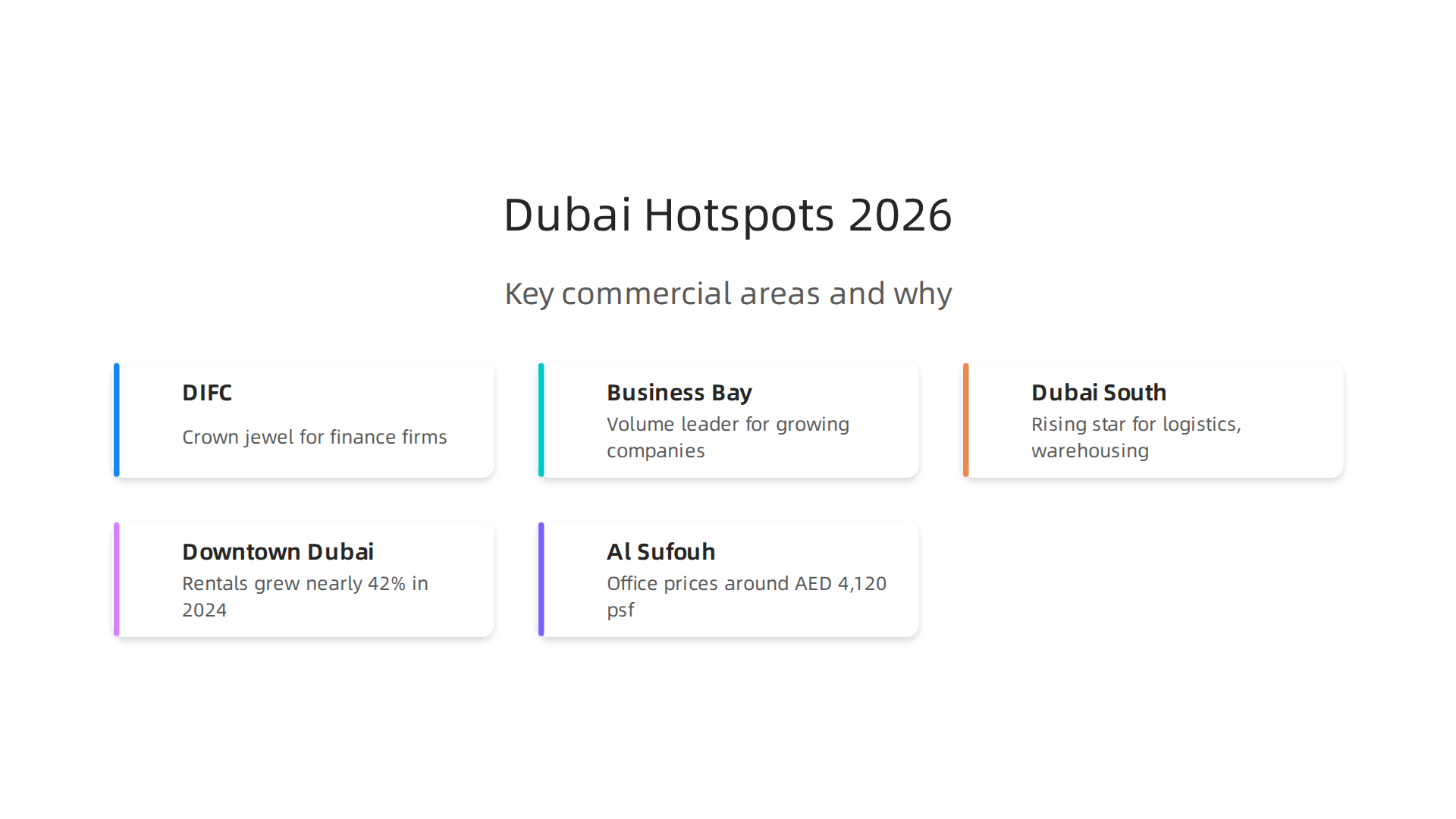
DIFC remains the crown jewel for finance and banking firms. Rental rates there jumped over 38% in 2024. If you want prestige and a global address, this is it.
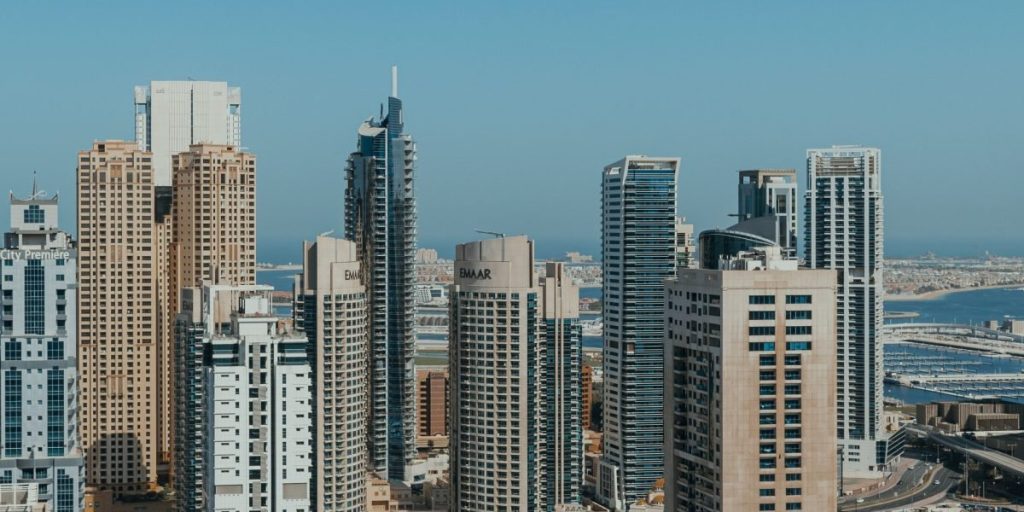
Business Bay is the volume leader. It recorded 1,343 office sales in 2024 alone. The area offers modern towers at slightly lower price points than DIFC, making it a favorite for growing companies.
Dubai South is the rising star for logistics and warehousing. With the Expo 2020 legacy and proximity to Al Maktoum International Airport, this corridor attracts businesses that need space to move goods.
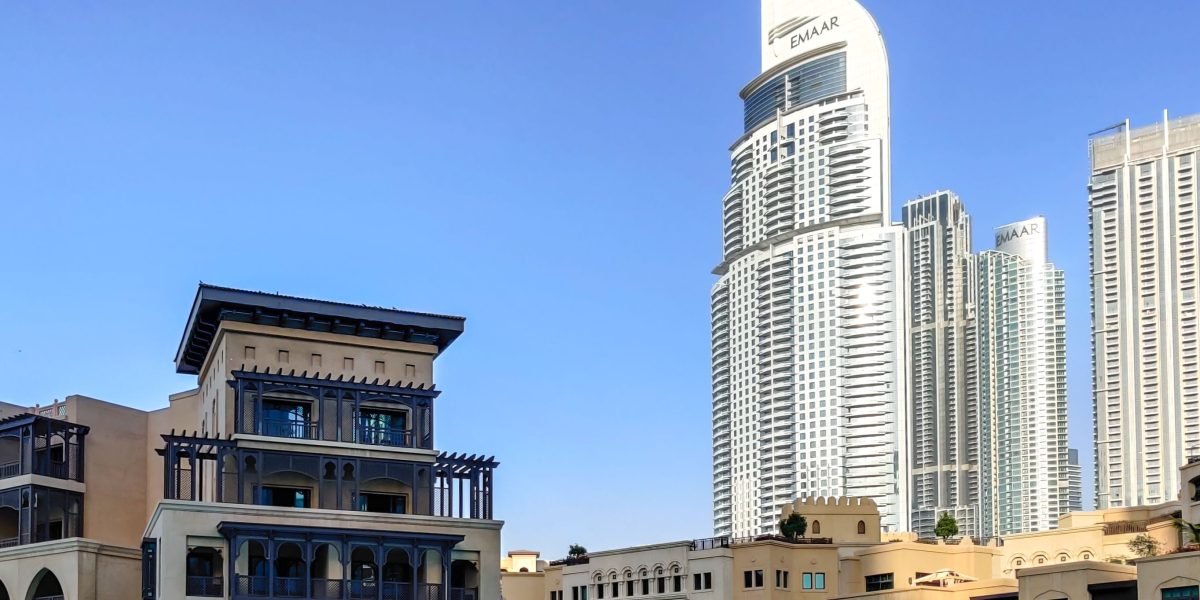
Downtown Dubai and Al Sufouh also saw strong activity. Downtown rentals grew nearly 42% in 2024, while Al Sufouh office prices sat around AED 4,120 per square foot in January 2026.
What Is Trending in 2026
Three big shifts are shaping the market.
First, Grade A office space is in high demand. Corporate tenants want modern, efficient buildings with smart infrastructure. The business services sector drove 45% of total office requirements in 2024, followed by finance (22%) and tech (6%).
Second, flexible co-working spaces keep growing. More companies want short-term commitments and ready-to-use setups. This trend is especially strong in Business Bay and DIFC.
Third, retail space in emerging communities is booming. Prime mall retail transactions hit AED 2.15 billion in Q1 2026 alone, according to the Q1 2026 Commercial Transaction Overview. Locations like Dubai Hills and Mohammed bin Rashid City are drawing both retailers and shoppers.
A Market Built for Growth
The total commercial stock is expected to reach 9.7 million square meters by the end of 2026, up from 6.26 million. That is a 55% increase. Office prices rose 27% year-on-year in 2024, and rental rates climbed about 25%. Warehouses saw a 20% price jump in 2024 too.
These figures mean one thing: if you are looking for a commercial property for sale and lease, now is an active time to act. But you need to know where to focus.
That is why we built this guide. If you want to go deeper into how the market works and what steps to take next, check out our full Dubai commercial real estate market guide. It breaks down everything from pricing to legal steps.
The next section will walk you through the main property types you can choose from. Let us keep going.
Freehold vs Leasehold – Understanding Ownership Models
Before we talk about property types, you need to know the two main ways you can hold a commercial space in Dubai. The difference between freehold and leasehold affects your rights, costs, and long-term plans. This distinction matters whether you are searching for a commercial property for sale and lease because the model you choose changes everything.
What Is Freehold Ownership?
Freehold means you own both the building and the land underneath it. You have full rights to use, sell, or lease the property however you like. In Dubai, freehold ownership is available only in designated freehold zones. These areas include DIFC, Business Bay, Jumeirah Lake Towers (JLT), and Dubai South, among others.
Foreign investors can buy freehold property in these zones. According to the Dubai Real Estate Laws, Rules for 2026, and Regulations for Investors guide, expats can now obtain freehold ownership in designated areas and even transfer the property to their dependents. This is ideal if you are a long-term investor looking for stability and capital appreciation. If you are eyeing offices for sale in Dubai in a freehold zone, you get full control over the asset.
What Is Leasehold Ownership?
Leasehold gives you the right to use a property for a fixed period, typically between 10 and 99 years. You do not own the land. The land remains with the original owner or the government. Leasehold is common in areas where freehold is not available to foreigners. It is also popular for businesses that want a long-term presence without the full cost of buying the land.
For for lease commercial real estate, leasehold is often the structure used. The lease terms must be registered with the Dubai Land Department and the Ejari system. A quick look at the Commercial Leasing Guidelines for Tenants in Dubai explains that all commercial leases must be registered to be legally valid. Leasehold gives you peace of mind for a set period, but you do not build equity in the land.
Which One Should You Choose?
The right choice depends on your goals.
- Investment horizon: If you plan to hold the property for decades and want full ownership, go freehold. If you need space for a fixed number of years, leasehold works well.
- Budget: Freehold requires a larger upfront investment, including 4% DLD fee and 5% VAT. Leasehold usually has lower entry costs.
- Legal preferences: As a foreign investor, freehold is only possible in designated zones. If your desired location is outside those zones, leasehold is your option.
If you are still unsure, reading our complete guide on how to buy property in Dubai for foreigners can help you understand the full process.
Making the right choice early saves you time and money. If you want personalized advice based on your situation, reach out for a FREE Dubai Real Estate Consultation. Our expert can walk you through freehold and leasehold options that match your investment plan.
How to Evaluate Commercial Property Investment Potential
Now that you understand the difference between freehold and leasehold, it is time to look at the numbers. Knowing how to check a property’s potential helps you avoid bad deals and find the best opportunities.

Whether you are searching for a commercial property for sale and lease in Dubai or just starting out, these evaluation steps will guide you.
Key Financial Metrics You Need to Know
Three numbers matter most when checking investment potential.
Cap rate is the first one. It shows the return you get if you buy a property with cash. You calculate it by dividing the net operating income (NOI) by the property’s purchase price. A higher cap rate means higher potential return but also more risk. For commercial offices in Dubai, cap rates typically fall between 6% and 8% for Class A buildings. The Best ROI for Commercial Property in Dubai guide explains that a good cap rate and cash-on-cash return are what make a deal worthwhile.
Gross rental yield is the second metric. It measures how much income a property generates compared to its price. You get it by dividing the annual rent by the property cost and multiplying by 100. In Dubai, the average rental yield for commercial properties sits between 7% and 9% for offices, which beats residential yields. The Average Rental Yields in Dubai 2026 market insights show that apartments offer around 7.15%, but commercial yields can go higher.
Cash-on-cash return is the third number. It tells you the annual return based on the actual cash you put in. Divide your annual NOI by your total cash investment. This helps you compare properties when you use a loan.
Location and Future Infrastructure
Numbers only tell part of the story. Where the property sits matters just as much. Look at how close it is to major roads, metro stations, and airports. Dubai is always building new infrastructure, so check what is planned near the property. New metro lines and road expansions can push property values up fast. Areas near Expo City Dubai and the new Al Maktoum International Airport are worth watching.
Due Diligence Essentials
Before you sign anything, you must verify the property’s legal status. The title deed proves who owns the land. The No Objection Certificate (NOC) from the developer confirms you have permission to buy or lease. Service charges cover maintenance of common areas, and you need to know what they are each year. Strata regulations set the rules for shared spaces in multi-tenant buildings. Skipping these checks can cost you thousands.
For a deeper look at how to find the right property, check out this guide on how to find and buy the best commercial business property for sale in Dubai. It walks you through the search process step by step.
Taking the time to evaluate these factors now will save you headaches later. A little homework goes a long way in building a strong investment.
Step-by-Step Guide to Buying Commercial Property in Dubai
Once you know how to evaluate a property’s potential, it is time to take action. The process of buying commercial property for sale and lease in Dubai follows a clear path.
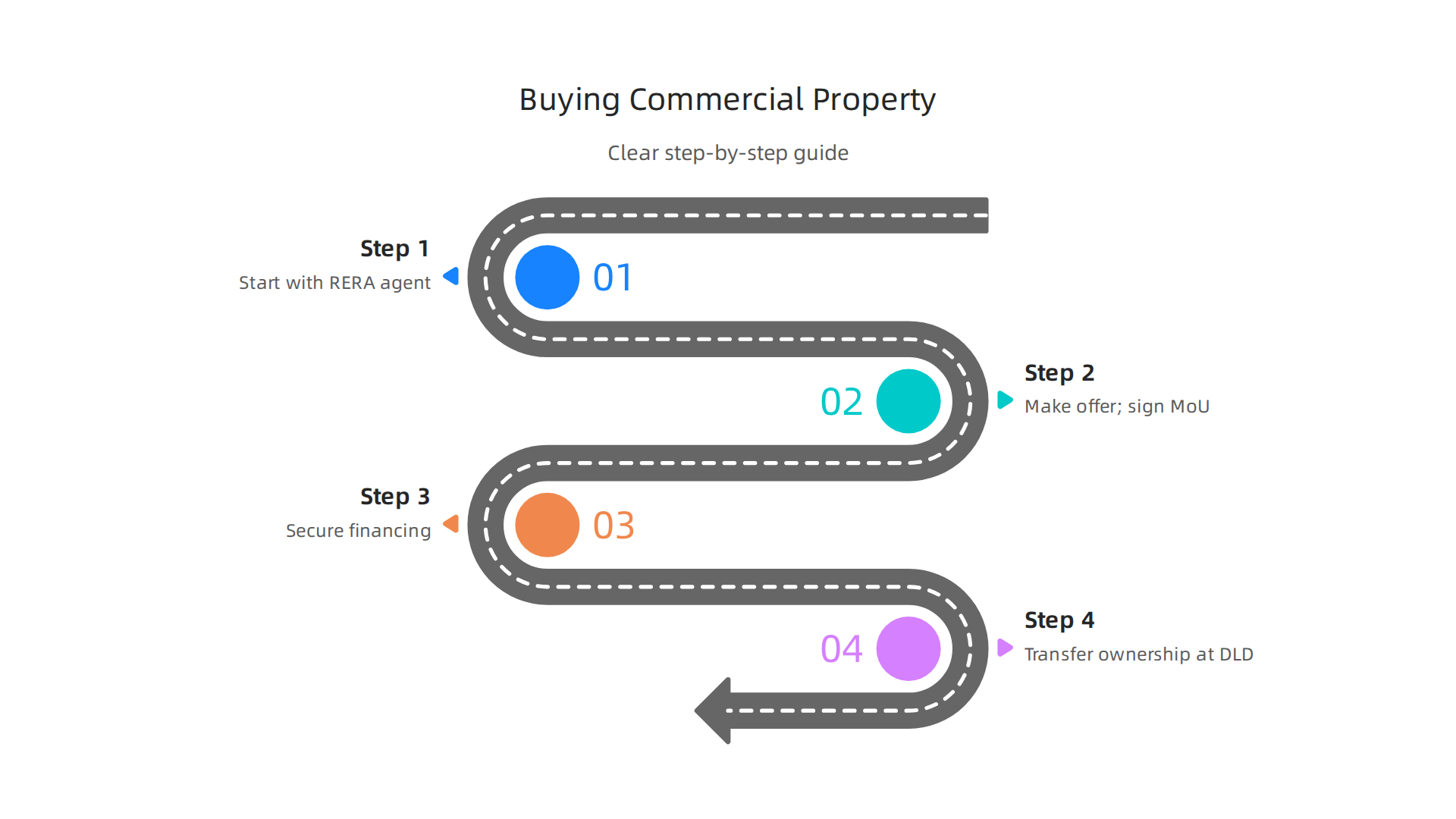
Here is a step-by-step guide to make it smooth.
Step 1: Start Your Search with a RERA-Registered Agent
Begin by looking at online listings for offices for sale in Dubai or other commercial spaces. But do not rely on listings alone. Work with a real estate agent registered with the Real Estate Regulatory Agency (RERA). A good agent knows the market and can help you shortlist properties that match your budget and goals. They also handle negotiations and paperwork. If you need help finding one, check out our guide on how to find a commercial real estate agent in Dubai you can trust.
Step 2: Make an Offer and Sign the MoU
When you find the right property, your agent will help you negotiate the price with the seller. Once both sides agree, you sign a Memorandum of Understanding (MoU). This document outlines the payment schedule, conditions of sale, and deadlines. You then pay a deposit, usually 10% of the purchase price, to secure the property.
The guide on buying and selling commercial properties in Dubai explains that the MoU locks in the deal and protects both buyer and seller.
Step 3: Secure Your Financing
You can pay in cash or take out a commercial mortgage. For non-residents, banks typically offer 50% to 60% loan-to-value (LTV). That means you need at least 40% to 50% down payment. Interest rates vary, so shop around. If you are using a loan, get pre-approval early so you know your budget. The guide on commercial real estate financing in Dubai walks you through the process and lender requirements.
Step 4: Transfer Ownership at the Dubai Land Department
This is the final step. Both buyer and seller (or their representatives) must be present at the Dubai Land Department (DLD). You submit documents like your Emirates ID, trade license (if applicable), NOC from the developer, and the title deed. You pay a 4% transfer fee plus a small admin fee. Once approved, the DLD issues the new title deed in your name. Congratulations, you are now a commercial property owner.
Get Expert Help Along the Way
Buying commercial property involves many steps, but you do not have to do it alone. A trusted agent and proper financing make all the difference. If you want personal guidance, reach out for a FREE Dubai Real Estate Consultation with an expert who knows the local market inside out.
Step-by-Step Guide to Leasing Commercial Property in Dubai
Buying a property is one path. But many businesses prefer to lease instead. Leasing gives you flexibility. You can test a location, scale up, or move when your needs change. The process for leasing commercial property for sale and lease in Dubai is different from buying. Here is a step-by-step guide to help you lease the right space.
Step 1: Understand the Three Main Lease Types
Dubai uses a few common lease structures. Knowing them helps you compare deals fairly.
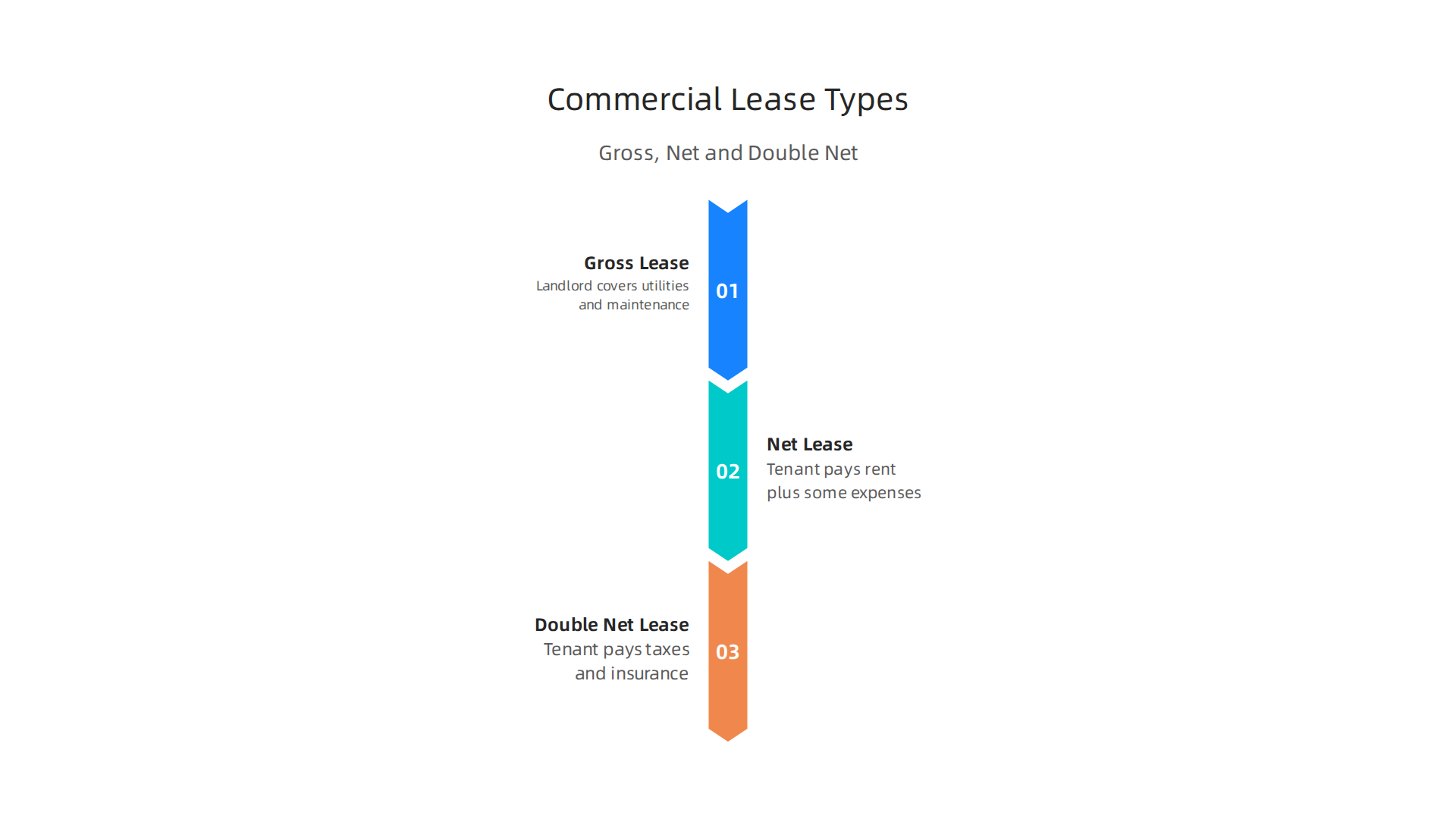
- Gross Lease: The landlord pays for utilities, maintenance, and building insurance. You pay a single monthly rent and that is it. Simple and predictable.
- Net Lease: You pay the base rent plus some of the building expenses. This might include property taxes, insurance, or common area maintenance. The exact split is written in the contract.
- Double Net Lease: You pay the base rent plus two major expenses, usually property taxes and building insurance. The landlord covers structural maintenance.
Each type shifts costs between you and the landlord. Always read the fine print. The guide on commercial property advice for buying, selling, and leasing in Dubai reminds you to clarify who pays for what before you sign.
Step 2: Negotiate Key Lease Terms
Lease terms are negotiable. Do not assume the first offer is final. Focus on these four items:
- Rent amount: Know the market rate for similar spaces. Use it as leverage.
- Escalation clause: Rent increases are common. Try to cap annual increases or tie them to a recognised index. This keeps your costs predictable.
- Maintenance responsibilities: Who fixes the AC, plumbing, and electrical? Get it in writing.
- Renewal options: Ask for the right to renew at a pre-agreed rent or a fixed increase. This protects you if the area becomes popular.
If you want help with this negotiation, you can secure a commercial real estate lease near you with a trusted agent who knows the local market.
Step 3: Complete Ejari Registration and Tenancy Contract
Once the lease is signed, you must register it with the Dubai Rental Authority through the Ejari system. This makes the contract legally binding. You will need:
- A signed tenancy contract (both parties)
- Your Emirates ID and passport copy
- The landlord’s proof of ownership (title deed)
- A valid trade license (if you are running a business)
The Ejari registration usually takes one to two days. After that, you can activate utilities, get your business license, and move in. Skipping this step can lead to fines or disputes later.
Get Professional Guidance
Leasing commercial property for sale and lease in Dubai involves legal and financial details. A small mistake in the lease type or rising rent clause can cost you. Working with a registered commercial real estate agent and a lawyer who specialises in property makes the whole process safer and faster.
Legal Framework – Regulations and Compliance for Commercial Property
Dubai’s commercial property market is tightly regulated. Knowing the key rules helps you avoid fines, delays, and disputes. Three main bodies oversee everything.
Dubai Land Department (DLD) handles property registration, transfers, and ownership records. All commercial leases must be registered with the DLD. Missing this step can lead to penalties. The DLD also works with the Real Estate Regulatory Authority (RERA) to enforce standards. RERA sets rules for how properties are advertised, rented, and managed. They also manage the Ejari system for lease registration. Following the latest commercial leasing guidelines for tenants in Dubai keeps you compliant.
Dubai Municipality focuses on building safety, health standards, and land use. Your commercial space must meet their zoning and safety requirements.
Foreign Ownership Rules
Foreign ownership of commercial property in Dubai depends on location. In freehold zones like DIFC, JLT, and Dubai South, non-GCC nationals can own property fully. In mainland areas, ownership is more restricted. The current Dubai real estate laws for 2026 and investor rights explain that expats can get freehold or leasehold rights in designated areas. Many free zones also allow 100% foreign ownership of businesses, which makes buying or leasing easier.
Dispute Resolution
Disputes happen. If you have a conflict with a landlord or tenant, the Rental Dispute Settlement Centre (RDSC) handles it. They offer faster, cheaper solutions than regular courts. In 2026, Dubai introduced better dispute resolution for construction and rental contracts, making the process smoother.
Before you sign any contract, protect yourself. You can hire a solicitor for a commercial property lease before signing in Dubai to review the fine print.
Get Expert Help
The legal side of commercial property for sale and lease in Dubai does not have to be overwhelming. A small mistake, like missing a registration or misunderstanding ownership rules, can cost you. Working with a trusted advisor makes everything simpler.
Buying, selling, renting, or investing in Dubai? Connect with Ayaz Salman for a FREE Dubai Real Estate Consultation to get personalised guidance.
Financing Options and ROI Analysis for Commercial Properties
Now that you understand the legal side, let’s talk about money. How do you pay for a commercial property, and how do you know if it is a good deal?
Commercial Mortgage Products
Financing a commercial property for sale and lease works differently than buying a home. Banks in Dubai offer commercial mortgages, but the rules are strict. For non-residents, the loan-to-value (LTV) ratio is usually 50% to 60%. That means you need a 40% to 50% down payment. Interest rates for commercial mortgages in 2026 range from 5% to 7%, depending on your profile and the property type. Repayment terms are typically 5 to 15 years.
If you are an end-user looking for offices for sale in Dubai, you might qualify for better terms. Investors should expect higher rates and shorter repayment periods. For a full breakdown of what lenders offer, check this guide on commercial real estate financing in Dubai 2026.
Calculating ROI
You need three main numbers to judge a property: cap rate, net operating income (NOI), and cash-on-cash return.
Cap rate is the most popular metric. It shows your unleveraged return. The formula is simple: NOI divided by property value. A higher cap rate means a higher potential return but often more risk. In Dubai, cap rates for commercial properties in 2026 range from 6% for warehouses to 9% for prime mixed-use spaces. Office spaces average about 8.5%. If you are searching for for lease commercial real estate, understanding cap rates helps you compare different options.
Cash-on-cash return measures the cash you actually earn against the cash you invested. You divide the annual NOI by your total cash invested. This number tells you how quickly your money is working.
NOI is your rental income minus operating expenses. This includes maintenance, management fees, insurance, and vacancy costs. Dubai’s average rental yield for commercial properties sits around 6.68% as of early 2026, with apartments outperforming villas. For the latest numbers, check this 2026 market insights report on average rental yields in Dubai.
Tax Advantages
One big reason investors choose Dubai: there is no annual property tax. That saves you a lot of money compared to cities like London or New York. However, VAT of 5% applies on new commercial properties under certain conditions. Make sure to factor this into your total cost.
When evaluating commercial real estate near me, the combination of high yields, no property tax, and stable regulatory framework makes Dubai a strong choice for commercial investment.
How to Choose the Right Commercial Real Estate Agent in Dubai
Once you know your numbers and financing options, the next step is finding the right agent to help you execute. A good agent does more than show you properties. They guide you through market pricing, negotiations, and paperwork.

Here is how to pick someone you can trust.
Look for RERA Certification
Every legitimate real estate agent in Dubai must hold a valid RERA broker card. This card proves they passed the required training and exam from the Dubai Real Estate Institute. You can check an agent’s credentials quickly by searching the Dubai Land Department’s online list of licensed RERA brokers in Dubai. If an agent hesitates to share their RERA number, walk away. For more detail on what makes an agent trustworthy, read this guide on how to choose real estate brokerage companies in Dubai for commercial property.
Ask About Local Market Knowledge
An agent who specializes in commercial real estate near me should know the vacancy rates, rental trends, and future development plans for specific areas. Ask them: “Which office towers in Business Bay have the lowest vacancy right now?” or “What is the average lease rate for a warehouse in Al Quoz?” The best agents give you concrete answers, not vague promises.
Check References and After-Sales Support
Request two or three client references from recent commercial transactions. Call those clients and ask if the agent followed through after the deal closed. Did they help with paperwork? Were they reachable when issues came up? Strong after-sales support matters, especially for offices for sale in Dubai where handover can involve multiple agencies.
Watch for Red Flags
Avoid agents who pressure you to sign quickly, refuse to put fee structures in writing, or avoid answering direct questions about RERA rules. Transparency is non-negotiable. A good agent will walk you through their commission structure, explain any extra charges, and give you a clear timeline.
Ready to move forward? Buying, selling, renting, or investing in Dubai? Connect with Ayaz Salman for a FREE Dubai Real Estate Consultation to discuss your needs and find the right agent for your commercial property for sale and lease search.
Future Trends in Dubai Commercial Real Estate
The Dubai commercial real estate market keeps changing fast. In 2026, three big trends are shaping how people find commercial property for sale and lease. First, flexible workspaces and co-working spaces are growing. More small and medium businesses need short-term, movable offices because of hybrid work. This means more offices for sale in Dubai are being designed as flexible layouts that can adapt over time.
Second, technology is changing everything. PropTech tools like virtual tours let you view a space from anywhere. AI helps manage buildings more efficiently, and blockchain is starting to handle lease agreements and transactions securely. These tools make finding for lease commercial real estate faster and safer.
Third, sustainability is now a top priority. New buildings aim for green certifications like LEED and Estidama. Older buildings are getting energy-efficient upgrades. If you are searching for commercial real estate near me, ask about the building’s green credentials. It can lower your utility bills and increase property value over time.
These trends mean you need a skilled agent who understands the latest market shifts. Use the Dubai Land Department official list of licensed real estate brokers to verify your agent’s credentials. For a deeper look at where the market is heading, check out this Dubai commercial real estate market guide for 2026.
Summary
This guide is a practical roadmap to Dubai’s commercial real estate market in 2026, aimed at business owners and investors who want to buy or lease offices, retail or industrial space. It starts with a market snapshot and hot zones — DIFC, Business Bay, Dubai South, Downtown and Al Sufouh — then explains ownership models (freehold vs leasehold) and the legal steps you must follow. You’ll learn the key financial metrics (cap rate, NOI, cash-on-cash, rental yield), how to run due diligence, and the exact steps to buy or to sign a commercial lease, including Ejari registration. The guide also covers financing options and expected LTVs, what to negotiate in leases, and how to pick a RERA-registered agent who protects your deal. Finally, it highlights 2026 trends — flexible workspaces, PropTech, and sustainability — so you can pick assets built to perform. After reading, you’ll know where to focus, which numbers to check, and which professionals to hire to execute safely.