

Dubai’s commercial property market offers some of the highest yields in the world. But here is the thing. Those returns do not come cheap. To buy an office, a warehouse, or a retail space in a prime location, you need serious capital. And how you get that capital matters just as much as which property you pick.
Many investors jump into the market without a clear financing strategy.

They look at properties first and worry about the money later. That approach often leads to delays, lost opportunities, or paying too much in interest. The truth is, the difference between a profitable deal and a break-even one often comes down to your loan terms.
In 2026, the landscape is more complex than ever. You have traditional bank mortgages, Islamic finance options, and creative developer payment plans. Each has its own rules, rates, and approval timelines. To make smart choices, you need to understand how they compare. That is why we put this guide together. We want to help you cut through the noise and find the right path for your situation.
Right now, lenders in Dubai are offering some of the most competitive rates in recent years. Major banks have been rolling out fixed mortgage rates that make financing more predictable. According to a recent market report, buyers are locking in fixed mortgage rates in Dubai dropping to 3.75% to protect themselves from future rate changes. That kind of certainty can make a huge difference when you are planning your investment.
But rates are just one piece of the puzzle. You also need to know about loan-to-value limits, documentation requirements, and which lenders specialize in commercial loans rather than residential mortgages. The rules for financing commercial real estate are different. They often require larger down payments and more financial history.
This article walks you through every option available. From traditional bank loans to Sharia-compliant structures, we explain how each works and who they work best for. You will also find a step-by-step guide to financing commercial real estate in Dubai that covers the exact process from application to approval.
If you are ready to move forward but want a second opinion from someone who knows the Dubai market inside and out, consider getting expert guidance. You can connect with Ayaz Salman for a FREE Dubai Real Estate Consultation to ask questions about your specific financing situation.
In the next section, we look at the main types of commercial loans available in Dubai and how to choose the right one for your property goals.
Traditional Bank Loans and Commercial Mortgages
When most people think about financing commercial real estate in Dubai, traditional bank loans are the first option that comes to mind. Major lenders like Emirates NBD, FAB, ADCB, and HSBC all offer commercial mortgages. But the rules for these loans are very different from residential home loans.
Bigger Down Payments
Commercial properties require more money upfront. Banks typically ask for 30% to 50% down. That is much higher than the 20% you might need for a home. If you are looking at a AED 3 million office space, expect to bring AED 900,000 to AED 1.5 million in cash. This higher barrier helps protect the lender and shows you are serious about the investment.
Fixed vs Variable Rates
You have two main rate options. Fixed rates lock in your interest for one to five years. This makes your monthly payments predictable and easy to budget for. Variable rates change based on the Emirates Interbank Offered Rate, or EIBOR, plus a fixed margin set by the bank. When EIBOR is low, variable rates can save you money. But they can also rise over time.
Emirates NBD is one of the major players in this space. They offer a dedicated commercial mortgage for ready-built properties.
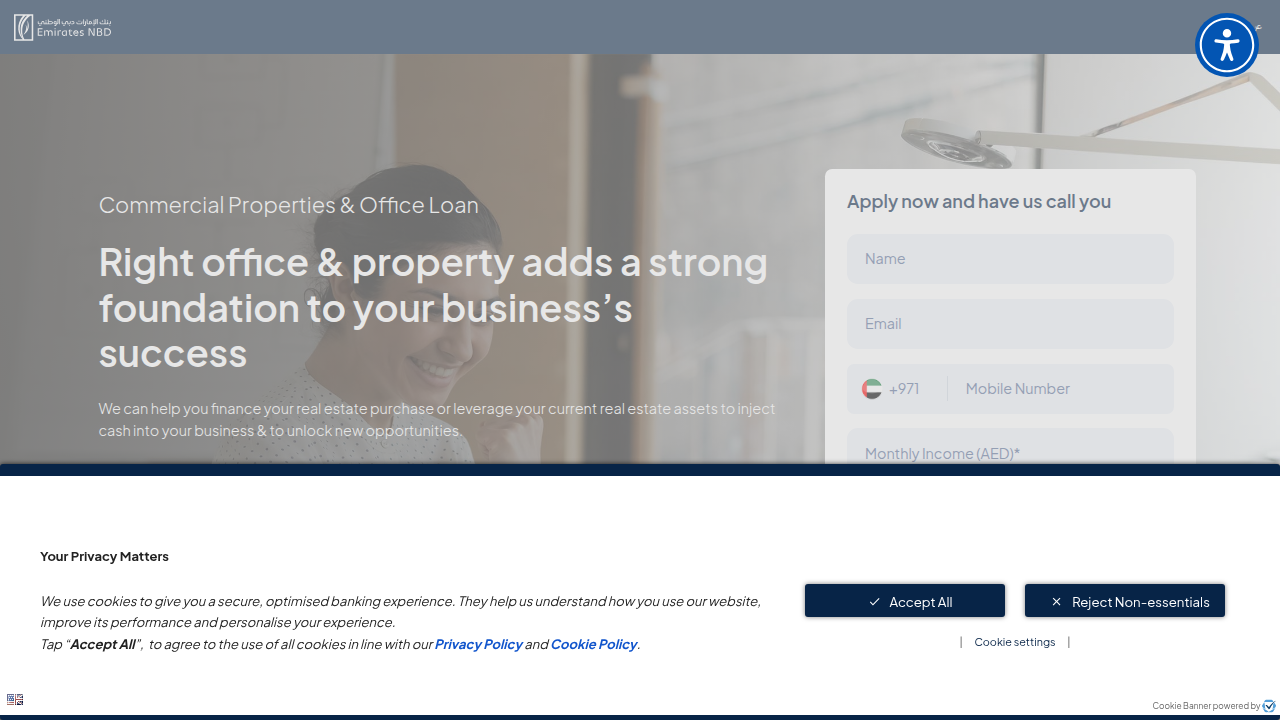
Their Commercial Property and Office Loan covers up to AED 7 million with a maximum loan-to-value of 70%. Other banks have similar products, though the exact terms vary from lender to lender.
What Banks Look For
Lenders check a few key things when you apply for a real estate commercial loan.
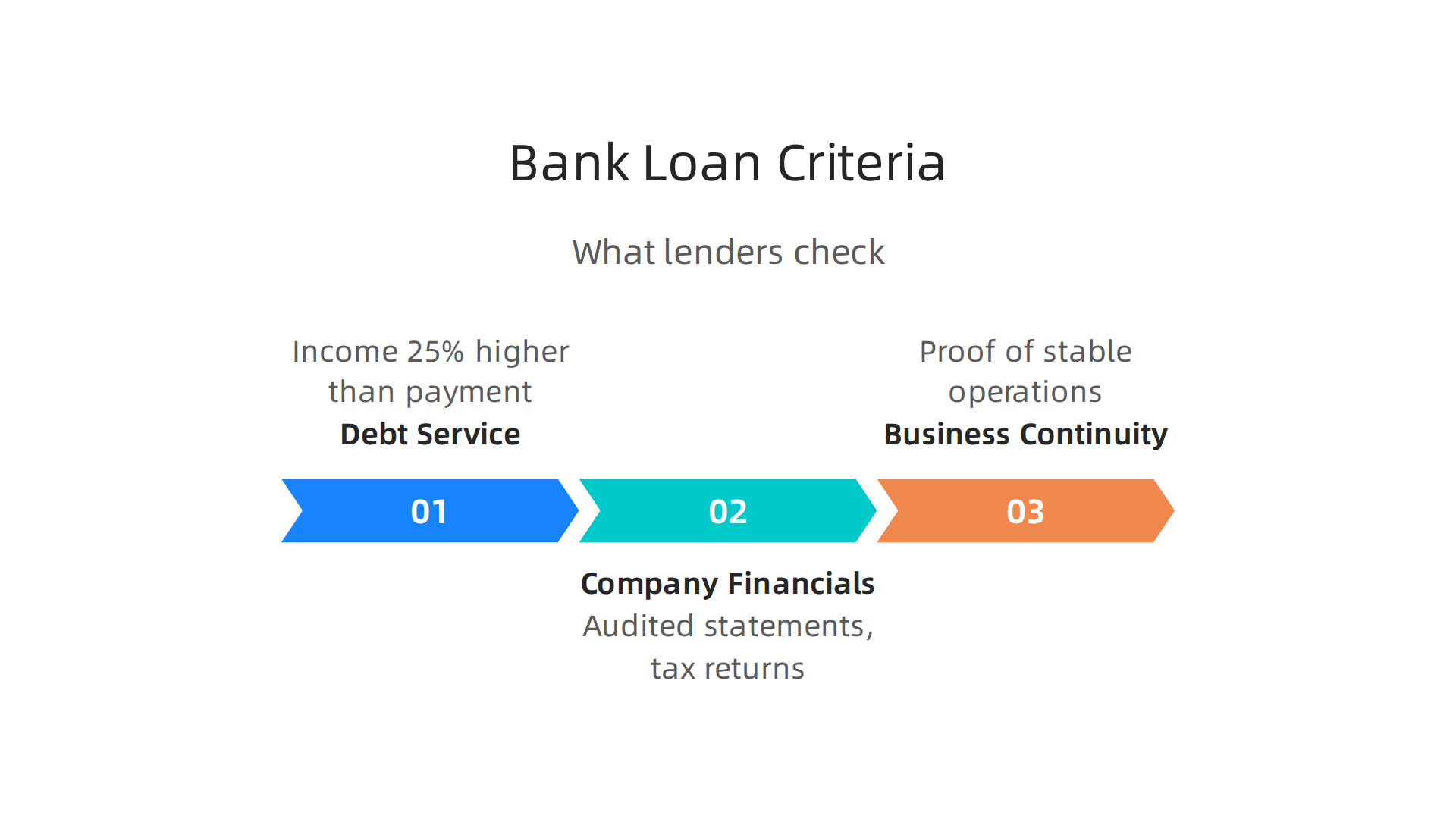
The most important is your debt service coverage ratio, or DSCR. This compares your business income to your loan payments. Most banks want a DSCR of at least 1.25 to 1. That means your income should be 25% higher than your monthly payment.
Banks also review your company financials, tax returns, and bank statements. If you are self-employed, expect stricter checks. You may need to provide audited financial statements and proof of business continuity to show your company is stable.
Rates and Prepayment Rules
Fixed rates for qualified borrowers in 2026 start around 3.99% at banks like FAB, according to their Mortgage Loan for Residences in UAE page. Variable rates usually run EIBOR plus 1.4% to 1.8%. One thing to watch for is prepayment penalties. Some banks charge a fee if you pay off the loan early. Others allow early settlement with minimal charges. Always ask about this before you sign.
Ready to move forward with a traditional bank loan? Our guide on commercial real estate loans in Dubai walks you through the full application process step by step.
Islamic Finance: Murabaha, Ijara, and Sukuk for Commercial Real Estate
Not everyone feels comfortable with interest‑based loans. If you prefer Sharia‑compliant options, Dubai has strong alternatives. Islamic finance follows the principle of no interest (riba) and no uncertainty. Instead of lending you money at interest, the bank buys the property and sells it to you at a fixed profit, or leases it to you until you own it.
Murabaha: Cost‑Plus Financing
Murabaha is the most common Islamic structure for commercial property. Here is how it works. You find a property you want. The bank buys it from the seller. Then the bank sells it to you at a higher price, which you pay in fixed installments over time. No interest is involved. The profit rate is set at the start and never changes.
Dubai Islamic Bank offers a specific Murabaha program for buildings.
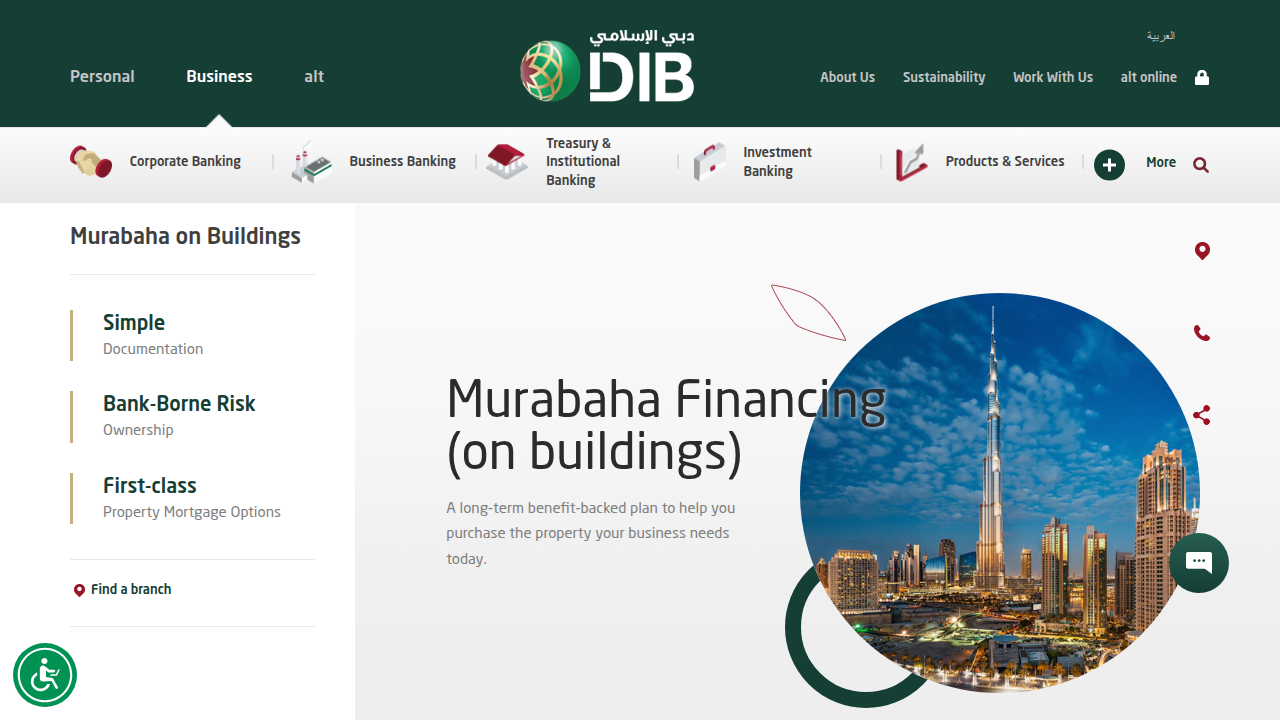
They require a minimum down payment of 25% and allow up to 10 years to repay. You can pay quarterly, semi‑annually, or annually. The profit rate stays fixed, so your payments never rise unexpectedly. For full details, check their Real Estate Murabaha On Buildings page.
Other banks in Dubai also offer Islamic mortgages. For example, Emirates Islamic Bank, Abu Dhabi Islamic Bank, and FAB Islamic have similar products with profit rates starting around 3.45% to 3.6% per year, depending on the property and your profile. The exact terms vary, so it pays to compare.
Ijara: Lease‑to‑Own
Ijara is like renting with a promise to buy. The bank buys the property and leases it to you. Your monthly payments include rent plus a small portion that goes toward ownership. At the end of the lease term, the property transfers to your name. This can be a good fit if you want lower upfront costs and the flexibility to move out if your business needs change.
Sukuk: Islamic Bonds for Big Projects
For larger commercial developments, Sukuk (Islamic bonds) are another option. Instead of paying interest, Sukuk investors earn a share of the profits from the project. This appeals to ethical investors who want to avoid interest altogether. Sukuk are commonly used for large‑scale office buildings, shopping centers, and mixed‑use developments in Dubai. The Sharia-Compliant International Real Estate in 2026 article explains how these instruments work for cross‑border investors.
How to Choose the Right Structure
Your choice depends on your cash flow, how long you plan to hold the property, and your comfort with fixed versus variable costs.
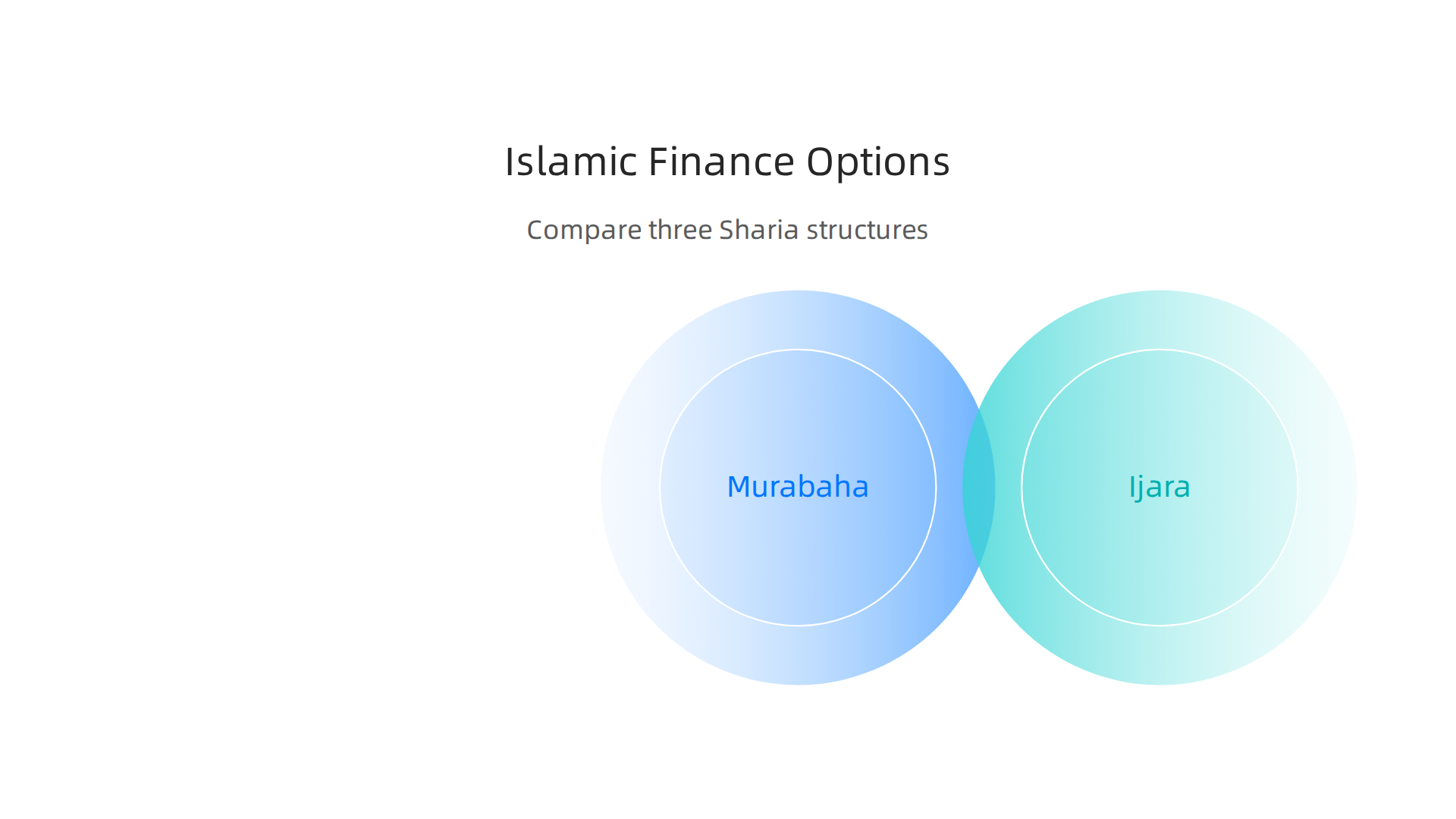
Murabaha works well if you want predictable payments. Ijara gives you more flexibility to walk away if needed. Sukuk is best for large projects where you want to share the risk with other investors.
If you are unsure which option fits your situation, a good next step is to read a commercial real estate financing guide that walks through all the major lenders and their requirements.
Get Help from a Local Expert
Navigating Islamic finance can feel overwhelming, especially with different banks offering different terms. A free talk with someone who knows the market can save you time and money.
FREE Dubai Real Estate Consultation
Developer Financing and Payment Plans
Bank loans and Islamic mortgages are not the only ways to handle financing commercial real estate in Dubai. Many developers offer their own payment plans directly, especially for off-plan properties. These plans can reduce how much cash you need upfront and give you more breathing room during construction.
How Developer Financing Works
Instead of you getting a loan from a bank, the developer sells you the property on a schedule.

You pay in installments while the building is being built. Some plans even let you pay after you move in. The total price is usually fixed from the start, so you know what your installments will be.
A typical off-plan payment plan might look like this:
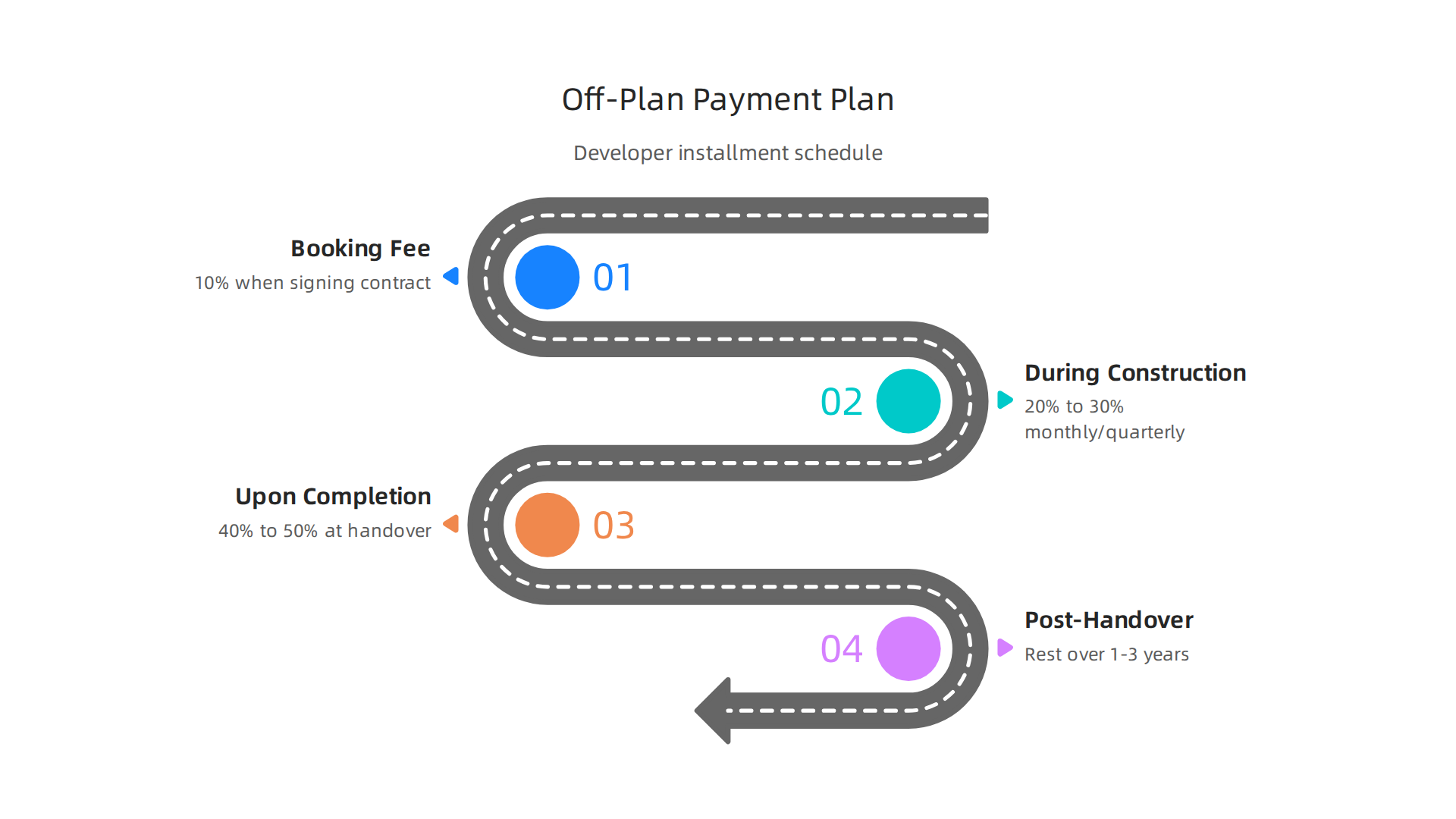
- 10% booking fee when you sign the contract
- 20% to 30% spread across monthly or quarterly payments during construction
- 40% to 50% due upon completion (handover)
- The rest over one to three years after handover
For example, a deal described in this commercial property ROI guide used a 50/50 split: half during construction and half at handover. That kind of structure can lower your real estate commercial loan burden significantly.
Post-Handover Payment Plans
Some developers go one step further and extend payments into the occupancy period. You take possession of the commercial unit and start using it, but you keep paying the developer in installments for another year or two. This can be very helpful if your business cash flow is still building.
But there is a catch. The total purchase price on a post-handover plan is often higher than if you paid the full amount at handover. Developers add a premium for the flexibility. Always compare the total cost against a conventional or Islamic bank loan before deciding.
Why You Must Check the Developer First
Developer financing is only as safe as the developer offering it. Dubai requires developers to keep buyer payments in a regulated escrow account. This money is used only for construction costs. If the developer fails, the escrow protects your payments. But not all developers are equal. Some have a track record of delays, lower‑quality builds, or even project cancellations.
Before you sign any commercial loans for real estate agreement with a developer, research their history. Look at their past projects, read reviews, and ask your agent about their reputation. A good developer will be happy to share references.
One way to start is by reading a trusted 2026 Dubai commercial real estate market guide that covers developer reputations and off‑plan trends. This kind of research helps you avoid costly mistakes.
When Developer Financing Makes Sense
This option works best when you:
- Want to keep your bank credit lines open for other deals
- Need lower upfront capital to get started
- Plan to hold the property for the long term and can afford a slightly higher total cost
- Trust the developer and their escrow arrangements
If you prefer to keep your cash for renovations or business operations, developer payment plans can be a smart tool in your commercial real estate lender toolkit. Just run the numbers carefully and compare with bank options to see which path costs less over time.
Alternative Financing: REITs, Private Equity, and Crowdfunding
Bank loans and developer payment plans are not the only ways to handle financing commercial real estate in Dubai. You have other options that offer different benefits. Some give you more flexibility. Others let you start with less cash.
Real Estate Investment Trusts (REITs)
Maybe the most popular alternative is a Real Estate Investment Trust, or REIT. Think of a REIT like a basket of commercial properties. You buy shares in the company, and you earn a portion of the rent those properties collect.
The best part is liquidity. You can trade REIT shares on the Dubai Financial Market just like a stock. You are not stuck owning a physical building. If you need your cash back, you can sell your shares quickly. This makes REITs a very flexible tool for getting commercial property exposure without a huge down payment.
You can learn more about how these work in this guide on Understanding REITs in Dubai. For a current example, you can see the property portfolio and performance on the ENBD REIT website.
Private Equity and Family Offices
For larger deals, private equity funds and family offices are another path. These groups pool big amounts of money from wealthy investors. They use that money to buy entire buildings or large commercial portfolios.
They often offer more flexible terms than a standard bank. You can negotiate the structure of the deal directly. This is very different from a fixed loan product.
But there is a trade off. These investments usually require a high minimum contribution. The risk is higher, but the potential returns are bigger too. You can read about the numbers behind these strategies in this post on UAE real estate IRR strategies.
Real Estate Crowdfunding
Crowdfunding is a newer option that is slowly growing in Dubai. Online platforms allow many small investors to pool their money together to fund a single property project.
For commercial property, this is still a niche method. It is not as mature as REITs or private equity. That means you must do very careful due diligence. Always check the platform’s track record and the specific terms of the deal. A good comparison of different property types is available in this commercial vs residential property investment in 2026 guide.
Summing It Up
These alternative methods give you more ways to approach your next commercial real estate lender decision.

Maybe you choose a REIT for easy entry and liquidity. Or perhaps you go with private equity for a bigger, more flexible deal.
The right choice depends entirely on your goals, your budget, and your risk comfort. If you want to talk through which path fits you best, reach out for a FREE Dubai Real Estate Consultation with a local expert.
You can also explore how to get started directly by reading this guide on how to find and buy commercial business property in Dubai.
Government-Backed Schemes and Free Zone Incentives
You have one more big advantage when looking at financing commercial real estate in Dubai. The government itself has created programs to help you. These schemes lower your costs and make the whole process smoother.
Free Zones with Built-in Support
Dubai’s free zones are famous for a reason. Areas like the Dubai International Financial Centre (DIFC), Dubai Multi Commodities Centre (DMCC), and Abu Dhabi Global Market do more than just offer tax benefits. They also provide tailored financing support for businesses that set up inside them.
When you lease or buy a commercial real estate property in a free zone, you often get access to special lending partners. These lenders understand the free zone rules. They work with you on terms that match your business setup. Plus, the licensing process is bundled with the property deal. That saves you time and paperwork.
The DIFC is a great example. It is home to many financial firms and even the UAE’s largest Sharia-compliant REITs. For instance, you can see how the DIFC structure supports property investment by looking at the portfolio of Emirates REIT (reit.ae), which is incorporated right inside the free zone.
The strong demand in these areas is backed by real data. Recent reports show that Dubai commercial property market trends for 2026 (linkedin.com/posts/stevenleckie) highlight yields hitting 6 to 10% in prime industrial spots. That performance is partly driven by the advantages free zones offer.
UAE Central Bank SME Scheme and Emirates Development Bank
The UAE Central Bank runs a special scheme for small and medium businesses. It encourages local banks to offer commercial loans for real estate at subsidised rates. If your business qualifies as an SME, you can get a real estate commercial loan with better terms than a standard one.
Then there is the Emirates Development Bank. It provides direct financing for eligible commercial ventures.
Their loans focus on sectors the government wants to grow, like logistics, manufacturing, and tech. The interest rates are lower, and the approval process is designed to move faster.
These are not small programs. They are active in 2026 and can save you thousands in interest costs.
Visa Reforms and 100% Foreign Ownership
Here is another way the government helps. Recent visa reforms make it much easier for international investors to live and work in Dubai while managing their property. The Golden Visa, for example, gives long-term residency to property investors.
And since 2021, you can own 100% of a commercial real estate company in most sectors. You do not need a local partner anymore. This change removes a big barrier for foreign investors. It also makes lenders more comfortable approving a commercial real estate lender application because you have full control of the business.
If you want a full breakdown of how to structure your financing step by step, check out this guide on commercial real estate financing in Dubai (commercialrealestateagentsdubai.com/commercial-real-estate-financing-in-dubai-2026-your-step-by-step-guide-to-loans-rates-and-approval). It walks you through everything from application to approval.
These government-backed options give you another strong path to fund your next deal. They are worth exploring before you commit to any single lender.
How to Evaluate and Choose the Right Financing Option
By now you have a clear picture of the lenders and government programs available. But the real work is matching those options to your specific deal. Here is how to compare, align, and stress-test your choice.
Compare the Total Cost, Not Just the Rate
The interest rate is important. But it is only one piece of the puzzle. When you compare a real estate commercial loan from a conventional bank, an Islamic finance product, and a developer payment plan, you need to look at the full picture.
Start with the interest rate. Then add origination fees, processing fees, valuation fees, and legal costs. Many lenders also charge early settlement penalties. That matters if you plan to sell the property or refinance before the loan ends.
Islamic finance products often use a different cost structure. Instead of interest, you pay a profit rate or a rental fee. These can look similar on paper, but the underlying terms differ. Make sure you understand how the profit rate is calculated and whether it changes over time.
Developer financing may offer zero interest for a few years. But the property price is often higher to compensate. Run the numbers over the full term, not just the promotion period.
A good rule of thumb is to compare the total cost of capital across all options. This includes every fee, penalty, and adjustment. The 2026 commercial real estate outlook from Deloitte (deloitte.com/us/en/insights/industry/financial-services/commercial-real-estate-outlook.html) points out that the recovery in 2026 is driven partly by more flexible capital structures. That means you have choices. Do not let a low headline rate trick you into missing hidden costs.
Align Your Financing with Your Exit Strategy
Your investment horizon changes everything. If you plan to hold the property for ten years and lease it out, a long-term amortising loan from a bank or life insurance company makes sense. You get fixed payments and predictable costs.
If you plan to flip the property within two to three years, look for a bridge loan or a short-term facility. These loans have higher rates but lower total cost because you hold them for less time. They also give you the flexibility to sell without huge penalties.
If your plan is to lease and then sell later, consider an interest-only period. That keeps your monthly payments low while the property generates income. Then when you sell, you pay off the principal.
The same principle applies to commercial loans for real estate structures. A loan that works for a buy-and-hold investor may be a disaster for someone who needs to exit quickly. Match the product to your timeline.
Stress-Test with Professional Advisors
Even the best plan can fail if market conditions shift. That is why professional advisors and financial modelling are so valuable.

Work with a commercial real estate agent or a financial consultant who understands the Dubai market. They can help you build cash flow projections and test them against different scenarios. What happens if occupancy drops to 70%? What if interest rates rise by 2%? What if a major tenant leaves?
This kind of commercial real estate lender underwriting is standard for banks. They stress-test your deal from their side. You should do the same from your side. The 2026 commercial underwriting best practices guide (smartcapitalcenter.com/blog-post/2026-commercial-underwriting-key-principles-best-practices) emphasises that consistency in underwriting is critical. Use the same approach for your own analysis.
Run multiple scenarios. A base case, a conservative case, and a worst case. If your deal still works in the worst case, you have chosen the right financing.
Finally, do not go it alone. Getting professional advice saves time and prevents costly mistakes. For personalised help evaluating your options and finding the best lender for your situation, connect with an expert for a FREE Dubai Real Estate Consultation (https://wa.me/971527999193?text=Hi%20Ayaz%2C%20I%20found%20you%20through%20one%20of%20your%20Dubai%20property%20guides.%20I%20would%20like%20to%20have%20a%20free%20consultation%20with%20you.). They can walk you through the numbers and help you make a confident decision.
But before you finalise anything, there is another type of financing you should consider: Islamic finance. It works differently from conventional loans and is widely used in Dubai. That is what we cover next.
Documentation and Eligibility Requirements for Expatriates and Foreign Investors
You have found the perfect commercial property in Dubai. You have compared financing options and picked a lender. But then the bank asks for documents you did not expect. Your deal stalls for weeks. Frustrating, right?
That is why understanding the documentation and eligibility requirements upfront is so important. Whether you are an expatriate living in the UAE or a foreign investor buying from overseas, the paperwork varies. Being prepared saves time, money, and stress.
What Most Lenders Want to See
Banks and other lenders review your financial health before approving any commercial loans for real estate. For expatriates and foreign investors in Dubai, the standard checklist includes:
- Valid passport and UAE residence visa – Most conventional lenders require a valid residence visa. If you are a non-resident, you may need a UAE bank account first.
- Company financial statements – If you are funding the purchase through a business, lenders ask for audited financials for the last two to three years.
- Personal net worth proof – This includes bank statements, investment portfolios, and property ownership documents. Lenders want to see you have enough assets to cover the down payment and any shortfall.
- Proof of income – Salary certificates or business profit statements help show you can repay the loan.
- Local partner documentation – If you are investing in a mainland company (not a free zone), you may need a local partner. That partner’s details and Emirates ID are also required.
Non-residents face stricter rules. Many lenders require a higher minimum down payment, often 40% or more. Some also ask for a larger security deposit or additional guarantees. The commercial real estate lender you choose will have its own underwriting criteria, but these basics apply almost everywhere.
How Proper Documentation Speeds Up Approval
Incomplete files can delay your deal by weeks. A broken link, a missing signature, or a bank statement not in English can stall the process. Lenders use the underwriting process to cross-check every number. If your documents are clean, the underwriter can move faster.
The commercial real estate lending handbook from the OCC (occ.gov/publications-and-resources/publications/comptrollers-handbook/files/commercial-real-estate-lending/pub-ch-commercial-real-estate.pdf) emphasizes that lenders must assess the borrower’s capacity to meet repayment from available cash flow. That assessment only works if your financial documents are complete and accurate.
So before you apply, gather everything. Make digital copies. Translate non-English documents. Check that your company trade license and tenancy contracts are current. This small upfront effort can cut approval time from weeks to days.
For a full breakdown of what you need, read our guide on commercial real estate loans in Dubai. It walks you through the specific requirements for different visa and ownership structures.
One Last Tip: Start Early
Do not wait until you have signed a purchase agreement to think about documents. Start gathering them as soon as you begin property hunting. That way, when you find the right deal, you can move fast and close with confidence.
If you need help understanding your eligibility or assembling your paperwork, connect with an expert for a FREE Dubai Real Estate Consultation. They can review your situation and guide you to the right lender and financing structure for your needs.
Tips for Securing Financing as an Expat or Foreign Investor
You have your documents ready. But getting approved for financing commercial real estate in Dubai takes more than paperwork. It takes strategy. As an expat or foreign investor, you can increase your chances of success with a few smart moves.

Build a Strong Bank Relationship
Do not just apply to any lender. Choose a bank that understands expat profiles. Set up a meeting with a dedicated relationship manager before you even start looking at properties. That person can guide you through the process, explain what your specific commercial real estate lender needs, and speed up your application.
A good relationship manager knows which banks offer the best real estate commercial loan for non-residents. They can also help you fix small issues in your file before they become big delays. It is worth the time investment.
Structure Your Investment Through a UAE Company
Many foreign investors do not realize that setting up a company in a free zone or on the mainland can unlock better loan terms. Banks often offer lower rates and higher loan amounts to companies registered in the UAE. This is because the lender can see the business as more stable and easier to recover from if something goes wrong.
Think about this early. A mainland company can give you access to more local financing options. Free zone companies work well for specific business activities. Your choice affects the commercial real estate lender you can work with and the interest rates you will pay. For a deeper look at how UAE banks handle this, check out this resource on how UAE banks support commercial property investment.
Leverage Your Professional Network
The best deals in Dubai often never hit public listings. Off-market financing options exist too. But you only hear about them through trusted advisors. Your lawyer, tax consultant, or real estate agent can introduce you to private lenders, family offices, or alternative financing sources that do not advertise.
That is why building a strong team matters. Do not work alone. An experienced advisor knows who offers competitive commercial loans for real estate and can connect you directly. For a complete walkthrough of the entire process, see our step-by-step guide to commercial real estate financing in Dubai.
One More Pro Tip
Start building your lender relationships and your company structure at least three months before you plan to buy. That gives you time to explore all your options and pick the one that fits your goals best. With the right preparation, you can secure financing that works for you, not against you.
Summary
This guide explains how to finance commercial real estate in Dubai in 2026, showing why the financing choice can make or break your investment returns. It walks through the main options—traditional bank commercial mortgages, Sharia‑compliant structures (Murabaha, Ijara, Sukuk), developer payment plans, and alternative routes like REITs and private equity—and outlines who each suits. The article details key mechanics such as down‑payment expectations (often 25–50%), fixed vs variable pricing, DSCR requirements, and common bank documentation for expats and foreign buyers. You’ll also learn how government‑backed schemes and free‑zone support can lower costs, how to compare total cost of capital (including fees and prepayment rules), and practical steps to prepare an application and stress‑test scenarios. Finally, it gives tactical tips on building bank relationships, setting up UAE entities, and when to use advisors so you can move fast and confidently on the right financing structure.