Introduction
Is a Dubai property market crash on the horizon? That is the big question for anyone watching the emirate’s booming real estate sector.

After several years of eye-popping price growth, it is natural to wonder when the cycle might slow down. In 2026, the market still has plenty of momentum. The average price per square foot hit 1,976 AED in January 2026, an 18% jump from the year before, according to the Dubai Property Price Index 2026.
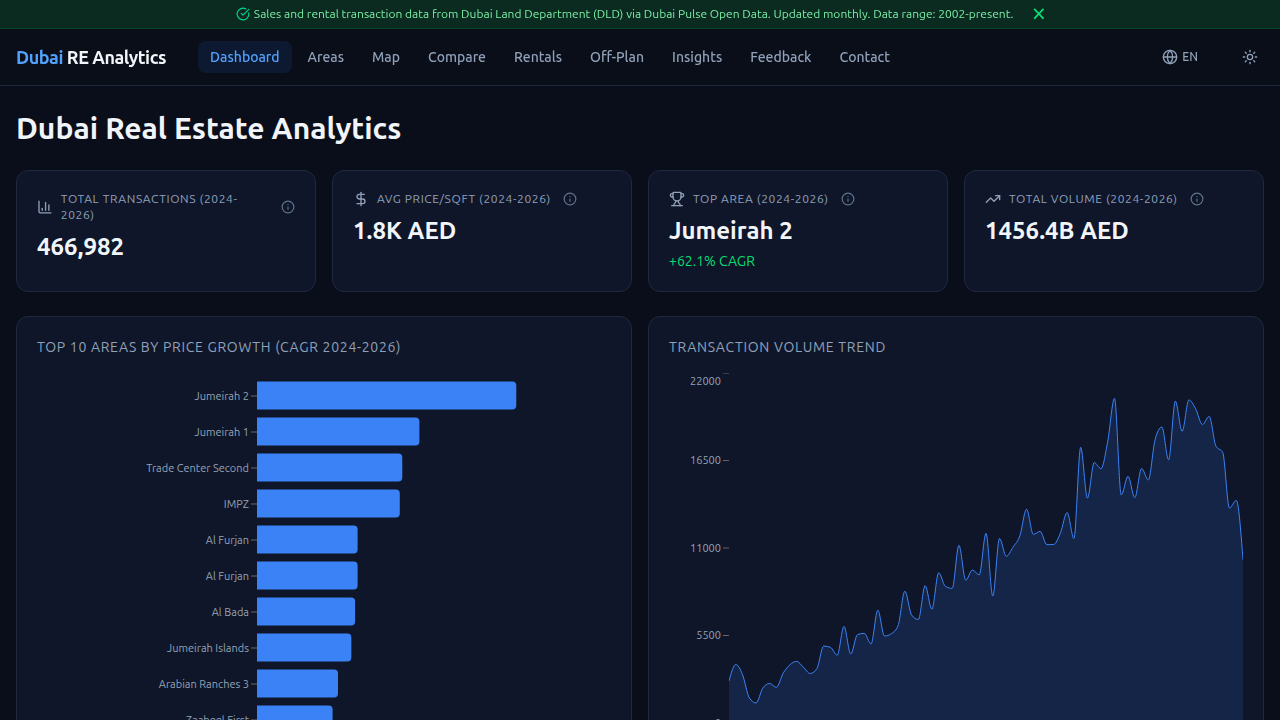
Yet the pace is clearly easing. Forecasts now point to 5% to 8% growth for the full year, down sharply from the double-digit gains of 2024 and 2025.
So what does this mean for you as an investor, buyer, or seller? This article takes a data-driven look at the key warning signs, historical corrections, and expert opinions. We will also explore the regulatory safeguards Dubai has put in place and lay out practical strategies to protect your money. For a broader look at today’s prices and top locations, check out our guide to buying property in Dubai in 2026.
And if you want one-on-one advice tailored to your situation, get a FREE Dubai Real Estate Consultation with a trusted local agent to help you navigate the uncertainty.
Understanding the Dubai Property Market Cycle
To really understand whether a Dubai property market crash is coming, you first need to look at how this market has always behaved. Dubai real estate moves in clear cycles. First comes a boom with fast price growth. Then the market plateaus. And sometimes it corrects, with prices dropping for a while.
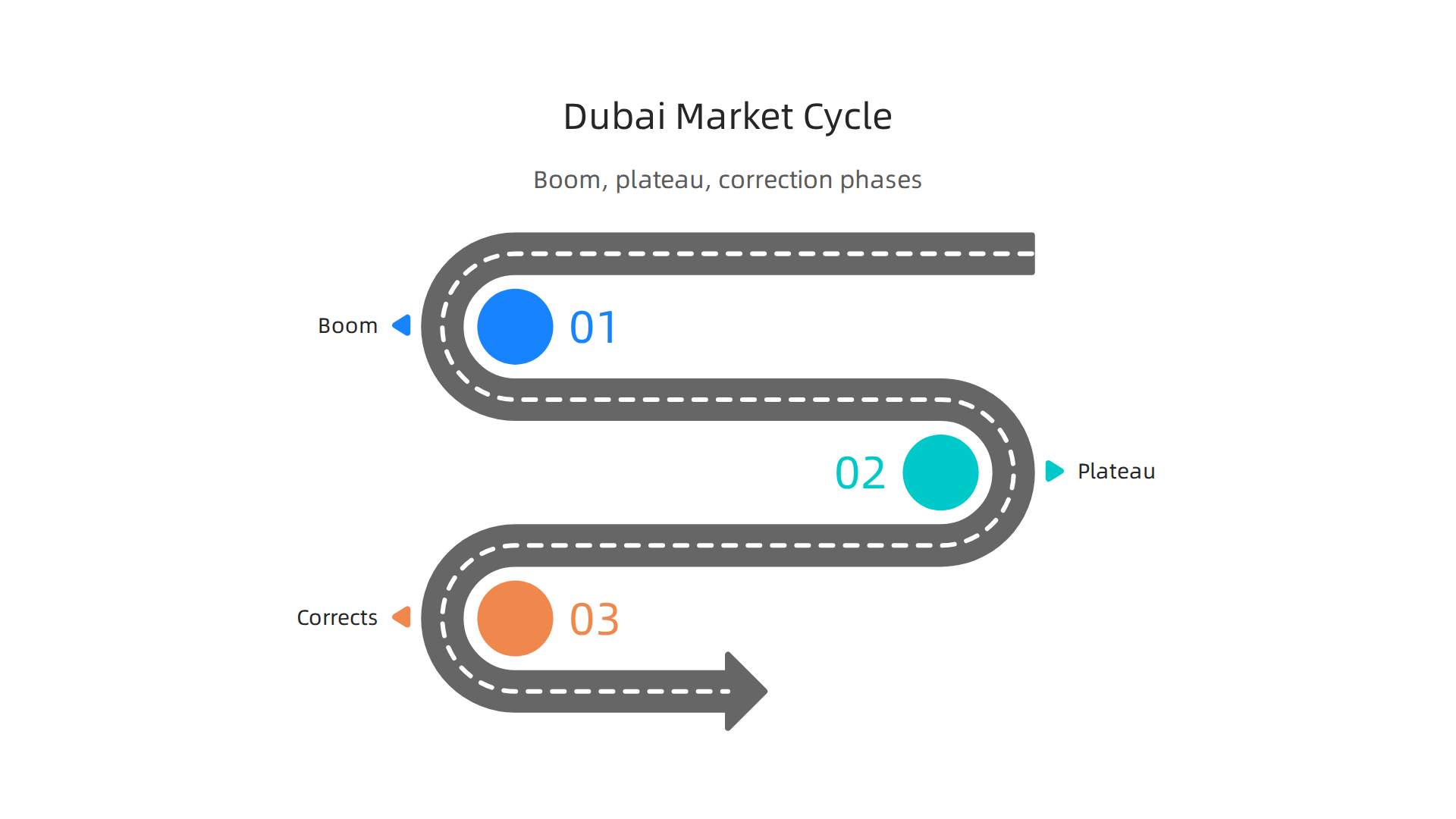
History shows this pattern clearly. In 2008, prices fell sharply after a massive run-up. Another slowdown happened between 2014 and 2019 when oversupply caught up with demand. The Dubai Land Department tracks this in its official Residential Sales Price Index, which shows those past peaks and troughs.

The COVID-era boom that started in 2020 pushed prices to new highs, but now we are seeing signs that the cycle is turning again.
Right now, we are in a phase that looks a lot like the top of previous cycles. Prices are elevated. New supply is hitting the market fast. And growth is clearly slowing. Forecasts from industry watchers suggest price appreciation will fall to 5% to 8% in 2026, a big drop from the 12% to 22% seen in 2024 and 2025, according to Property Price Forecasts Dubai 2026.
This does not guarantee a crash, but it does mean the easy money phase is ending. Understanding where we stand in the cycle is the single most important thing you can do as an investor. If you are planning your next move, our guide to commercial property for sale and lease in Dubai can help you compare current opportunities across different asset types.
Key Indicators That Signal a Potential Market Crash
So how do you know if the Dubai property market is heading toward a crash or just taking a normal breather? There are specific warning signs you can watch. No single indicator tells the full story. But when several flash at once, it is time to pay close attention.
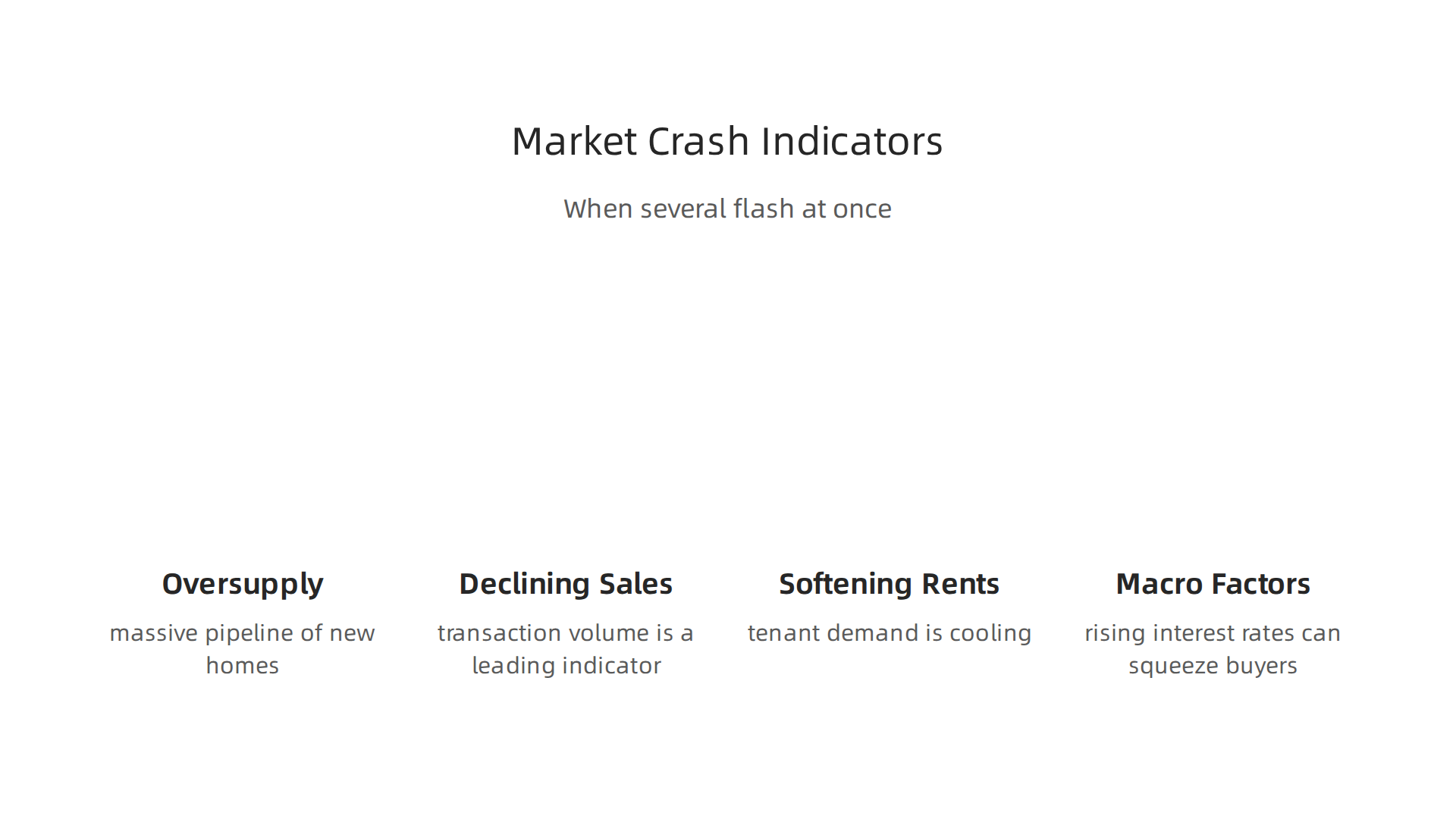

Oversupply of new units. Dubai has a massive pipeline of new homes coming to market. Nearly 96,500 units are planned for 2026 according to recent market reports. That is a lot of supply. If demand doesn’t keep up, prices can get squeezed. History shows that oversupply has been a key trigger in past corrections.
Declining sales volumes. Transaction volume is a leading indicator. It often peaks 6 to 12 months before prices start to fall. If you see fewer properties selling month after month, that is a red flag. Experienced analysts track these numbers closely. According to the experts at Fam Properties, tracking sales volume and days on market helps predict where the market is headed. They explain this in their breakdown of leading indicators for Dubai’s property market.

Softening rents. Rents are another early signal. When rental growth slows or reverses, it usually means tenant demand is cooling. In 2026, the market is seeing some signs of rental stabilization after years of sharp increases. That is not a crash signal by itself, but combined with other factors it matters.
Macroeconomic factors. Rising interest rates can squeeze buyers who need mortgages. In 2025 the UAE central bank cut rates, but global rate movements still affect how much people can borrow. Reduced foreign investment and geopolitical risks also weigh on confidence. If you are using financing, understanding the lending landscape is key. Our detailed guide on commercial real estate loans in Dubai 2026 explains how to secure financing even when conditions tighten.
The big takeaway: do not panic over one warning sign. A healthy market can have high supply or a slow sales month. A crash happens when multiple indicators move in the wrong direction at the same time. Keep an eye on oversupply, sales volumes, rents, interest rates, and buyer confidence together. That is the smart way to separate a normal correction from something worse.
If you want to talk through what you are seeing in the market and get personalized advice, reach out for a FREE Dubai Real Estate Consultation. A direct conversation can help you make sense of the numbers and plan your next move.
What Dubai’s Regulators Are Doing to Prevent a Crash
You might wonder if anyone is watching the big picture. The answer is yes. Dubai’s regulators are not waiting for trouble. They have been busy building a stronger safety net for the property market. The Dubai Land Department (DLD) and the Real Estate Regulatory Agency (RERA) have rolled out some serious changes in 2026.
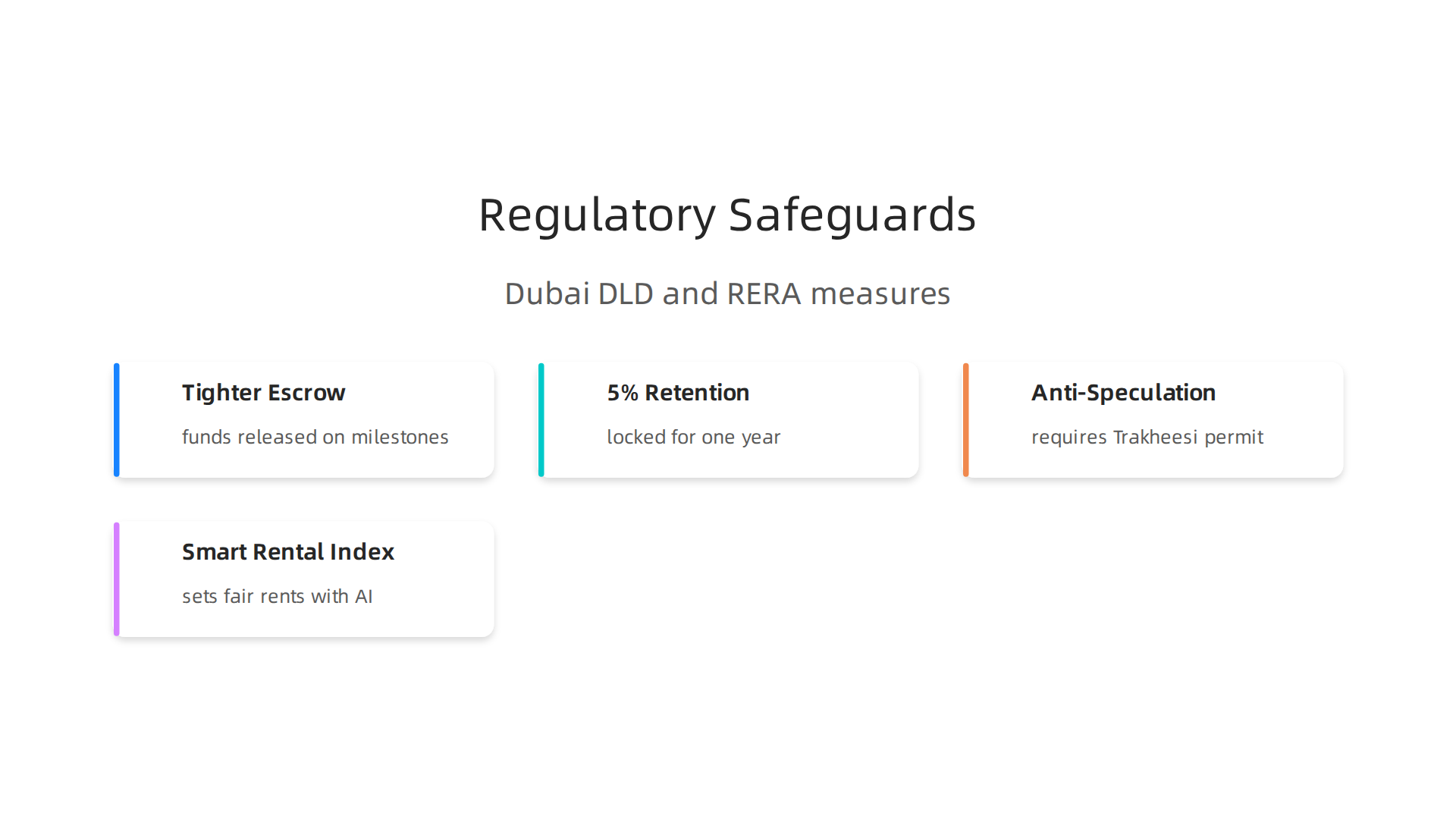
The biggest move is tighter control over escrow accounts. Developers used to have easy access to buyer money. Now things are different. Funds are released only when independent engineers confirm that specific construction milestones have been met. That protects your money from being spent on other projects. There is even a new rule that keeps 5% of the total project value locked in escrow for a full year after the building is handed over. This ensures developers finish the job properly before they get paid in full. These measures are part of the broader effort to reduce risk, as explained in the overview of how Dubai’s new real estate laws are making the market safer.
Another big change is the crackdown on speculation. RERA now requires every property ad to have a valid Trakheesi permit number. Sellers can list with only three brokers at a time. And any power of attorney used for a sale must be digitally verified and less than two years old. These steps make it much harder for flippers to manipulate prices.
The rental market has also been stabilized with the new Smart Rental Index. It uses real data and AI to set fair rent increases. Landlords cannot raise rent without 90 days notice, and the maximum increase is capped at 20%. This transparency helps keep the rental market balanced and stops sudden price spikes that can ripple into the sales market.
All these rules add up to one thing: a market built to handle shocks better. If you want to see how these regulations affect your own property search, reading the full guide to commercial property for sale and lease in Dubai can help you understand the new landscape. The regulators are not perfect, but they are learning from past crashes. That should give you more confidence to invest without constantly worrying about a sudden collapse.
How to Predict the Next Crash: Tools and Data Sources
Watching regulations is smart, but you also want to spot trouble before it hits. The good news? You do not need to be a data scientist to keep an eye on the market. Dubai actually shares a lot of useful numbers for free. You just need to know where to look and what to watch.
The first place to check is the Dubai Land Department (DLD). They publish transaction data through the Dubai Pulse open data portal. You can see exactly how many sales happened each month, at what prices, and in which areas. For example, the latest numbers show the market-wide average price per square foot hit 1,976 AED in January 2026, an 18% increase year-on-year. That kind of data, available through the Dubai Property Price Index 2026, helps you see if prices are rising too fast.
Next, look at RERA’s real estate indices. They track price trends across different property types and locations. When you combine that with the number of new project permits and how long properties stay on the market, you get a clearer picture. Industry experts also watch the property absorption rate. That measures how quickly available properties are being sold or leased. If absorption slows down while supply keeps growing, it can be an early warning sign.
Third-party analytics platforms add another layer. Sites like ValuStrat Research produce regular outlook reports with macroeconomic indicators like GDP growth and population density. These help you see the big picture behind the price numbers. And some platforms track things like mortgage approval rates and visa issuance. Historically, transaction volumes tend to peak 6 to 12 months before prices do. So if you see sales numbers sliding, it is worth paying attention.
Finally, do not rely on just one indicator. The most accurate forecast comes from combining multiple data points: transaction volumes, price indexes, rental yields, developer launch frequency, and even buyer nationalities. A useful overview of these leading indicators for predicting Dubai’s real estate market breaks down exactly what to watch, from cancellation rates to the number of days a property sits unsold.
If all this data feels overwhelming, you do not have to go it alone. A good guide on how to buy a house in Dubai in 2026 walks you through the whole process step by step, including how to interpret market numbers.
The goal is simple. Watch the signals. Stay curious. That way, you can make confident decisions instead of guessing. And if you ever want a professional to help you sort through the noise, reach out for a FREE Dubai Real Estate Consultation to get personalized advice.
Historical Precedents: Lessons from 2008 and 2020
The best way to understand where the dubai property market might be heading is to look at where it has already been.

Two events stand out as the biggest tests for the city’s real estate: the 2008 global financial crisis and the 2020 pandemic. Each one hit hard. And each time, the market came back stronger.
The 2008 crash: A painful reset
Between 2008 and 2010, property values dropped 50 to 60% from their peak. Projects stopped cold. Developers went silent. Investors who bought at the top faced years of losses. The crash came when a global credit crunch hit Dubai at a time when the city had too much supply and not enough demand.
But here is what happened next. The government stepped in with stronger regulations. They introduced escrow accounts to protect buyer money. They pushed for more transparency in how developers operate. And by 2012, prices had recovered significantly. The market did not just survive. It reformed itself from the ground up.
The 2020 downturn: A much faster bounce
When COVID-19 shut down the world, Dubai’s property market took another blow. Prices fell about 6% from 2019, though some areas saw steeper drops. But the recovery this time was much faster. By 2023, prices had surged 60% or more from the 2020 bottom.
Why the difference? In 2020, the city kept attracting people. Millionaire migration accelerated. Remote workers flocked in. Government visa reforms and pro-business policies kept demand strong. The fundamentals were still solid. What History Tells Us about Dubai property recovery shows a repeating pattern: every downturn in Dubai has been followed by regulatory upgrades, better infrastructure, and renewed confidence from global investors.
What this means for you in 2026
The current market looks different from both 2008 and 2020. Prices are still near record highs. Transaction volumes remain healthy. But some analysts predict a cooling period as new supply enters the market. The big question is whether any correction will be mild or sharp.
History suggests that corrections in Dubai are usually transitions, not dead ends. The city has bounced back every time because people keep moving here, businesses keep opening, and global capital keeps flowing in. For anyone worried about a dubai property market crash, the real risk is not the dip itself. It is selling in a panic or staying on the sidelines while others buy at discounted prices.
If you want to position yourself for the next recovery, the right guidance makes all the difference. A complete guide to buying a house in Dubai in 2026 walks you through each step, from reading market signals to closing the deal. And for personalized help, connect with our team for a FREE Dubai Real Estate Consultation to learn how to spot the best entry point.
What Happens to Property Values in a Dubai Crash?
So what does a property value slide actually look like on the ground? History and current data give us a clear picture. In a typical downturn, prices can drop 20 to 40% from their peak. That is not a random guess. A Dubai real estate is down 40% from peak analysis shows that recent corrections have reached that range. The exact number depends on the cause, the area, and how long the downturn lasts.
Luxury swings harder than mid-market
Not all properties fall the same way. Luxury homes on Palm Jumeirah or in Downtown Dubai often see steeper percentage drops. Why? Because they depend on discretionary buyers who can wait when uncertainty rises. Mid-market apartments in communities with strong rental demand tend to hold up a bit better. Location and supply matter a lot. An analysis of which property types hold value better during a Dubai correction confirms that villas in established, land-limited neighborhoods usually absorb shocks much better than off-plan apartments in oversupplied zones.
Commercial real estate: a slower but heavier hit
Commercial property follows its own rhythm. Long-term leases keep rents locked in for years, so price adjustments take longer. But when they come, they can be severe. Business cycles slow demand, vacancy climbs, and owners often have to slash prices to attract tenants. That is why understanding commercial lending for real estate and knowing how commercial real estate lenders behave during downturns is so important for anyone with a business property. If you own or plan to buy commercial space now, securing smart financing early can protect you when the market turns.
The key takeaway: a dubai property market crash does not hit every asset the same way. Knowing what to watch for helps you avoid the worst pain and spot the best entry points before others do. For a complete breakdown of how to finance a purchase in uncertain times, explore our guide on commercial real estate financing in Dubai.
Actionable Strategies for Buyers, Sellers, and Investors
No matter which side of the Dubai property market you are on, a downturn changes the rules. What worked when prices were climbing fast will not work when they are falling. The key is to match your strategy to your situation. Here is how buyers, sellers, and investors can make smart moves during a market correction.

For Buyers: Look for Real Value
A dubai property market crash can be a great time to buy, but only if you know what to look for. Prices in some areas have already dropped by 10 to 15% from peak levels, according to a Reuters report on Dubai property sector shows early signs of weakness. That means you may be able to negotiate below the previous peak.
Focus on properties with strong fundamentals. Look for homes in established communities with limited land supply, good demand from tenants, and solid construction. Avoid off-plan units in oversupplied zones where prices could keep falling. Be ready to act quickly when you see a fair deal. Quality assets at real discounts do not stay on the market long. If you are new to buying in Dubai, check out our guide to buying property in Dubai for foreigners to understand the process from start to finish.
For Sellers: Price Smart, Move Fast
If you are selling, the biggest mistake is waiting for the market to come back. That can leave you stuck with a property that loses value month after month. The smarter move is to set a realistic price from day one. Look at recent sales, not old peak prices. Be willing to cut your price early to attract serious buyers.
Think about liquidity over perfection. A sale at 10% below peak is better than holding on for a 25% drop later. If you have to sell, list your property at a competitive price and be flexible on terms. Time is not on your side in a falling market. Some sellers are already offering discounts of 20 to 25% to close deals. Do not get caught holding the bag.
For Investors: Diversify and Stay Liquid
For investors, a dubai real estate sale environment during a slowdown calls for caution and preparation. The first rule is to diversify. Do not put all your money into one type of property or one neighborhood. Spread your investments across different asset types like apartments, villas, and commercial spaces. Also consider markets outside Dubai for extra safety.
Keep cash reserves ready. A downturn often creates buying opportunities for those who can move fast. Having cash on hand means you can pick up quality properties when others are forced to sell. If your property no longer makes sense as a speculation play, think about converting it to a rental. Dubai rental yields are still strong, and income from tenants can cover your costs while you wait for prices to recover. For investors looking at commercial spaces, working with a trusted advisor helps you find the right deals and avoid pitfalls.
Get Expert Help Before You Act
Whether you are buying, selling, or investing, having a clear plan and the right guidance makes all the difference.

The market is moving fast, and the best moves happen when you are prepared. If you want to talk through your specific situation with someone who knows the Dubai market inside out, get your FREE Dubai Real Estate Consultation with Ayaz Salman. No pressure, just honest advice about your next step.
Expert Roundup: What Industry Leaders Say About 2026
Is a Dubai property market crash really on the horizon this year? Instead of guessing, we looked at what the people tracking this market every day actually think. The outlook is more balanced than you might expect.
Market analysts at Engel & Völkers believe the most likely outcome is not a crash but continued growth at a slower, more sustainable pace. Their Dubai housing market 2026 analysis points out that supply concerns are often overstated when measured against actual handovers, not flashy launch numbers. They see well-located homes holding value thanks to population growth and solid rental demand.
Others are slightly more cautious. One YouTube market commentator notes that there are no mass layoffs or meaningful exodus of residents happening right now. The structural factors that drive the Dubai market – visa framework, tax environment, economic diversification – have not changed. In his 2026 market forecast video, he predicts a window of opportunity rather than a broad downturn. Quality assets at genuine discounts will sell fast because buyer demand is still lined up.
Meanwhile, a respected analyst at a major research firm predicts that the most vulnerable properties are those in oversupplied off-plan segments. These could see corrections of 20% or more, as shown in this market outlook discussion. But the same source says that if you can hold on, prices will likely recover.
If you are considering commercial properties during this period, make sure you understand the financing side. Our guide to commercial real estate financing in Dubai 2026 explains how to secure loans and rates that work for you.
What is the big takeaway? The experts agree that a Dubai property market crash is unlikely, but a moderate correction in some areas is possible. The key is to focus on fundamentals – location, quality, and your own financial readiness.
Summary
This article gives a data-driven look at whether a Dubai property market crash is likely in 2026, explaining where the market stands, what to watch, and how to respond. It reviews recent price growth and the slowing forecasts (now 5–8% for 2026), outlines leading indicators such as oversupply, sales volumes and rents, and explains how macro factors and mortgage conditions matter. The piece describes new regulatory safeguards—tighter escrow controls, advertising limits, and a Smart Rental Index—that reduce systemic risk. It also shows how to use DLD, RERA and third‑party data to spot trouble early, and compares current conditions with the 2008 and 2020 downturns. Readers learn which asset types tend to fall hardest, what typical price declines have looked like, and concrete tactics for buyers, sellers and investors. The article ends with expert views that expect a moderation rather than a full crash, and suggests practical next steps and when to get professional advice.