
Introduction
Thinking about how to buy a house in Dubai? You are not alone.
In 2026, Dubai’s property market is stronger than ever. The Dubai Real Estate Market Outlook 2026 reports robust growth and a rising population. That means more people like you want to buy a property in Dubai. And for good reason.
But here is the thing. Trying to purchase property in Dubai for the first time can feel overwhelming. Information is all over the place. You see different prices on different websites. Legal rules are confusing. And finding someone you can trust? That can be a real headache.
Many buyers waste time and money because they do not have a clear plan. They jump in without knowing the steps. They end up stressed or making expensive mistakes.
That is why we wrote this guide. We will walk you through exactly how do you buy a house in Dubai step by step. You will get simple tips, real numbers, and expert advice to make things easy.
We will also touch on commercial and real estate options if you are thinking about investing in business properties too. And if you ever need a pro on your side, working with a commercial real estate agent in Dubai can save you time and stress.
Ready to get started? Your journey to purchase property in Dubai begins here. And if you want personal help right now, feel free to book a FREE Dubai Real Estate Consultation. No pressure, just honest answers.
Understanding Dubai’s Real Estate Market in 2026
Before you jump into the exact steps of how to buy a house, it helps to understand what is happening in the market right now. The truth is, Dubai’s property market is in a strong position in 2026. The economy is growing, and more people are moving to the city. According to the Dubai Real Estate Market Outlook 2026, this strong growth is giving buyers confidence.
So what does this mean for you? More supply is coming. Experts expect nearly 366,000 new homes to hit the market by 2028. But demand is keeping up. In fact, most analysts believe property prices will rise modestly in 2026. So if you want to purchase property in Dubai, waiting too long might cost you more.
Where should you look? If you are a first-time buyer, pick an area with good demand and stable prices. Dubai Marina offers a lively waterfront lifestyle. Downtown Dubai gives you that iconic city experience. And if you want more space, Arabian Ranches is a top choice for families. All of these areas continue to attract buyers from around the world.
One big reason buyers feel safe investing here is the government. The Dubai Land Department (DLD) and the Real Estate Regulatory Agency (RERA) make sure everyone follows the rules. They protect your rights as a buyer. Developers and agents must be licensed. This makes the whole process of learning how to buy a house much less risky.
Maybe you are not just looking for a home. Maybe you want to explore commercial and real estate options too. Whether it is an office or a retail space, the same strong market applies. If you want expert help finding the right deal, working with a commercial real estate agent in Dubai can save you a lot of time and stress.
This is a lot to take in. But you do not have to figure it out alone. If you want clear advice that fits your budget and goals, feel free to book a FREE Dubai Real Estate Consultation. Ask your questions and get honest answers with no pressure.
Setting Your Budget: Financing Options and Costs
Now that you understand the market, let’s talk money. Setting your budget is one of the most important steps when you how to buy a house in Dubai.

Without a clear budget, you might fall in love with a property you cannot afford.
So how do you finance your purchase? If you are a resident or an expat, you have good options. Most banks offer mortgages to both groups. For expats, banks usually finance up to 80% of the property value. That means you need a down payment of at least 20%. Some lenders ask for 25% depending on your salary and profile. According to HSBC UAE, their variable rate home loans start around 5.09% in 2026. And Property Finder reports that fixed rates in 2026 typically range between 4.9% and 5.8%.
What about down payment requirements? For expats, expect to put down 20% to 25% of the property price. Residents who are UAE nationals may get better terms. You can compare different lenders at once using a site like Mortgage Finder to find the best deal for your situation.
But the purchase price is not your only cost. You also need to plan for extra fees. Here is a quick breakdown:
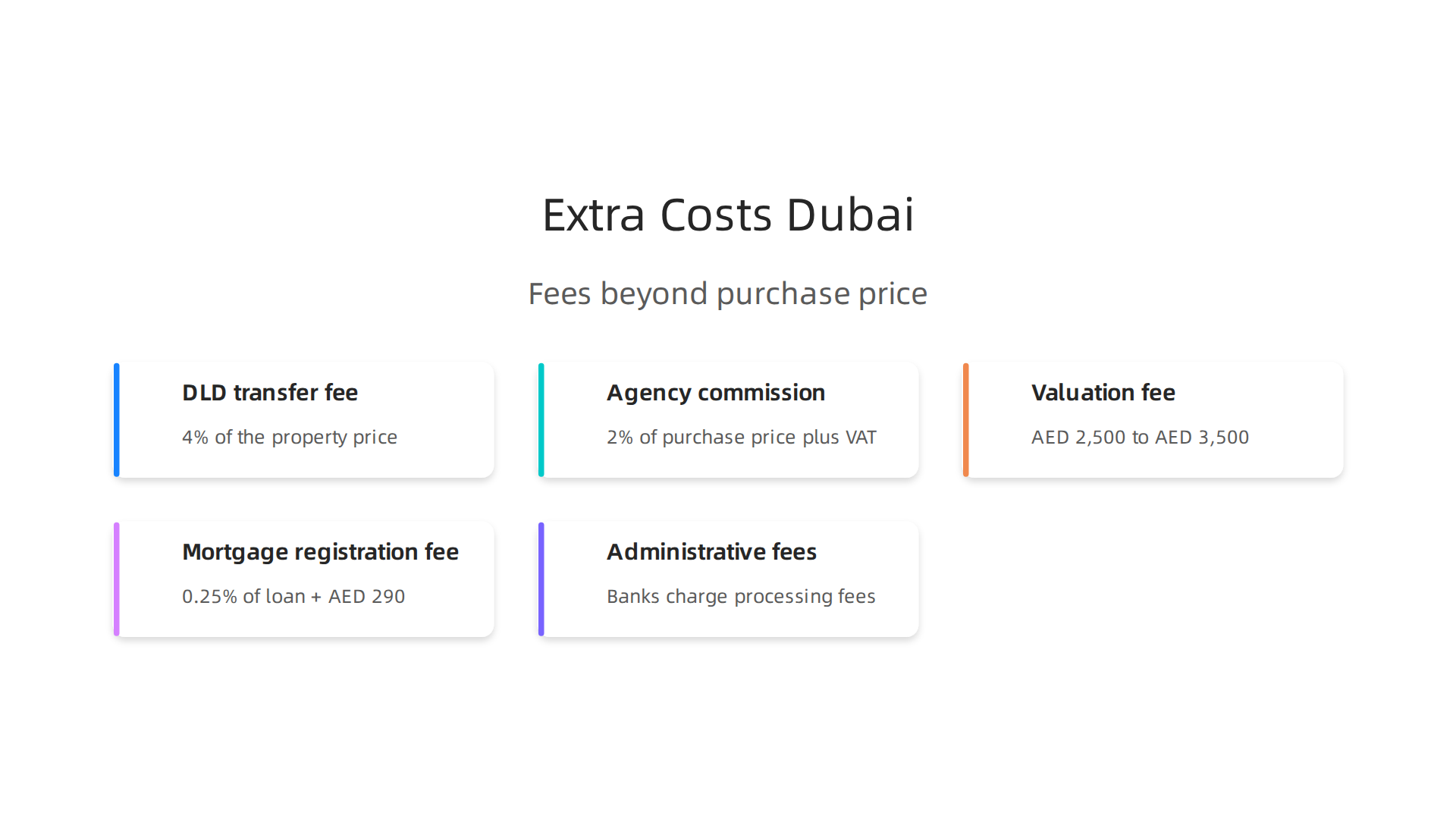
- DLD transfer fee: 4% of the property price. This goes to the Dubai Land Department.
- Agency commission: Usually 2% of the purchase price plus VAT.
- Valuation fee: Around AED 2,500 to AED 3,500. The bank needs this to confirm the property is worth the loan amount.
- Mortgage registration fee: 0.25% of the loan amount plus AED 290.
- Administrative fees: Banks may charge processing fees of 1% or a flat amount.
These extra costs can add up to 7% to 9% on top of the purchase price. So do not forget them when you buy a property in Dubai.
If you are looking at commercial and real estate options instead of residential, the costs and financing rules are different. Our guide on commercial real estate in Dubai explains what to expect for offices and warehouses.
Getting your numbers right early makes everything smoother. If you want help running the numbers for your specific situation, reach out for a FREE Dubai Real Estate Consultation. No pressure, just honest advice tailored to you.
Mortgage Pre-Approval Process
You have your budget ready. Now comes a step that makes a huge difference: getting a mortgage pre-approval.
Many people confuse pre-qualification with pre-approval. Pre-qualification is a quick estimate. You tell the bank your salary, and they guess what you might afford. Pre-approval is much more serious. The bank checks your financial history and gives you a written commitment for a specific loan amount. When you learn how to buy a house in Dubai, this is the step that separates serious buyers from lookers.
Sellers in Dubai prefer pre-approved buyers. It means you can move fast when you find the right home. According to Property Finder’s 2026 guide, having pre-approval also helps you understand your exact borrowing limit before you start negotiating.
What documents do you need to get pre-approved? Gather these before you apply:
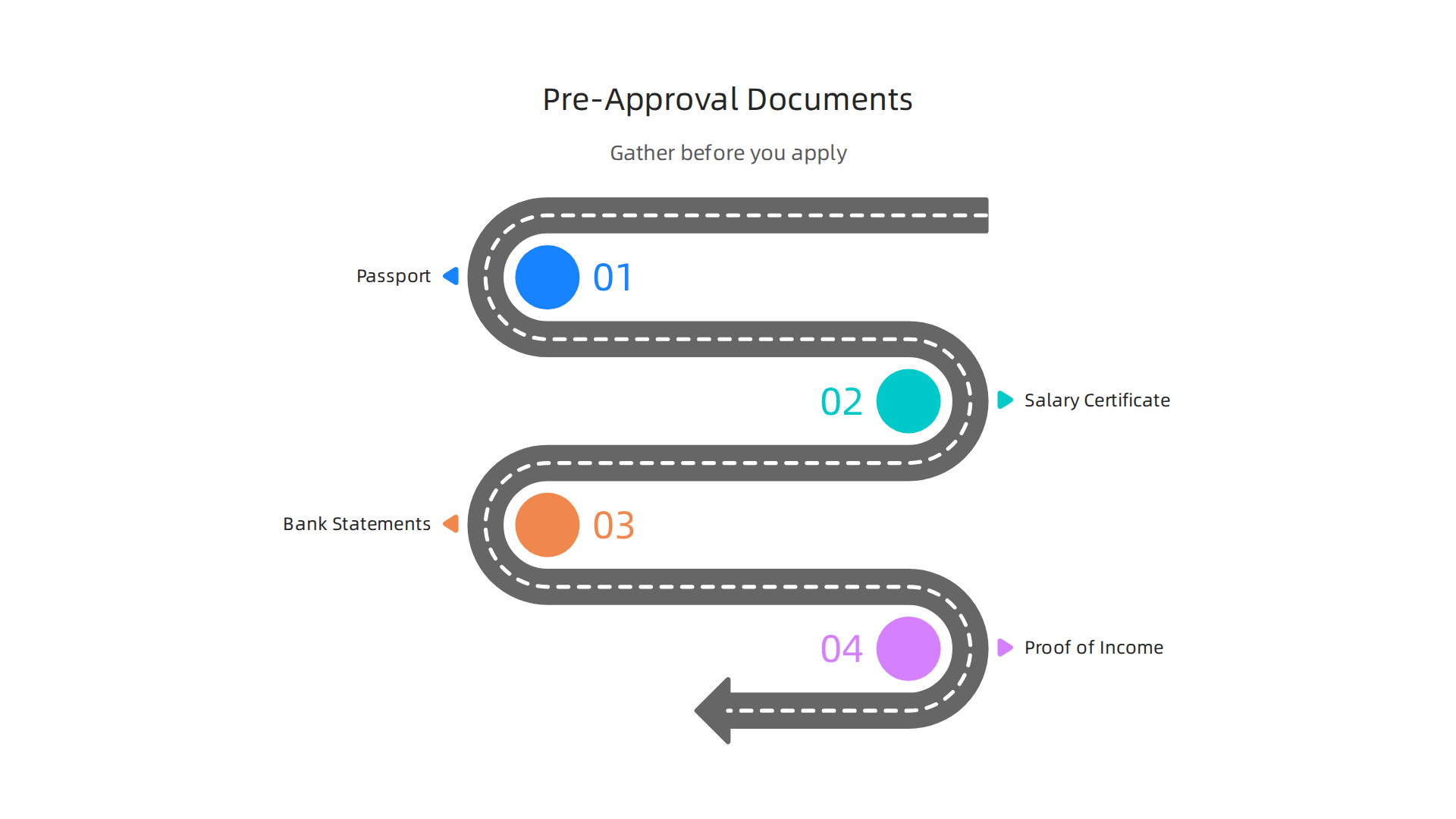
- Your passport, UAE visa, and Emirates ID
- A salary certificate from your employer
- Bank statements for the last 3 to 6 months
- Proof of any additional income or assets
The process takes around 3 to 7 working days. Most pre-approvals are valid for 60 to 90 days, which gives you plenty of time to search.
But here is something important. A residential mortgage pre-approval does not work for commercial properties. If you are looking at commercial and real estate options like an office or warehouse, check our detailed guide on how to buy or lease commercial property in Dubai for the right financing steps.
Getting pre-approved early puts you in a strong position. When you are ready to start, reach out for a FREE Dubai Real Estate Consultation. We can help you find the right lender for your situation.
Down Payment and Additional Fees
When learning how to buy a house in Dubai, knowing the upfront cash you need is just as important as the mortgage. The down payment is the first big cost you must cover.
For expats, the down payment on a residential property is usually 20% of the price for your first home. For a second property, it jumps to 25%. Banks like Dubai Islamic Bank and HSBC require this 20% for expats, as shown in their current mortgage offers. UAE nationals typically need only 15%.
But here is where many first-time buyers get caught off guard. You also need to pay several extra fees on top of the down payment:
- DLD transfer fee: 4% of the property value. This goes to the Dubai Land Department.
- Agency commission: Usually 2% plus 5% VAT. This pays your real estate agent.
- Valuation fee: Around AED 2,500 to AED 3,500. The bank orders this to confirm the property is worth the loan amount.
- Registration fee: About AED 4,000 plus 0.25% of the property value.
These extra costs can add 7% to 8% more to your cash needed. So if you buy a AED 1 million home, you might need AED 200,000 down plus AED 70,000 in fees. That is AED 270,000 total upfront.
If you are planning to purchase property in Dubai and want a full breakdown of all costs for your specific budget, a quick chat can save you a lot of guesswork. Message me for a FREE Dubai Real Estate Consultation and I will walk you through the numbers.
Also, remember that these rules apply to residential homes. If you are exploring commercial and real estate options like an office or warehouse, the down payment is typically higher. Check out our detailed guide on how to buy or lease commercial property in Dubai for those specific requirements.
Legal Framework: Who Can Buy What in Dubai?
One of the first questions people ask when learning how to buy a house in Dubai is: Can I actually buy here as a foreigner? The short answer is yes. Since 2002, Dubai allows full foreign ownership in designated freehold areas. That means you can buy, sell, and lease property just like a UAE national, as long as the property is in one of these zones. Check the current rules on foreign ownership to see the full list of freehold areas.
Here is the thing. Dubai is split into two main types of property zones:
- Freehold areas: You own the property and the land outright. Popular freehold zones include Dubai Marina, Palm Jumeirah, Downtown Dubai, and Arabian Ranches.
- Leasehold areas: You get long-term rights to use the property, usually for 99 years, but you do not own the land. This is common in older areas like Deira and Bur Dubai.
As of 2026, the rules are clear. Expats can buy a property in Dubai in either freehold or leasehold zones, with full ownership rights in freehold areas. The Dubai Real Estate Regulatory Agency (RERA) oversees all transactions to protect both buyers and sellers. You must register every property purchase with the Dubai Land Department (DLD). The DLD handles the title deed transfer and collects the 4% transfer fee we talked about earlier.
A new rule in 2026 also affects how you resell property. The Dubai property resale rule introduced tokenized assets and a secondary market activation system. This means you need to stay updated on DLD guidance for eligibility and transaction costs.
Another big benefit? Buying property in a freehold zone can qualify you for a residency visa. Since 2026, there is no minimum property value for sole owners applying for a two-year residence visa. For joint ownership, each investor needs at least AED 400,000.
If you plan to purchase property in Dubai, understanding these legal layers is key. The good news is that the process is straightforward once you know the rules. For a quick walkthrough of your options based on your budget and goals, message me for a FREE Dubai Real Estate Consultation.
And if you are looking at commercial and real estate like offices or warehouses, the legal rules change a bit. Check out our full guide on how to buy or lease commercial property in Dubai for those specific requirements.
Essential Due Diligence Checks Before You Buy
So you have found a property you love in Dubai. The view is perfect, the price seems right, and you are ready to move forward. But here is the thing. Buying a home is a big financial step. You need to make sure the property is actually safe to buy. This is where due diligence comes in.
Think of due diligence as your checklist for peace of mind. It helps you avoid nasty surprises later. Let us walk through the key checks you should do before you sign anything.
Verify the Title Deed and Ownership History
First, you must check the property title deed. This document proves who owns the land and the building. The Dubai Land Department (DLD) keeps official records. You can ask your agent or a legal consultant to verify this. A clean title deed means no disputes over ownership.
Check for Encumbrances, Liens, and Service Charge Arrears
This is a big one. Encumbrances are things like loans or mortgages on the property. Liens are legal claims from creditors. If the seller has unpaid service charges to the building management, those debts could fall on you after you buy. A full due diligence check will uncover these issues. Use a comprehensive Dubai real estate due diligence checklist to make sure you do not miss anything.
For off-plan properties, the developer must use a regulated escrow account. This protects your money. You can learn more about escrow accounts and buyer protection in the smart investor’s guide to buying property in Dubai in 2026.
Get a Property Valuation and Inspection
Never skip a professional valuation and inspection. A valuation tells you the fair market price. An inspection checks the physical condition of the property. For ready homes, look for structural issues, plumbing, and electrical systems. For off-plan properties, the risk is different. You need to check the developer’s track record and whether construction is on schedule. As noted in the UAE 2026 off-plan investment guide, construction delays are a real risk. A good inspector can spot problems early.
If you are comparing off-plan vs ready properties, this guide on off-plan vs ready property in Dubai 2026 will help you decide which option fits your risk comfort.
Why This Matters
Skipping due diligence can cost you thousands. A property with hidden debts or legal issues can trap you in years of headache. So take the time. Hire a good lawyer or a trusted real estate agent to do these checks for you.
And if you are thinking about expanding beyond residential property, many investors find that commercial and real estate also offers strong returns. The same due diligence rules apply.
Ready to start your search? Get expert help so you do not miss a thing. Message me for a FREE Dubai Real Estate Consultation. I can walk you through the entire due diligence process step by step.
Off-Plan vs Ready Properties: Pros and Cons
Now you know the due diligence steps. But before you start hunting, you need to decide what kind of property you want. In Dubai, the biggest choice is off-plan versus ready. Each option comes with its own tradeoffs. Let us break them down so you can see which one fits your plan to buy a property in Dubai.
Off-Plan Properties
Off-plan means you buy a unit that is still under construction. The developer has a plan and a timeline, but you are buying based on renderings.
Pros:
- Lower prices. Off-plan units often cost 10 to 20 percent less than ready ones.
- Flexible payment plans. Many developers let you pay in installments during construction.
- Capital appreciation potential. If the area grows, your property value can rise before you even move in.
Cons:
- Construction delays. Projects can run late, pushing back handover dates. The Times of India guide notes that delays are a real risk in 2026.
- Developer defaults. Not every developer finishes the project. You could lose your deposit.
- Quality issues. What you see in the brochure may not match the final product.
Ready Properties
Ready means the building is complete and you can move in right away.
Pros:
- Immediate possession. You can start living or renting the same week.
- Known condition. You can walk through the unit, inspect everything, and see what you are actually getting.
- Instant rental income. If you want cash flow now, ready properties deliver right away.
Cons:
- Higher price. You pay a premium for the convenience.
- Less room for appreciation. Most of the value growth in the area has already happened.
In the end, the choice comes down to timing, budget, and your comfort with risk. If you want a safe, fast start with predictable returns, ready property is your best bet. If you are patient and want to stretch your dirhams further, off-plan can work.
And if you ever want to explore other options like commercial and real estate for higher yields, the same principles apply. Check out this guide on Dubai commercial real estate 2026 market guide for investors to learn more.
Not sure which path is right for you? Get expert advice. Message me for a FREE Dubai Real Estate Consultation and I will help you compare your options step by step.
Step-by-Step Purchase Process
Once you pick your path, here is how the actual purchase works. The steps are simple, but each one matters.
Follow them closely and you will avoid common mistakes.
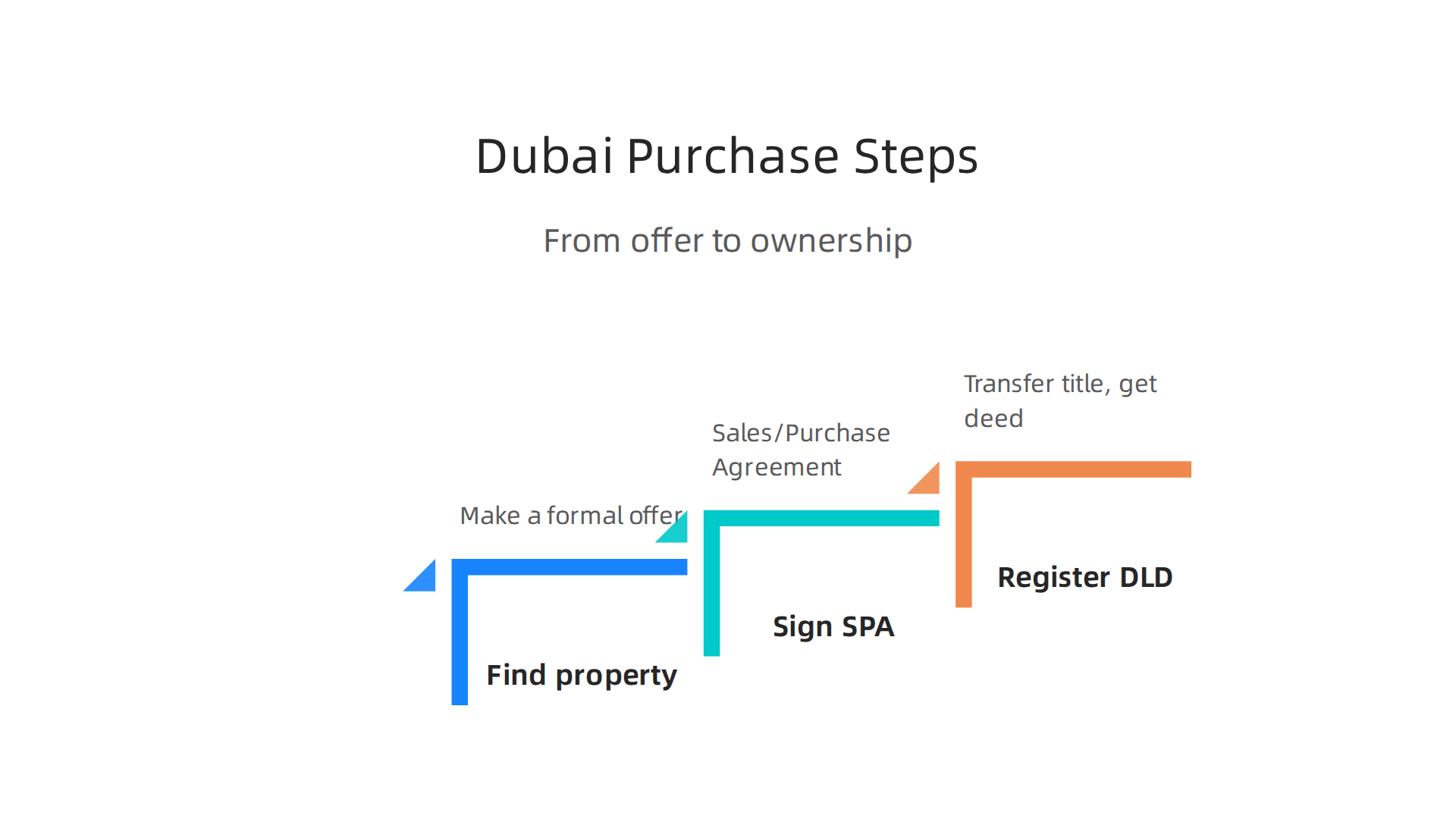
Step 1: Find a property and make an offer.
Start by searching for properties that match your budget and goals. Work with a trusted agent or browse online portals. When you find a unit you like, your agent helps you submit a formal offer. The seller can accept, reject, or counter your offer. In 2026, you can complete this step in as little as a few days if the property is in demand. Just make sure you are looking in a freehold area. According to Pearlshire, foreigners can buy property in Dubai in designated freehold zones, so check that the location qualifies before you proceed.
Step 2: Sign the Sales/Purchase Agreement (SPA).
Once the seller accepts your offer, you both sign the SPA. This is a legal contract that spells out the price, payment schedule, handover date, and any conditions. Read it carefully. The Driven Properties guide on real estate laws in Dubai reminds us that the SPA protects both buyer and seller. You will usually pay a deposit, often 10 percent, at this stage. The deposit is held in an escrow account to keep your money safe.
Step 3: Register and transfer the title with the Dubai Land Department (DLD).
This is the final step. You and the seller go to a DLD trustee office to complete the transfer. You pay the remaining balance plus the DLD transfer fee, which is 4 percent of the purchase price. The DLD registers the property in your name and issues a new title deed. In 2026, the DLD has updated its resale rules, so watch for official guidance on transaction costs. After this step, you officially own the property.
After the transfer, you can apply for a Dubai residence visa if the property meets the value requirements. The Gulf News visa guide explains that sole owners need no minimum property value for a two-year visa. Joint owners need at least AED 400,000 per investor. Check the latest rules from the DLD before applying.
If you want expert help through every step, connect with a local agent who knows the process well. Reach out for a FREE Dubai Real Estate Consultation to compare your options and get a clear plan.
Making an Offer and Negotiation
Finding a home you love is exciting. But to actually get it, you need to make a smart offer. This is where many buyers feel stuck. Here is how to structure your offer, negotiate with confidence, and let your agent do the heavy lifting.
Write a clean offer letter.
Your offer letter is your first impression. It should include your full legal name, the price you are offering, and your ideal handover date. In 2026, sellers expect you to attach a deposit check for 10 percent of the price. This shows you are serious. Before you write the letter, double check that the property sits in a freehold zone. According to Pearlshire, that is the only area where foreigners can own property in Dubai.
Use data to negotiate.
Never guess your offer price. Ask your agent for recent sales of similar units in the same building. This data gives you power. In 2026, new property resale rules from the DLD have changed the market. Some sellers are more flexible now because they want to avoid new compliance steps. You can use this to your advantage. Stay respectful, but let the data lead the conversation.
Let your agent handle the back and forth.
Your agent does more than show you homes. They present your offer to the seller’s agent. They explain why your price is fair. They also make sure your offer letter follows Dubai’s real estate laws. Read this guide on how a commercial real estate agent saves you money and headaches to understand the full value they bring. A good agent is worth their fee.
You do not have to negotiate alone. Get expert help on your side. Claim your FREE Dubai Real Estate Consultation today and make your next offer a winning one.
Signing the Sales Agreement (SPA)
Once the seller accepts your offer, you move to the Sales and Purchase Agreement (SPA). This is the legal contract that seals the deal. Do not rush through it. In 2026, Dubai’s property laws have updated, especially around resale rules, so every clause matters. Here is what to check.
Key clauses to look for in the SPA
Make sure the SPA clearly states the property description, the final price, and the handover date. It should also list any fixtures included like appliances or built-in cabinets. If you are buying in a freehold zone, confirm that your right to own is specifically mentioned. According to Pearlshire’s 2026 guide, foreign ownership is only allowed in designated freehold areas.
Deposit requirements
You will need to pay a deposit right after signing. In Dubai, the standard is 10 percent of the purchase price. This money goes into an escrow account managed by the Dubai Land Department. It shows you are serious and protects both sides. The Sands of Wealth guide confirms that foreigners can hold property titles in freehold zones once the deposit clears.
Cooling-off period and cancellation terms
The SPA usually gives you a short period to back out. If you cancel within that window, you may get your full deposit back. After that, you could lose part or all of it. Ask your agent to explain the exact dates. The new DLD resale rule changes in 2026 also affect how cancellations are handled for resale properties.
If you are thinking about investing further, check out this 2026 market guide for Dubai commercial real estate to see your options beyond residential.
Need help reviewing your SPA? Get your FREE Dubai Real Estate Consultation today to make sure every clause protects you.
Registration with Dubai Land Department
Once you have signed the SPA, the next big step is registration with the Dubai Land Department (DLD). This is where the government officially records you as the owner. Without this, you do not legally own the property. If you are wondering how to buy a house in Dubai, this part is essential.
Documents required for DLD registration
You will need your original passport, a copy of your visa or Emirates ID, the signed SPA, and proof that you paid the deposit. If you are buying a resale property, you also need a No Objection Certificate (NOC) from the developer. The Pearlshire guide confirms that foreign buyers must own within freehold zones, so make sure your property qualifies.
Payment of transfer fee and other charges
When you purchase property in Dubai, the DLD charges a transfer fee of 4 percent of the property value. You also pay a small registration fee and a fee for the trustee office. These costs add up, so budget for them. According to Driven Properties, expats can own property in freehold areas with full rights, and the DLD transfer process is straightforward.
Receiving the Title Deed and ownership certificate
Once the payment goes through and the DLD verifies everything, they issue a Title Deed in your name. This is your official proof of ownership. The Sands of Wealth article highlights that foreigners can hold property titles in their own name within freehold zones. After you receive it, you are the legal owner.
If you are curious about other property types, check out our 2026 market guide for Dubai commercial real estate to explore investment options beyond residential.
Need help with the DLD registration process? Get your FREE Dubai Real Estate Consultation today to make sure your paperwork is complete.
Long-Term Investment Considerations
You have the Title Deed in your hand. Now the real question is: will this home make you money over time?

Whether you want to live in it or rent it out, you need a plan. Let us look at what smart buyers think about before they buy a property in Dubai.
Rental yield trends in different areas
Rental yields in Dubai are among the highest in the world. Some neighborhoods give you returns of 6 to 8 percent each year. Areas like JLT, Dubai Marina, and Business Bay have strong demand from tenants. According to the 2026 guide for buying property in Dubai, yields vary based on location, property type, and market timing. If you want steady monthly income, pick areas close to metro stations and business hubs. Short-term rentals in tourist zones can give even higher returns, but they require more management.
Capital appreciation potential over 5 to 10 years
Dubai property values have gone up steadily over the long run. Even with short dips, the trend is upward. The city keeps growing, and demand stays strong. Experts say that investing now in 2026 still offers exceptional returns because of new infrastructure projects and a growing population. Over five to ten years, areas like Dubai South and Dubai Creek Harbour are expected to see strong gains. The key is to buy in places with planned schools, hospitals, and transport links.
Exit strategies: resale, leasehold, or inheritance planning
You will not own the property forever. So you need a clear exit plan. The most common exit is resale, where you sell the property for a profit. Another option is leasehold: you rent it out to someone else for many years and collect income. If you plan to pass the property to your family, Dubai allows inheritance under UAE law. The Aurantius guide to investment strategies explains that a buy-and-hold approach works best for most owners. But you can also use commercial and real estate options to diversify. For example, if you already own a home, you might look at buying a small office or warehouse for extra income.
If you are still learning how do you buy house and want to explore all investment angles, consider getting professional advice. A good agent can help you compare rental yields, capital gains, and exit options. You might also be interested in how a commercial real estate agent in Dubai saves you money and headaches if you decide to invest in business properties.
Need help planning your long-term strategy? Get your FREE Dubai Real Estate Consultation today and talk to an expert who can guide you on yields, appreciation, and your best exit plan.
Common Mistakes First-Time Buyers Make
You have your long-term plan ready from the last section. But even the best plan can hit a wall if you fall into common traps. Learning how to buy a house in Dubai means knowing what to avoid. Let us look at the biggest mistakes first-time buyers make in 2026.
Mistake 1: Overlooking hidden costs
The asking price is just the beginning. Many people forget to budget for Dubai Land Department fees, registration costs, agent commissions, and annual service charges. Believe it or not, service charges in some buildings can eat up a big chunk of your rental income. According to the 2026 guide on buying property in Dubai, you need to budget around 7 to 10 percent extra on top of the purchase price. If you want to purchase property in dubai the right way, always ask for a full breakdown of costs before you sign anything.
Mistake 2: Not checking the developer’s history
Off-plan properties can be a great deal. But they can also be a headache if you pick the wrong developer. Some first-time buyers get excited by a shiny brochure and forget to check if the developer actually delivers on time. You should always ask about past projects, handover dates, and RERA registration. A trusted agent can verify this for you. Market trends in 2026 show that developers with strong track records weather uncertainty the best, so do your homework before you commit.
Mistake 3: Skipping professional advice
This one is the most common. People think they can handle everything alone. But Dubai’s property laws are different from other countries. You might miss something important in the contract or skip a property inspection that reveals expensive problems. Working with a professional agent, like those mentioned in this guide on how an agent saves you money and headaches, can prevent these costly errors. The same rules apply whether you are buying residential or commercial and real estate in Dubai.
If you are still wondering how do you buy house without making these common mistakes, the answer is simple: get the right help from the start. Do not learn the hard way.
Get your FREE Dubai Real Estate Consultation today and talk to an expert who can help you avoid these traps and find the perfect property for your needs.
Summary
This guide explains, step by step, how to buy a house in Dubai in 2026, covering market context, financing, legal rules, due diligence and long‑term investment considerations. You’ll learn where demand and supply stand, what neighbourhoods suit different buyers, and how much cash you need up front including typical down payments and DLD fees. The article breaks down the mortgage pre‑approval process, what to check in the Sales & Purchase Agreement, and the exact registration steps with the Dubai Land Department. It also contrasts off‑plan and ready properties, highlights common first‑time buyer mistakes, and explains basic exit strategies so you can buy with confidence or evaluate commercial alternatives.