Introduction: Why This Guide Matters for Your UAE Property Purchase
The Dubai property market in 2026 is booming like never before.

In the first quarter, the residential sector recorded 45,221 transactions valued at AED 137.31 billion (Reliant Surveyors). Residential prices are climbing steadily, with Global Property Guide reporting a 12.88% year on year increase. Luxury real estate is also setting records, as transaction volumes in prime areas jumped 23% in Q1 2026 (Mavrix Properties).
These numbers confirm the massive opportunity waiting for buyers. But here is the challenge. Many people struggle to turn that opportunity into a smooth purchase.
If you are wondering "how do you buy a house here?" or "how to i buy a house without hidden surprises?", you are not alone. The rules around freehold property in Dubai can confuse even experienced investors. And if you are searching for real estate commercial options, you face another layer of complexity.
Business owners, investors, and tenants all run into the same issues. Legal steps feel unclear. Costs pop up that you did not expect. It is hard to know who to trust.
That is exactly why this guide exists. We built a research backed roadmap that makes the entire process easier to understand. We walk you through the legal steps, financing options, true costs, and smart investment strategies. For a complete look at the buying journey, read our step by step guide on how to buy a house in Dubai.
The goal is simple. We want you to feel ready and confident to make your move.
If you would rather talk to someone who knows the market inside and out, we can help with that too.
Click here for your free Dubai real estate consultation
Understanding the UAE Property Market in 2026
Before you buy property in the UAE, you need to understand what is driving the market right now. The numbers from early 2026 tell a clear story. Dubai’s residential sector recorded 45,221 transactions valued at AED 137.31 billion in the first quarter alone, according to Reliant Surveyors.
That is not a small number. It shows real momentum.
So what is causing this surge? Three big factors stand out.
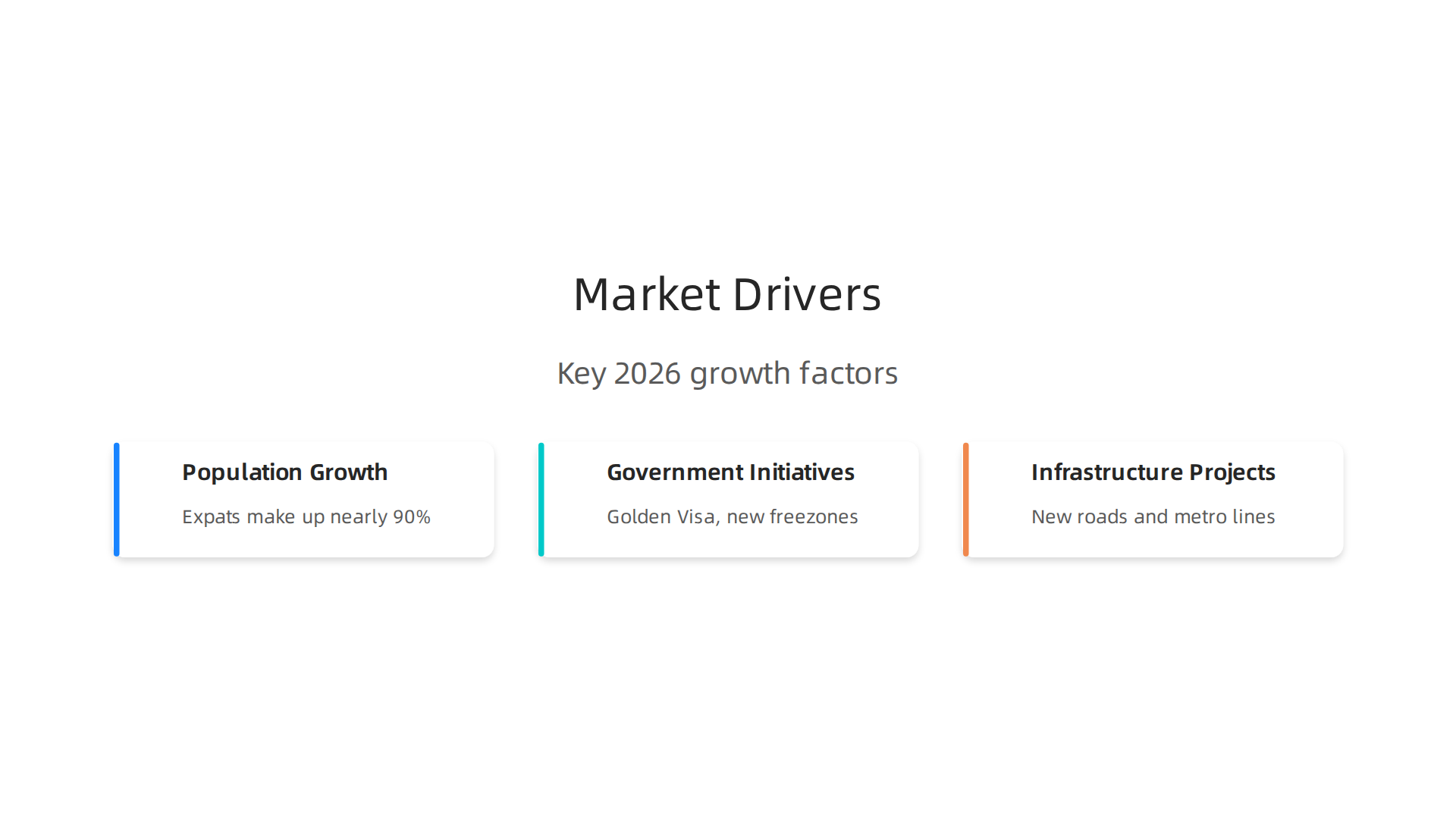
Population Growth and Expat Demand
More people are moving to the UAE than ever before. Expats now make up nearly 90% of the population. These new residents need places to live. Some are families looking for villas. Others are professionals searching for apartments in central areas. This demand keeps pushing prices up. According to the Global Property Guide, residential prices rose by 12.88% year on year as of December 2025. Villas grew even faster at 15.16%.
Government Initiatives That Open Doors
The UAE government has introduced several programs that make it easier to buy property here. The Golden Visa gives long term residency to investors, entrepreneurs, and skilled professionals. New freezones allow more people to own freehold property in Dubai. These changes remove the uncertainty that used to hold buyers back. If you have been wondering how do you buy a house as a foreigner, the answer is simpler now than ever before.
Infrastructure Projects Changing the Map
New roads, metro lines, and community developments are opening up areas that were less popular before. Places like Dubai South, Dubai Hills, and Al Furjan are growing fast because of better connections. The result is more choice for buyers. You are not limited to the same five neighborhoods anymore.
Off Plan vs Secondary Market
Here is something important to understand. The market has two sides right now.
| Market Type | What Is Happening in 2026 |
|---|---|
| Off plan properties | Developers are launching new projects at competitive prices. Payment plans are flexible. This works well if you want to buy property in UAE and hold it for a few years. |
| Secondary market | Ready properties in prime locations like Palm Jumeirah and Downtown Dubai are seeing strong demand. Mavrix Properties reports luxury transaction volumes jumped 23% year on year in Q1 2026. |
Each option has pros and cons. Off plan gives you lower entry prices but you wait for completion. Secondary market costs more upfront but you get immediate rental income.
Why This Matters for Your Purchase
Knowing the market pulse helps you decide when and where to buy.

For example, if you see prices rising fast in a specific area, you might want to act sooner. If you notice a neighborhood with new infrastructure but stable prices, that could be a smart long term pick.
The average property price in Dubai is around AED 1,850 per square foot as of early 2026, based on data from Sands of Wealth. That gives you a baseline to compare listings. If a property is priced much higher, ask why. Location, views, and amenities all matter.
If you are new to this market and feel unsure, that is completely normal. The best way to move forward is to learn the landscape first. Then take action.
If you want personalized guidance on how to i buy a house in the UAE with confidence, we are here to help.
Click here for your free Dubai real estate consultation
Legal Framework and Ownership Rights: Freehold, Leasehold, and Everything In Between
Now you know how the market is moving. But here is where many buyers get stuck. The legal side of buying property in the UAE can feel confusing. It does not have to be. Once you understand the basics, you will feel much more confident about how to i buy a house in this country.
Let us break it down simply.
Freehold vs Leasehold: What You Actually Own
This is the most important thing to get right.
Freehold ownership means you own the property and the land it sits on. Permanently. No time limit. This is the strongest form of ownership available to foreigners. In Dubai, freehold is only allowed in specific areas. These are called freehold zones. Think of places like Dubai Marina, Palm Jumeirah, Downtown Dubai, and Emirates Hills. According to Betterhomes, the government passed laws in 2002 allowing expats to own real estate in these freehold areas.
Since then, the list has grown. As of 2026, foreigners can fully own property in designated freehold zones with 100% ownership rights.
Leasehold ownership is different. You own the building or unit for a set period, usually 99 years. But you do not own the land. After the lease ends, ownership goes back to the landowner. Leasehold is common in areas that are not designated freehold. You can still live in or rent out a leasehold property. But you cannot sell it as freely as freehold.
Here is a quick comparison:
| Ownership Type | What You Own | Best For |
|---|---|---|
| Freehold | Property and land forever | Long term investors, families |
| Leasehold | Property for 99 years | Buyers in non freehold areas |
Designated Freehold Areas Across the UAE
The rules vary by emirate.
In Dubai, expats and foreigners can only buy freehold property in designated freehold zones. The UAE government website confirms this clearly. Outside these zones, only UAE nationals can own land. This is why checking the area before you buy is critical. A common mistake is falling in love with a property in a non freehold area and assuming you can still buy it. You cannot. To see which areas are open to you, refer to this guide on non freehold areas in Dubai.
In Abu Dhabi, the rules changed in 2019. The government now allows foreigners to own freehold properties in designated investment zones. According to the UNCTAD investment policy monitor, this opened up new opportunities for buyers outside of Dubai.
Even Sharjah has joined the trend. Expatriates can now buy freehold properties in specific areas there as well, as reported by Propertyfinder.
The Role of RERA and the Oqood System
You cannot just hand over money and walk away. The UAE has strong consumer protections in place.
The Real Estate Regulatory Authority (RERA) oversees all property transactions in Dubai. They make sure developers, agents, and buyers follow the rules. RERA also regulates the rental market and handles disputes.
For off plan properties, the Oqood system is your best friend. When you buy a property before it is built, your contract gets registered with the Dubai Land Department through Oqood. This protects your money. It proves you have bought the unit and prevents the developer from selling it to someone else. Always ask your agent to register your off plan sale on Oqood.
Strata Ownership: What About Shared Buildings?
If you buy an apartment in a tower, you own your unit. But the common areas like lobbies, pools, and gyms are shared. Strata ownership means you own your apartment plus a share of the common areas. The owners’ association handles maintenance and sets service charges. You must pay these charges. They cover building insurance, cleaning, security, and repairs. Review the service charge history before you buy to avoid surprises.
Common Legal Pitfalls to Avoid
Here are the mistakes that cost buyers time and money.
Missing the title deed check. Always verify the seller’s title deed with the Dubai Land Department. Make sure they actually own the property and it is not mortgaged or disputed. A real estate agent can help you with this step.
Buying in the wrong ownership zone. You cannot buy freehold in a non freehold area. Double check the area before you proceed.
Forgetting visa requirements. If you buy property in the UAE as a foreigner, you need a valid residency visa. Buying a property worth AED 750,000 or more may qualify you for a Golden Visa, which gives you long term residency. But you still need to apply for it. Do not assume ownership automatically grants you a visa.
Not using Oqood for off plan. If your developer does not register your off plan sale on Oqood, walk away. This is a red flag.
The legal side is not as scary as it seems. You just need to know the rules.

If you want personalized help navigating ownership types, title checks, or visa questions, the right guidance makes all the difference.
Click here for your free Dubai real estate consultation
The Step-by-Step Buying Process: From Property Search to Handover
Now you understand the rules. Let us walk through the actual process. Knowing how do you buy a house in the UAE step by step saves you time and keeps you from making expensive mistakes. Here is exactly what happens from the first search to the day you get the keys.
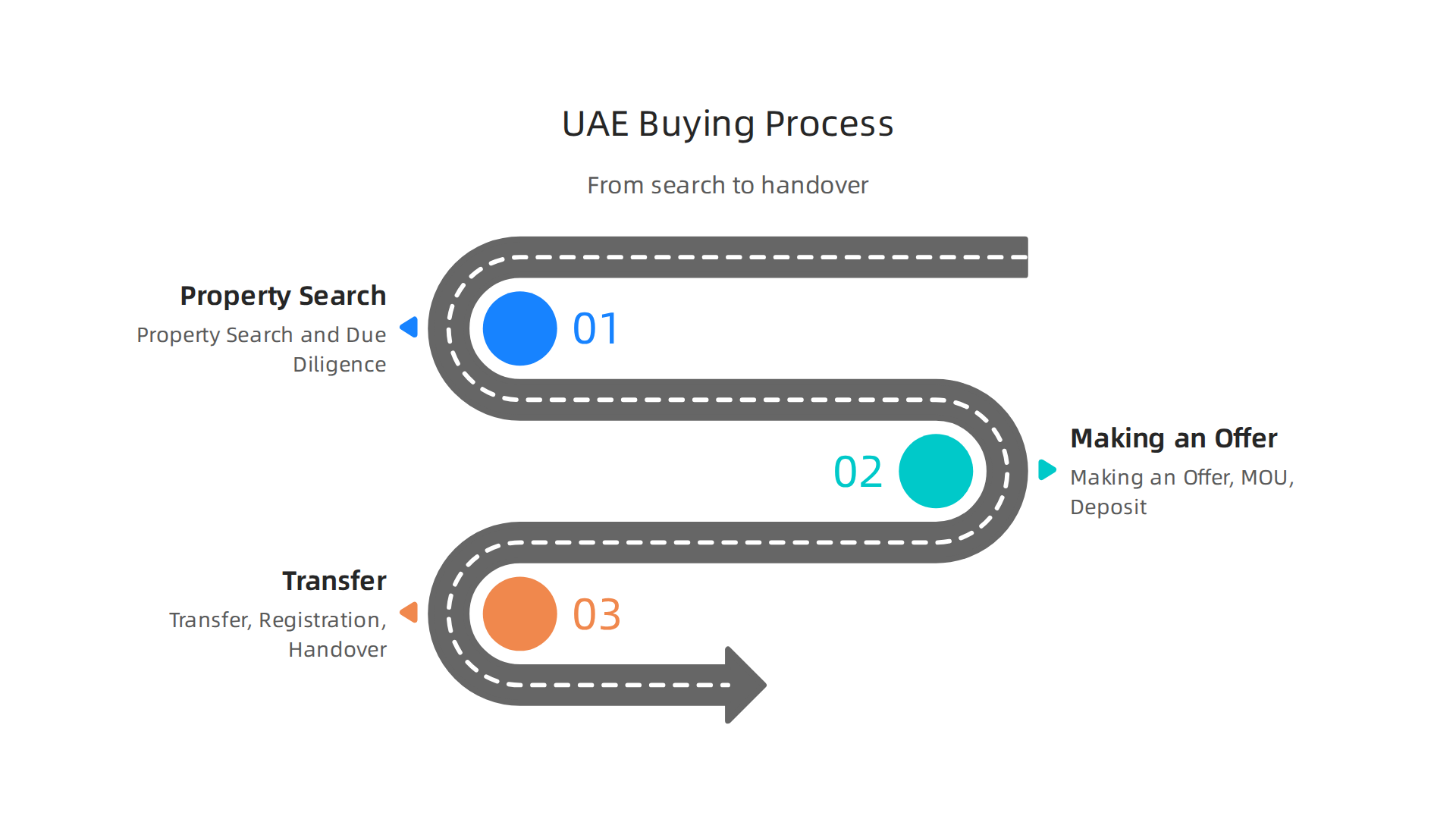
Phase 1: Property Search and Due Diligence
This is where most people rush. Do not.
Start by finding properties in freehold areas that match your budget and needs. Use trusted portals like Propertyfinder or work with a licensed agent. But the real work starts after you find a place you like.
You must do your homework on two things. First, the property itself. Ask for the title deed from the seller. Then verify it with the Dubai Land Department. Make sure the seller actually owns it and there are no mortgages or legal disputes. As the experts at Betterhomes explain, this step is part of the basic legal requirements to protect your money.
Second, check the developer. If you are buying from a developer directly, especially for off plan property, research their track record. Have they delivered projects on time? Are there complaints online? A quick search on the Real Estate Regulatory Authority (RERA) website can tell you if the developer has a clean history. According to Global Law Experts, proper due diligence requires checking with the seller’s agent, the developer, and government bodies like the Dubai Land Department. Skipping this step can cost you a lot.
Phase 2: Making an Offer, MOU, and Deposit
You found a property. You did your checks. Now comes the offer.
Make a written offer through your agent. If the seller accepts, you both sign a Memorandum of Understanding (MOU) . This is a legal document that outlines the sale price, payment terms, and handover date. You will pay a deposit at this point. Usually it is 10% of the sale price. The MOU is legally binding. So read it carefully. Make sure it includes any conditions you want, like a home inspection or financing clause.
After the MOU is signed and the deposit is paid, the seller takes the property off the market. Your purchase is now locked in.
Phase 3: Transfer, Registration, and Handover
This is the final stretch. The process looks different depending on whether you are buying a ready property or an off plan one.
For a ready property (secondary market): The seller must get a No Objection Certificate (NOC) from the developer. This proves there are no outstanding fees or issues on the unit. Both parties then visit the Dubai Land Department (DLD) to finalize the transfer. Holo explains that the DLD transfer process typically takes a few hours and includes payment of the transfer fee (usually 4% of the sale price plus administrative fees). After that, the title deed is reissued in your name. You get the keys.
For an off plan property: If you are buying from a developer and the building is not ready yet, the process is simpler upfront but takes longer. You sign the Sales Purchase Agreement (SPA) with the developer. The sale is registered on the Oqood system as we covered earlier. You then make payments according to a schedule drawn out over the construction period. Handover happens when the building is completed and the developer gets the Completion Certificate. At that point, the DLD issues your final title deed.
One more thing. After you buy property uae as a foreigner, you need a residency visa. Your property purchase may qualify you for a Golden Visa if the value is AED 750,000 or more. But you still need to apply separately. Do not wait until the last minute.
The whole process can feel detailed, but each step is there to protect you. If you want personal guidance through every phase of your purchase, from due diligence to final handover, professional help makes a massive difference.
Click here for your free Dubai real estate consultation
Financing Your Purchase: Mortgages, Payment Plans, and Cash Options
You found a property you love. But now comes the big question: how do you pay for it? There are three main roads: cash, a mortgage, or a payment plan from the developer. Most people go with a mortgage. Let me break down what you need to know in 2026.
Mortgages in the UAE for 2026
The good news is that foreigners can get residential mortgages in the UAE, as long as the property is in a freehold area. Sands of Wealth confirms this for early 2026. But the rules are different depending on your residency status.
UAE nationals can borrow up to 80% of the property value. Resident expats can usually borrow up to 80% as well, according to Emirates NBD. Non-residents face stricter terms. Most banks require a down payment of 35% to 40%. Engel & Völkers explains that this higher deposit is standard for non-resident buyers in Dubai.
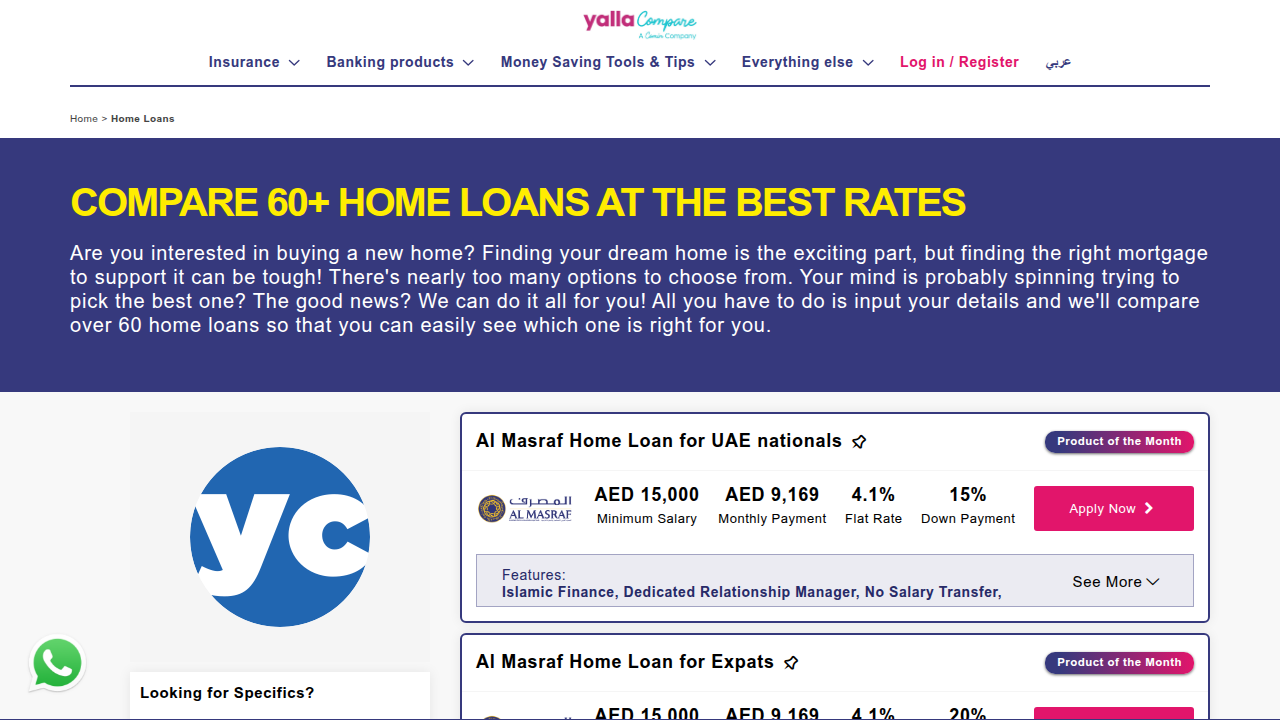
Interest rates in 2026 are competitive. You can compare offers from multiple banks using comparison tools like YallaCompare to find the best deal.
Overseas Mortgages vs Local Bank Financing
Some buyers choose an overseas mortgage from a bank in their home country. But local UAE banks often offer better terms and smoother processing. For example, global banks like HSBC UAE have mortgage products tailored for non-residents who want to invest in Dubai. The Wise guide recommends HSBC for expats looking to buy without living there.
Local banks understand the Dubai property market. They process transfers directly with the Dubai Land Department. That usually means fewer delays.
Payment Plans for Off-Plan Properties
If you are buying an off-plan property from a developer, you might not need a mortgage right away. Developers often offer payment plans. You pay a small deposit upfront, say 10% or 20%. Then you make payments during construction. The final payment happens at handover. This can make buying property easier on your cash flow.
Why Pre-Approval Matters
Getting a mortgage pre-approval before you start shopping is smart. It tells you exactly how much you can borrow. That way you only look at properties in your budget. When you find the right one, you can make an offer fast. Pre-approval also shows sellers you are serious. Property Finder’s 2026 guide advises getting pre-approval to avoid disappointment.
To compare offers, talk to at least three banks. Ask about interest rates, fees, and early repayment penalties. Use a comparison site to see the options side by side.
Your Next Step
Figuring out financing can feel overwhelming. But you do not have to do it alone. A professional consultant can help you compare mortgage offers and find the best payment plan for your situation. If you would like a free consultation to explore your financing options, reach out today.
Get your free financing consultation now
For investors also looking at commercial property, our Dubai commercial real estate market guide for 2026 covers similar financing considerations for office, retail, and warehouse spaces.
Costs, Taxes, and Hidden Fees: What You Really Pay When Buying Property
So you have your financing sorted. Now, let me walk you through the costs you will actually hand over at the closing table. Many first-time buyers only look at the sticker price. But the true cost to buy property UAE includes several fees on top of that.
Here is the reality: you need to budget roughly 7% to 8% extra on top of the property price.
That covers registration, agent fees, and other charges. Let me break down the biggest ones for you.
Dubai Land Department (DLD) Registration Fee
This is the largest single fee. The DLD charges 4% of the property purchase price. You pay this when you register the sale. The UAE government confirms that all property transactions in Dubai must go through the DLD. So this fee is not optional. On a AED 1 million property, that is AED 40,000 right there.
Agent Commission
Most real estate agents in Dubai charge a commission of 2% of the purchase price. You pay this to your agent for finding the property and handling the deal. Some agents charge a flat fee instead. Always ask upfront what the commission percentage is. Betterhomes notes that agent fees are standard practice for expat buyers.
Mortgage Registration Fee
If you are using a mortgage, the Dubai Land Department charges a fee to register the loan. This is typically 0.25% of the mortgage amount. Plus, there is usually a small admin fee from the bank itself. These add up, so factor them in.
Admin and Processing Charges
There are smaller costs too. The DLD charges a few hundred dirhams for admin and trustee fees. The developer or seller may also charge a small fee for processing the transfer. These are usually minor, but they still count.
Annual Service Charges and Maintenance
Here is the big difference from places like the US, the UK, or parts of Europe. There is no annual property tax in Dubai. None. Zero. That is a huge saving. But you do pay annual service charges to the building owner’s association. These cover security, cleaning, maintenance of common areas, and utilities for shared spaces. Bayut explains that service charges vary by building and location. For a one-bedroom apartment, expect AED 10,000 to AED 20,000 per year. For a villa, it can be higher.
You also need to budget for your own maintenance. Things break. Pipes leak. ACs need servicing. Set aside 10% to 15% of your annual service charge for unexpected repairs.
The Bottom Line
So when you see a property listed for AED 1 million, plan to have AED 70,000 to AED 80,000 in cash on top of your down payment. That covers the DLD fee, agent commission, mortgage registration, and admin charges. Do not forget the ongoing costs like service charges.
If you want to double check your budget with a professional, a good agent can walk you through every line item. And if you are also looking at real estate commercial properties, the fee structure is similar, though service charges for office and retail spaces can be higher.
If you would like a free consultation to go over closing costs for your specific property, reach out today.
Get your free consultation now
For investors also exploring business spaces, our Dubai commercial real estate 2026 market guide covers similar cost breakdowns for office and retail properties.
Top Investment Locations and ROI Insights for 2026
Now that you know the full cost picture, let’s talk about where your money can work hardest. Picking the right location is the single biggest factor that decides whether you get strong cash flow or slow appreciation. And in 2026, Dubai offers a wide range of options depending on your goals.
High-Yield Areas Worth Your Attention
Some communities consistently deliver strong rental returns. Others offer better long-term capital growth. Here is a snapshot of the top performers this year.
Dubai Marina remains a favorite for investors chasing rental income. Studios and one-bedroom apartments here typically yield between 6% and 7% gross. The waterfront lifestyle keeps demand high from professionals and tourists alike. Property Stellar confirms that Dubai Marina ranks among the top areas for rental yield in 2026.
Downtown Dubai is all about prestige and capital appreciation. Yes, rental yields are lower here, around 5.73% according to Engel & Völkers. But properties in Downtown tend to hold value better over time. If you want long-term growth, this area shines.
Palm Jumeirah sits in the same category. It is a luxury play. Yields are modest, but capital appreciation can be strong. This suits investors who care more about asset value than monthly rent checks.
Dubai Hills Estate offers a nice middle ground. With an average yield of 6.35%, you get decent rental income plus solid appreciation potential. Families love the green spaces and schools here, which keeps tenant demand steady.
Dubai South is the emerging star. As the area around the Expo site and Al Maktoum International Airport develops, property prices are still affordable. GuestReady reports that communities like Jumeirah Village Circle and Dubai South can deliver yields above 7% for well-chosen units.
Rental Yields vs Capital Appreciation: What Matters More?
This is the big question every investor must answer. Here is the simple way to think about it.
| Goal | Best Property Type | Best Areas | Typical Gross Yield |
|---|---|---|---|
| Monthly cash flow (income) | Studios and one-bedroom apartments | Dubai Marina, JVC, Discovery Gardens, Dubai South | 6% to 9% |
| Long-term wealth (appreciation) | Villas and luxury apartments | Palm Jumeirah, Downtown, Emirates Hills | 4% to 6% |
| Balanced approach | Mid-range apartments and townhouses | Dubai Hills Estate, Arabian Ranches | 5% to 7% |
Off-Plan vs Ready Property: Which Returns Better?
Off-plan properties often promise higher capital gains when the project completes. But they come with risk. Delays happen. Market conditions change. Ready properties let you start earning rent immediately, which matters if you need cash flow now.
For first-time buyers looking to buy property UAE, ready properties in high-yield areas are usually the safer bet. You can see what you are getting and you start collecting rent from day one.
If you want a deeper look at how individual communities compare, Home It Better has a detailed 2026 breakdown with yield data across dozens of neighborhoods.
Matching Property Type to Your Goals
Here is a quick rule of thumb.
If you want cash flow, buy a studio or one-bedroom in a mid-market community like JVC or Discovery Gardens. These areas consistently show yields above 7%.
If you want capital gains, buy a villa or luxury apartment in a prime area like Palm Jumeirah or Downtown. Accept the lower rent for the potential price growth.
If you want both, look at Dubai Hills Estate or Dubai Marina. These areas offer a solid yield with good appreciation history.
And if you are exploring real estate commercial options, the same logic applies. Offices in Business Bay or DIFC can yield 8% to 10%, but tenants expect higher quality finishes and longer lease terms.
Your Next Step
The best investment area depends on your budget, your timeline, and your risk tolerance.

I can help you match the right property to your specific goals.
Get your free consultation now
For investors also considering business spaces, check our Dubai commercial real estate 2026 market guide for yield comparisons on office and retail properties.
Summary
This guide explains how to buy property in the UAE in 2026 by walking you through the market context, legal rules, financing options, true costs, and investment strategies so you can act with confidence. It begins with the latest market data and the drivers behind rising demand, then explains ownership types (freehold vs leasehold), regulatory protections like RERA and the Oqood system, and the key legal checks to run before you sign. You get a practical, step-by-step buying process—from property search and MOU to transfer and handover—plus mortgage rules for residents and non-residents, developer payment plans, and why pre-approval matters. The guide breaks down closing fees (DLD 4%, typical agent commission ~2%, mortgage registration and admin) and ongoing service charges so you can budget correctly. It also highlights top areas for yield and capital growth and when to choose off-plan versus ready property. Read this to avoid common pitfalls, know which documents to check, and decide the best finance and location strategy for your goals.