

Why financing matters for Dubai commercial real estate in 2026
If you’re thinking about purchasing commercial real estate in Dubai, understanding how to finance your investment is super important.

The real estate business Dubai is booming, with lots of new real estate development in Dubai. This means many opportunities, but also some tricky parts, especially when it comes to getting a loan.
One big challenge for investors is that information about the mortgage rate commercial real estate options can be hard to find and understand. It’s like trying to put together a puzzle with missing pieces. You might find different rules from different lenders, and the laws about property in Dubai can seem complex. This makes it tough to compare your options fairly.
Actually, current residential mortgage rates in Dubai generally sit between 3.89% and 4.99% as of May 2026, which is quite good when compared to other places in the world. These rates are often tied to the Emirates Interbank Offered Rate (EIBOR), which moves with the US Federal Reserve’s decisions because the UAE Dirham is linked to the US dollar. So, if you hear about changes in US rates, know that Dubai mortgage rates usually follow suit Dubai Mortgage Rates 2026: What UAE Banks Actually Charge.

The average interest rate for a mortgage in Dubai makes it an attractive market for many buyers average interest rate for a mortgage in Dubai. For non-residents, mortgage rates typically range from 4.5% to 5.5% in 2026 Dubai Real Estate Market Analysis 2026 – Oliva.
This guide is here to help you make sense of it all. We will give you a clear plan to look at different mortgage rate commercial real estate options. You’ll learn what lenders look for when giving out loans and how to get all your papers ready. Our goal is to make sure you can confidently navigate the world of Dubai property prices and financing. For a deeper dive into loans, rates, and approval tips, check out our guide on Commercial Real Estate Financing Dubai 2026: Guide to Loans, Interest Rates, and Approval.
Getting the right financing is a big step in successful investing. Whether you are buying an office, a shop, or a warehouse, understanding your financing choices is key to making a smart move in Dubai’s busy market.
If you’re ready to explore your options or need expert advice on purchasing commercial real estate in Dubai, reach out for personalized support.
FREE Dubai Real Estate Consultation
Dubai Commercial Mortgage Landscape: Lenders, Regulators, and Market Structure
Moving from understanding why financing is crucial, let’s look closer at the players and rules that shape the world of commercial mortgages in Dubai. When you’re thinking about purchasing commercial real estate, it’s helpful to know who offers loans and what rules they follow. This helps you get a better handle on the mortgage rate commercial real estate options available.
Who Gives Loans for Commercial Property in Dubai?
In Dubai’s thriving real estate business, different kinds of lenders offer money for commercial properties:
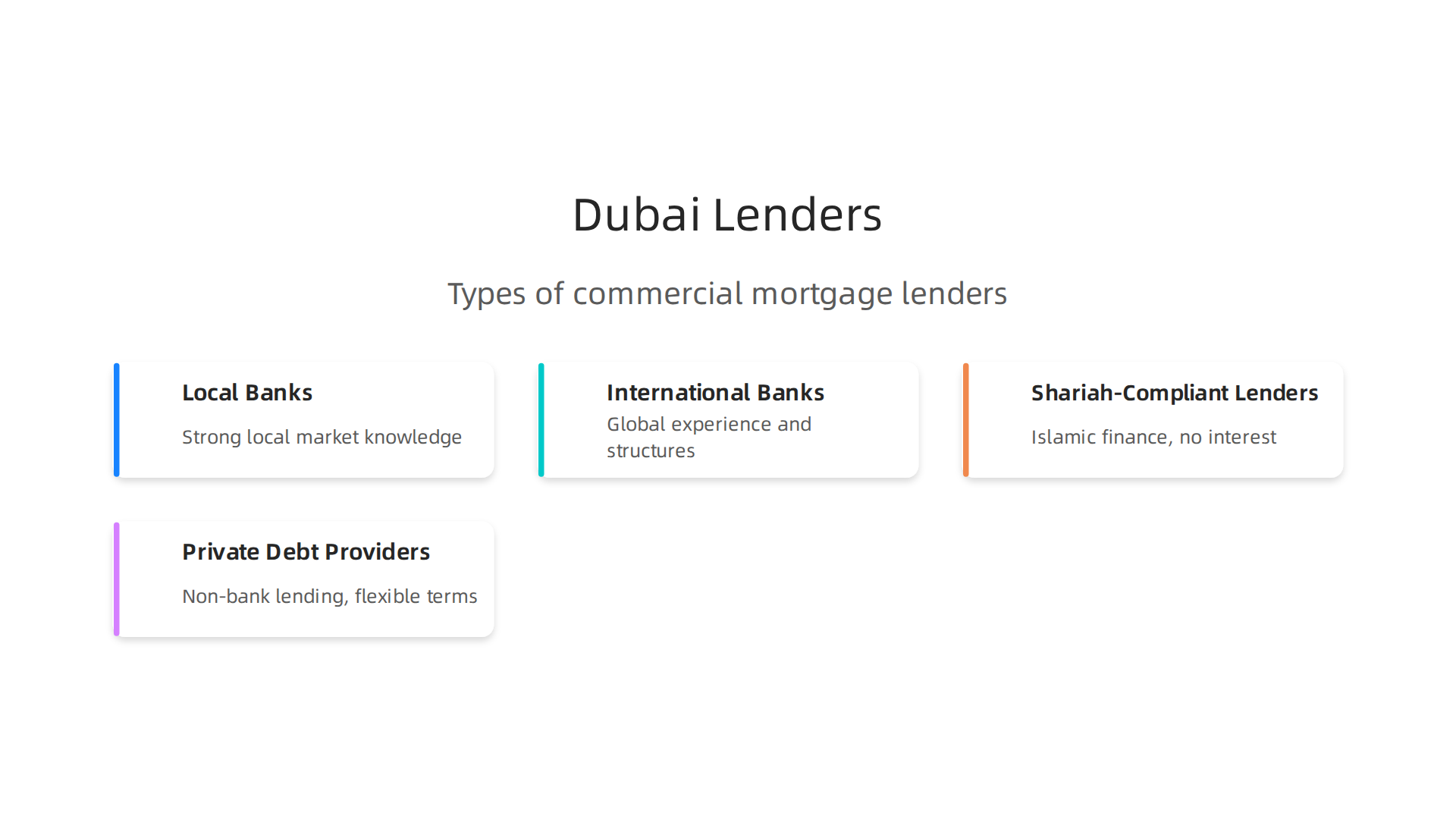
- Local Banks: These are banks from the UAE that know the local market very well. They often have tailored products for businesses looking to invest in real estate development in Dubai.
- International Banks: Big banks from around the world also have branches in Dubai. They bring global experience and sometimes offer different loan structures.
- Shariah-Compliant Lenders: These banks follow Islamic finance rules, which means they don’t charge interest (riba). Instead, they use different ways to make money, like sharing profits or lease-to-own agreements. This is a key option for many investors.
- Private Debt Providers: Sometimes, other companies or groups offer loans outside of traditional banks. They might be more flexible but can also have different rates and terms.
Rules and Regulations That Affect Your Loan
The financial world in the UAE is very organized. The Central Bank of the UAE (CBUAE) sets most of the big rules for banks and other financial companies. In 2026, the CBUAE continues to make sure everything runs smoothly and safely. There are also specific rules for areas like the Dubai International Financial Centre (DIFC) and Abu Dhabi Global Market (ADGM), which have their own financial watchdogs Overview of UAE Financial Regulations 2026: CMA, DFSA, & CBUAE.

These rules cover things like how much money a bank can lend, what information they must give you, and how they handle your loan. New laws have even come out recently, like the updated Civil Transactions Law in June 2026, which impacts how banks work with customers. Knowing about these rules helps ensure fair dealings and keeps the market strong, protecting both lenders and people purchasing commercial real estate.
How the Market Shapes Your Commercial Mortgage
The way the market is set up deeply affects the mortgage rate commercial real estate deals you find. With many lenders and strict rules, the market aims to be competitive and clear. This means you might find various options for different types of properties or business needs. The speed at which you can get a loan also depends on how busy the market is and how quickly lenders can process applications. For instance, in a booming market with high dubai property prices, lenders might be very busy, which could affect how fast your loan gets approved.
Understanding these parts of the Dubai commercial real estate market helps you choose the best loan for your needs. It allows you to see why one mortgage rate might be different from another and what factors could change the final cost of your investment. Getting a good grasp on these details is vital for smart investing. If you want to dive deeper into how different rates can impact your investment, consider reading our guide on Mastering Commercial Loan Interest Rates in Dubai for Property Investment Success.
Current mortgage rate trends & benchmarks for commercial real estate (Dubai, 2026)
Now that you know about the different lenders and rules in Dubai’s real estate business, let’s talk about current mortgage rates. Understanding these rates is super important when you’re purchasing commercial real estate, as it helps you know how much your loan might cost.
What Drives Mortgage Rates in Dubai?
In Dubai, the main guide for interest rates is something called EIBOR, which stands for Emirates Interbank Offered Rate. Think of EIBOR as a basic rate that banks use when lending money to each other. Your commercial mortgage rate will usually be EIBOR plus an extra percentage. This extra part is called the "spread" and it depends on things like how risky the loan is, how long it is for, and your own financial standing.
A key thing to know is that EIBOR usually follows what the US Federal Reserve does with its interest rates. This is because the UAE currency, the Dirham, is linked to the US Dollar Dubai Mortgage Rates 2026: What UAE Banks Actually Charge. So, when the Fed changes its rates, EIBOR often changes soon after, which then affects your mortgage rate commercial real estate options.
In 2026, EIBOR has been pretty stable, showing a clear path for lenders. For instance, the 3-month EIBOR rate has been around 4.20% recently General EIBOR.
How to Read the Trends
Looking at mortgage rate trends helps you see where the market is going. As of May 2026, residential mortgage rates in Dubai typically fall between 3.89% and 4.99% Fixed vs variable mortgage…. Some fixed-rate deals for residents have even been as low as 3.79% UAE Mortgage Guide 2026: Why Fixed-Rate Loans Are the ….
While these numbers are mainly for homes, they give you a good idea of the general cost of borrowing. Commercial mortgage rates can sometimes be a bit higher than residential ones. This is because commercial properties might have different risks or loan amounts. They are also different from general corporate lending rates, which are for businesses that borrow money for things like daily operations, not just property.
Smart Comparisons for Investors
When you are thinking about purchasing commercial real estate, it’s wise to ask lenders for a few specific things:
- The Spread Over EIBOR: Ask what their specific loan rate is compared to EIBOR. For example, is it EIBOR + 1% or EIBOR + 2%? This helps you understand the true cost.
- Comparison to Other Loans: See if they can show you how their commercial mortgage rates compare to rates for similar properties or businesses. This helps you know if you are getting a good deal.
- Fixed vs. Variable Options: Ask about both fixed-rate and variable-rate mortgages. Fixed rates stay the same for a set time (like 1 to 5 years), giving you steady payments, while variable rates can change with EIBOR Dubai Real Estate Market Analysis 2026 – Oliva.
- Loan-to-Value (LTV): This is how much of the property’s value the bank will lend you. A higher LTV might mean a slightly different rate.
By asking these questions, you can get a clearer picture of the best mortgage rate commercial real estate loan for your needs.

It helps you find good financing for your next investment, especially with the current Dubai property prices. For more helpful tips on finding the best rates, check out our guide on how to find the best commercial real estate loan interest rates in Dubai.
Moving from understanding mortgage rates, let’s look at the actual ways you can get money to buy commercial real estate in Dubai. There are a few main types of loans and financing options available, each with its own benefits and best uses. Knowing these will help you choose wisely when purchasing commercial real estate.
Financing Options for Dubai Commercial Properties: Bank Loans, Islamic Finance, Mezzanine, and Alternatives
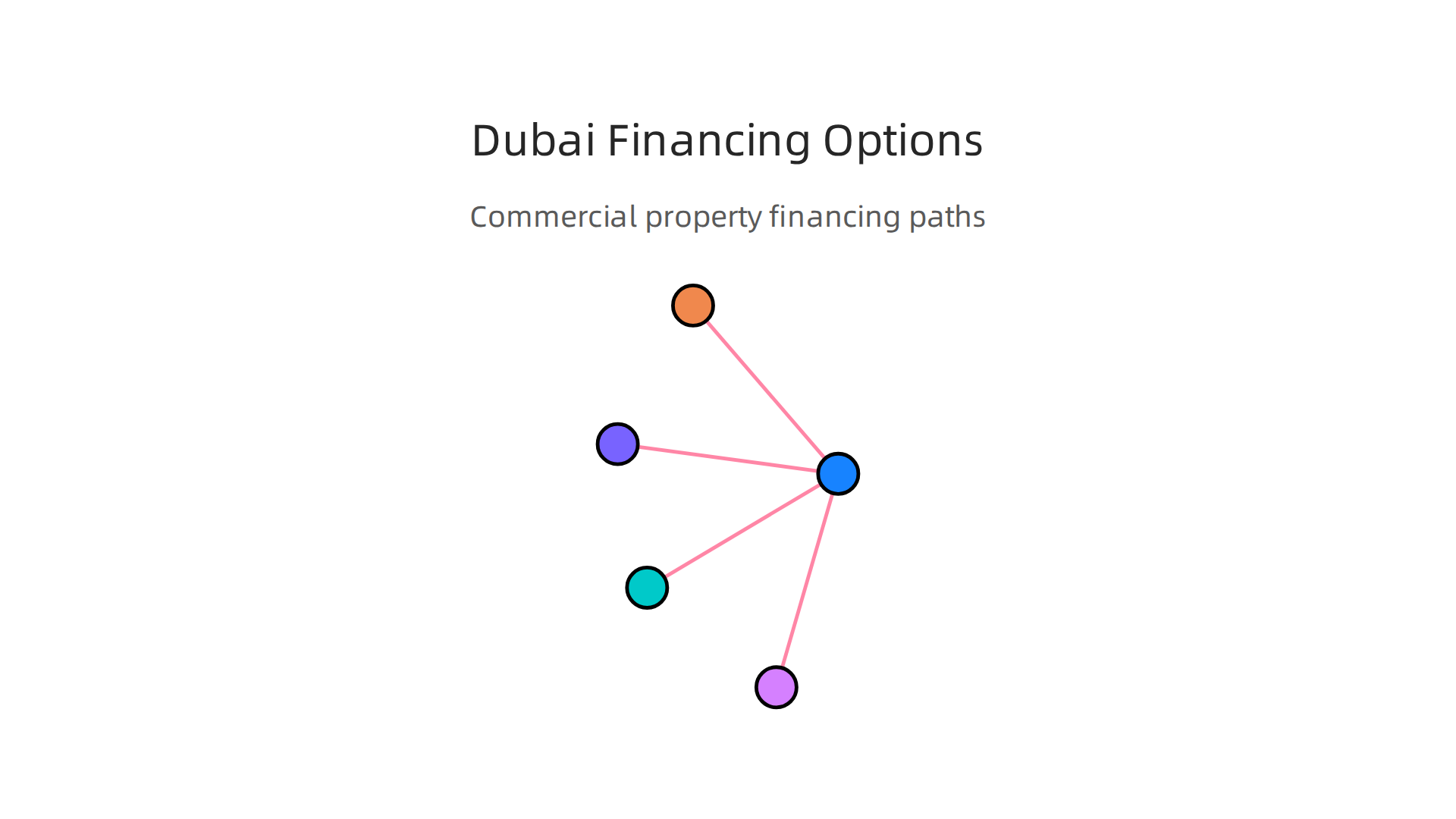
When you’re looking to invest in the real estate business Dubai, you’ll find different paths to finance your project.
Senior Bank Loans
These are the most common type of financing. Banks like to give these loans because they are usually seen as the safest. With a senior bank loan, the bank is the first to get paid back if something goes wrong. These loans often work best for properties that bring in steady money, like office buildings, retail shops, or simple industrial spaces.
To get a bank loan for commercial property in Dubai, banks look at a few key things:
- Debt Service Coverage Ratio (DSCR): This shows if the property’s income is enough to cover the loan payments. Lenders in the UAE usually want this number to be 1.25 or higher for commercial properties, meaning the property makes 25% more than it needs to cover its debt How to Qualify for a Commercial Mortgage in the UAE.
- Loan-to-Value (LTV): This is the amount of the property’s value the bank will lend you.
- Debt Burden Ratio (DBR): For individual investors, the UAE Central Bank says your total debt payments, including the new mortgage, cannot be more than 50% of your gross income Mortgage eligibility criteria in the UAE – DBR – Kredium.
For those looking to secure financing, learning more about different loan options can be very helpful. Check out this guide on commercial real estate loans in Dubai 2026.
Islamic Finance
Dubai is a big center for Islamic finance. This type of financing follows Sharia law, which means it doesn’t involve interest (Riba). Instead, Islamic banks use different ways to make money, like sharing profits and losses or buying and selling assets. Products like Murabaha, Ijarah, or Musharakah are used instead of traditional mortgages. These options are very popular for all kinds of commercial properties, from offices to hospitality, especially for investors who prefer Sharia-compliant options.
Mezzanine and Alternative Financing
Sometimes, a senior bank loan isn’t enough, or a project is a bit riskier, like a new real estate development in Dubai or a specialized hospitality project. That’s where mezzanine finance comes in. Think of it as a middle layer of funding between the main bank loan and the owner’s own money. It’s often more expensive than a bank loan but offers more flexibility.
Other alternatives include:
- Developer Financing: Some developers offer their own payment plans or financing to buyers, which can be helpful if you’re buying directly from them.
- Private Debt Funds: These are groups of investors who lend money for commercial real estate projects, often taking on more risk for higher returns. They can be good for unique or complex projects that regular banks might not fund.
Choosing the right financing helps you make smart moves in the real estate business Dubai and manage your Dubai property prices effectively.
If you’re buying, selling, renting, or investing in Dubai, connect with an expert for a FREE Dubai Real Estate Consultation.
Understanding the types of financing available is a big step. Now, let’s look at how lenders actually decide the mortgage rate for commercial real estate in Dubai. The rate you get depends on many things, not just the loan type. Lenders look closely at your property and your own financial health to figure out how risky your loan is for them. This helps them set your commercial mortgage rate.
Loan-to-Value (LTV)
The Loan-to-Value, or LTV, is a key factor. It compares how much money you want to borrow to the total value of the property. For example, if a property is worth AED 10 million and you want to borrow AED 7 million, your LTV is 70%. A lower LTV means you’re putting more of your own money down, which makes the loan less risky for the lender. When there is less risk, lenders are more likely to offer a lower mortgage rate. In Dubai, for properties over AED 5 million, you typically need at least a 30% down payment, meaning an LTV of 70% or less What is Loan-to-Value (LTV) in Dubai.
Debt Service Coverage Ratio (DSCR)
We touched on DSCR earlier, but it’s very important for your mortgage rate. This number shows if the money your property makes can cover its loan payments. A higher DSCR means the property earns much more than needed for its debt, signaling a safer investment to lenders. For example, a DSCR of 1.25 means the property’s income is 1.25 times its loan payments. The better your DSCR, the better your chances are of getting a favorable commercial mortgage rate. Some lenders offer lower rates for higher DSCRs, with rates changing by a few points depending on factors like DSCR, LTV, and your credit score in July 2026 July 2026 DSCR Loan Rates.
Tenancy and Lease Terms
The people or businesses renting space in your commercial property also impact your mortgage rate. Lenders want to see stable income. They look at:
- Tenant Mix: Do you have one main tenant or many? Having many different tenants can be safer because if one leaves, you still have income from others.
- Lease Terms: Longer leases with strong tenants mean more stable income for your property. This lowers the risk for the lender. Shorter leases or leases with tenants that might not stay long can lead to higher rates. For properties like office buildings or retail spaces, good tenancy means a lot to lenders in the real estate business Dubai.
Borrower Risk and Guarantees
Finally, lenders look at you, the borrower. Your personal and business financial history plays a big role in the mortgage rate commercial real estate.
- Credit Profile: A good credit score shows you pay your debts on time. This can help you get a better rate.
- Corporate Guarantees: Sometimes, if your business is new or the project is risky, lenders might ask for a corporate guarantee. This means another company (or you personally) promises to pay if the property income is not enough. This extra promise can help secure a loan and sometimes a better rate.
- Portfolio Concentration: If you already own many properties with the same lender, they might view your new loan differently. Diversifying your investments, even in a thriving market like real estate development in Dubai, can sometimes be seen as less risky.
All these parts work together to set your exact mortgage rate for commercial real estate. Understanding them can help you prepare better and get the best deal for your purchasing commercial real estate. If you want to dive deeper into how different factors affect loan costs, you can learn more about mastering commercial loan interest rates in Dubai.
Knowing what goes into your commercial mortgage rate is just one part of the puzzle. The next step for purchasing commercial real estate is understanding what lenders need from you to even consider your application. This includes looking at your eligibility, what papers you need to provide, and how long the approval process might take. Being ready with the right information can really help you get a good commercial mortgage rate and avoid delays in the fast-moving real estate business Dubai.

Eligibility, documentation and the underwriting timeline for UAE commercial mortgages
Before a lender gives you a mortgage for commercial real estate, they look at specific rules to make sure you and the property meet their standards. These rules are known as eligibility criteria.
What Makes You Eligible?
- Debt Burden Ratio (DBR): In the UAE, there’s a limit on how much of your monthly income can go towards debt payments. The Central Bank says this "debt burden ratio" can’t be more than 50% of your total gross income, meaning half of what you earn before taxes and other deductions Regulations Regarding Mortgage Loans. If your current debts, plus the new mortgage payment, go over this limit, your application might be turned down Foreigner Mortgage UAE: Down Payment, LTV Limits ….
- Debt Service Coverage Ratio (DSCR): For commercial properties, lenders want to see that the property itself makes enough money to cover its loan payments. Banks in the UAE typically look for a DSCR of 1.25 or higher. This means the property’s income should be at least 1.25 times the amount needed for the mortgage payments, showing a safe buffer How to Qualify for a Commercial Mortgage in the UAE.
Documents Lenders Commonly Require
Gathering all your documents ahead of time is very important.
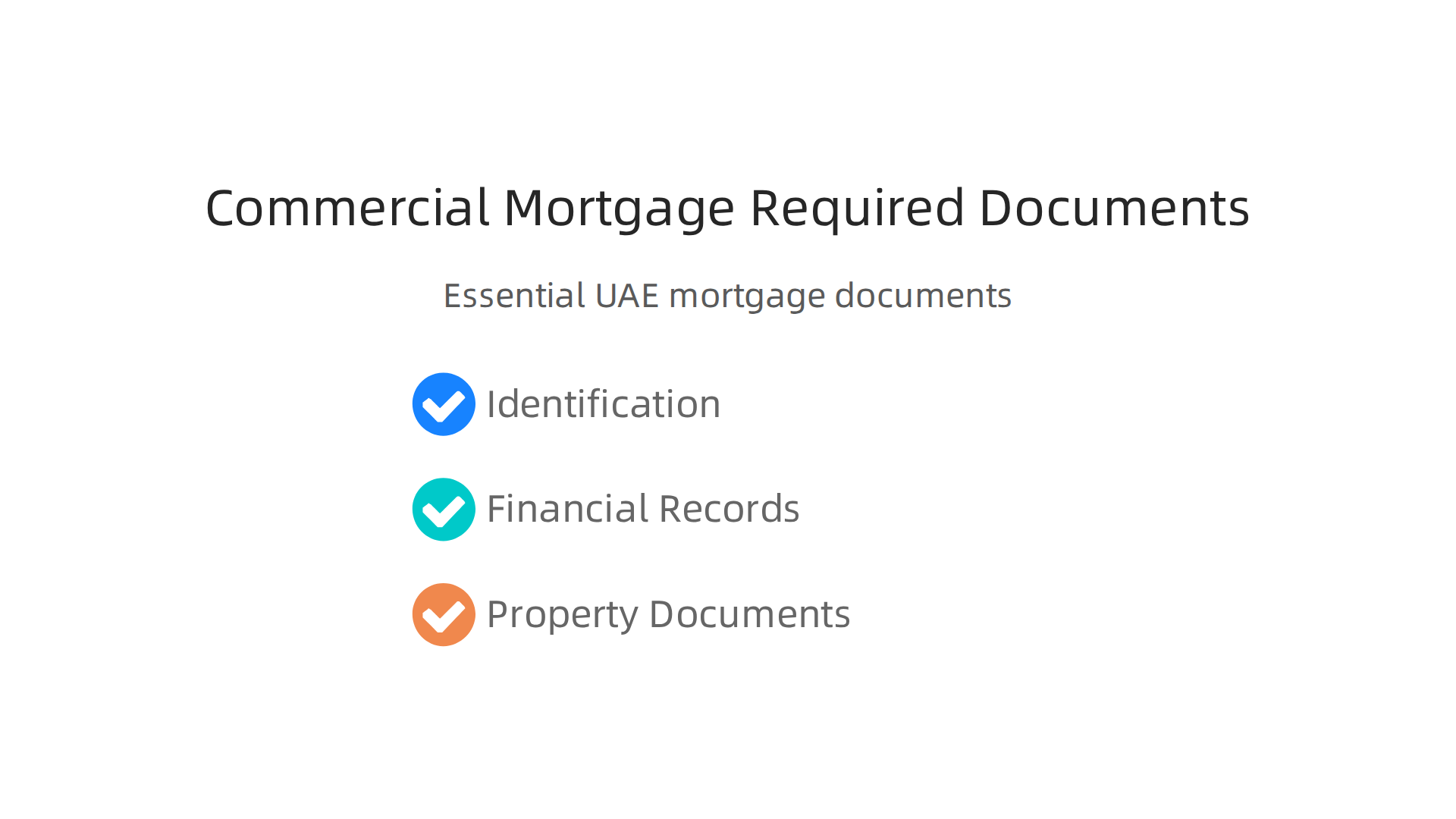
Lenders need a clear picture of your finances and the property’s value. Here’s a general list of what you might need when applying for a commercial mortgage rate:
- Your Identification and Company Papers:
- Passport copy and UAE visa (if applicable)
- Emirates ID for residents
- Trade license for your business
- Company’s Memorandum of Association (MoA) or Articles of Incorporation
- Your Financial Records:
- Bank statements (usually for the last 3 to 6 months)
- Salary certificate (if you’re a salaried individual)
- Audited financial statements for your business (often for the past 2 years)
- Credit bureau report (to show your payment history)
- List of all existing loans, credit cards, and other financial commitments Documents Required for a Mortgage in UAE
- Property Documents:
- Sales and Purchase Agreement (SPA) or Memorandum of Understanding (MoU)
- Title Deed
- Rent roll (a list of current tenants, their lease terms, and rents) DSCR Loan Approval Checklist for Landlords
- Copies of current lease agreements
- Proof of rent deposits and management statements What Documents Do you Need for a DSCR loan?
- Property valuation report or appraisal
- Completion certificate for the property
Some types of properties or loans might need even more papers, like environmental reports or extra operating history Documentation for Commercial Loans.
The Underwriting Timeline: What to Expect
Underwriting is when the lender carefully checks all your provided information and documents. They want to make sure everything is true and that the loan is a good risk for them. This process involves:
- Application Submission: You hand in all your papers.
- Initial Review: The lender checks if you meet basic eligibility rules.
- Document Verification: They confirm all your financial and property details. This might involve calling your bank, checking your credit, and getting independent property appraisals.
- Risk Assessment: They put all the information together to decide the overall risk of the loan and set your final mortgage rate commercial real estate.
- Approval/Rejection: You get a decision.
The timeline for this can vary. It often takes several weeks or even a few months, especially for complex commercial deals in real estate development in Dubai. To speed things up, make sure your documents are complete, accurate, and easy to understand. Having everything organized from the start can help you get faster approval and secure your desired commercial property financing.
For more helpful details on navigating the approval process and finding the best options, explore our guide to commercial real estate financing Dubai 2026 guide to loans interest rates and approval.
If you are looking to make smart choices when buying, selling, or investing in Dubai property, getting expert advice can make all the difference. Connect with an expert for a FREE Dubai Real Estate Consultation to discuss your specific needs.
Getting your application ready is a big step. But after a lender decides you are eligible, it is time to make sure you get the best deal possible. This means knowing how to talk to lenders about the mortgage rate commercial real estate, other fees, and the overall loan setup.
Tactics to Negotiate Your Commercial Mortgage
Even with a strong application, there’s often room to negotiate.
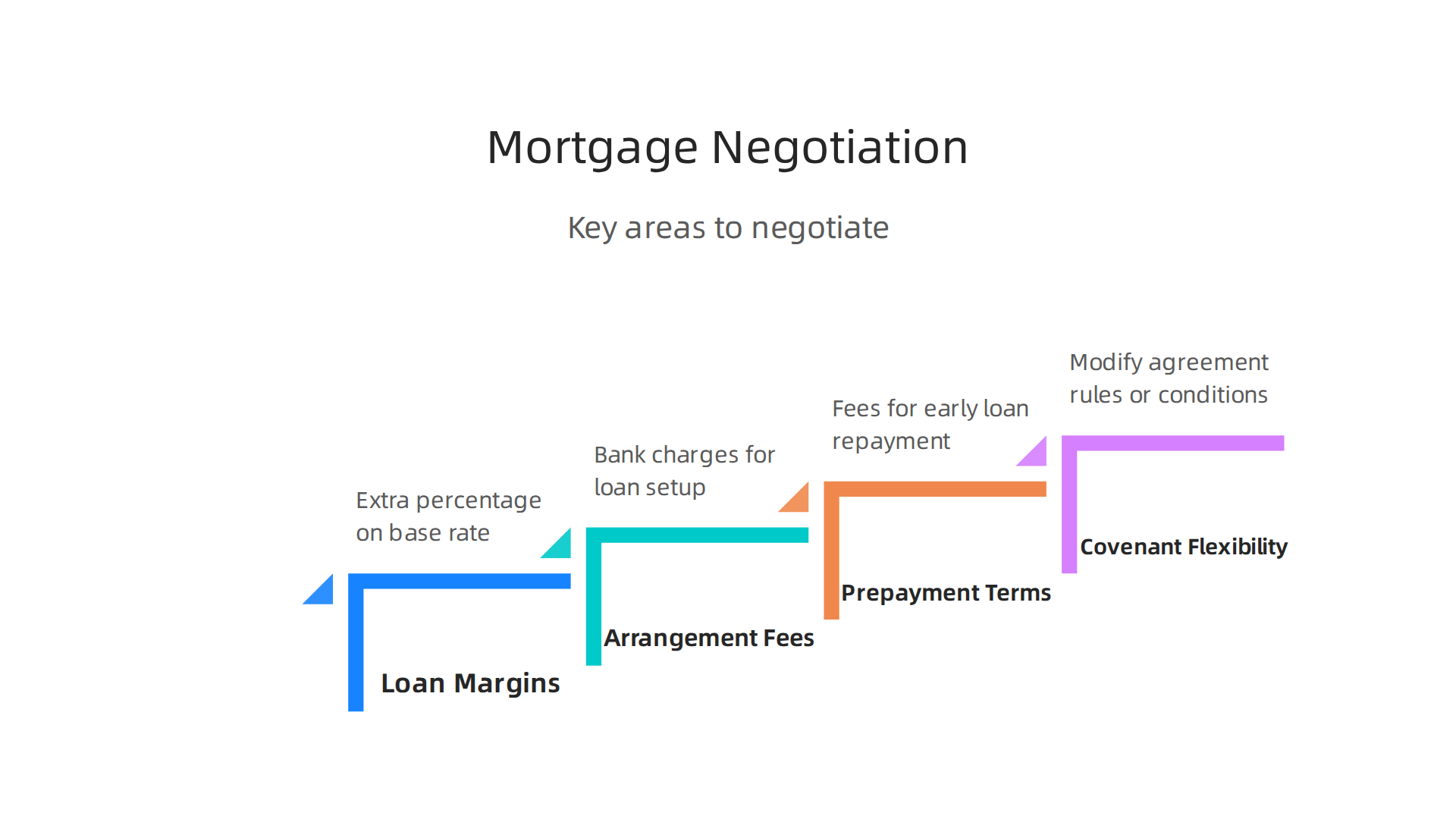
Here are some key parts to discuss with your lender:
- Loan Margins: Lenders add a little extra to the base interest rate. This extra part is called the margin. It is how the bank makes money. Even a small drop in this margin can save you a lot of money over the years. Do not be afraid to ask if they can lower it.
- Arrangement Fees: These are fees the bank charges to set up your loan. They can be a percentage of the loan amount or a fixed fee. Like the margin, these are often negotiable. Ask if they can reduce or even remove some of these fees.
- Prepayment Terms: Sometimes, you might want to pay off your loan early. But many commercial loans have fees for doing this. These are called prepayment penalties. Understand these rules and try to negotiate for terms that are fair if your business grows faster than expected and you want to pay back the loan sooner.
- Covenant Flexibility: Loan agreements also include special rules or conditions, called covenants. For example, a lender might ask you to keep your business’s cash flow above a certain level. Make sure these rules are clear and not too strict, so they do not make it hard to run your
real estate business Dubai.
Managing Rate Risk and Finding the Best Offers
To get the best mortgage rate commercial real estate and terms, it helps to be smart about your choices.
- Shop Around: Do not just go to one bank. Talk to many different lenders. When banks know you are talking to others, they might offer you a better deal to win your business. In 2026, fixed commercial rates in Dubai often range from 4.99% to 7.5%, while variable rates can be 5.5% to 8.5% Dubai Commercial Property Loans Interest Rates Requirements. Knowing these typical rates helps you spot a good offer.
- Show Your Strength: A lower Loan-to-Value (LTV) ratio (meaning you put more money down), a high Debt Service Coverage Ratio (DSCR), and a good credit score show you are a safe borrower. These factors can push your rate lower Commercial Mortgage Rates (2026) – Clear House Lending.
- Understand Rate Structures: You will likely choose between a fixed rate (stays the same) or a variable rate (can change). Variable rates often start lower but can go up. You can also discuss ways to limit how much your variable rate can increase over time, protecting your budget. Knowing how to get the best interest rates is key to successfully
purchasing commercial real estate.
To learn more about optimizing your borrowing strategy, explore our guide on Mastering Commercial Loan Interest Rates in Dubai for Property Investment Success. If you want to dive deeper into finding the most favorable options, check out our tips on How to Find the Best Commercial Real Estate Loan Interest Rates in Dubai.
Getting the best interest rates is a great start. But savvy investors know that financing your commercial property is a long game. You need to think about how your loan fits into your overall plans. This means looking at refinancing, using your property’s value, and planning for when you might sell.

Using financing strategically: refinancing, portfolio leverage, and exit planning
Sometimes, it makes sense to change your loan even after you have it. This is called refinancing. It means you take out a new loan to pay off your old one. You might do this if the general mortgage rate commercial real estate goes down. For example, in 2026, fixed rates for mortgages in the UAE typically range from about 3.99% to 5.5% for commercial properties, with special deals for residents sometimes lower UAE Mortgage Guide 2026: Why Fixed-Rate Loans Are the …. If your old loan has a much higher rate, refinancing could save you a lot of money each month.
You might also refinance to switch from a variable rate (which changes with the market) to a fixed rate (which stays the same) for more peace of mind. Or, you could do it to get better terms, like lower fees or fewer rules attached to the loan. The right time to refinance often depends on how interest rates are moving and what your business needs are. It is a smart way to keep your real estate business Dubai healthy over time.
Another key strategy is called portfolio leverage. This means using the value of a property you already own to help buy another one. When you have equity in a commercial asset (meaning you own a good chunk of it outright), you can sometimes borrow against that equity. This helps you keep expanding your business or take on new real estate development in Dubai without always needing fresh cash for a down payment. It helps grow your collection of properties faster.
Thinking about the future is also part of smart financing. This is called exit planning. It means you plan ahead for when you might want to sell your commercial property. Your current loan terms, like any fees for paying off the loan early, can affect how easy or costly it is to sell. Planning for these things helps you maximize your dubai property prices when it is time to sell.
To make sure your financial choices are strong, it is good to model long-term returns. This means trying to guess how much money your property will make over many years. You also need to stress-test your financing plans. This means asking "What if?" questions:
- What if interest rates go up more than expected?
- What if
dubai property pricesdrop slightly? - Can my business still handle the loan payments?
By doing these checks, you can be more confident in your purchasing commercial real estate decisions. It is all about having a clear picture of your money now and far into the future. If you are looking for a complete picture on handling commercial loans, explore our guide on Commercial Real Estate Financing in Dubai 2026 Your Step By Step Guide to Loans Rates and Approval.
Summary
This article explains why getting the right financing is crucial when buying commercial property in Dubai in 2026 and walks you through the market, lenders, rates, and practical steps to secure a loan. It describes who offers commercial mortgages—from local and international banks to Shariah-compliant lenders and private debt—and how UAE rules and EIBOR drive pricing. You’ll find clear guidance on current rate benchmarks, the key underwriting metrics lenders use (LTV, DSCR, DBR), the documents you must prepare, and typical approval timelines. The guide compares loan types (senior bank loans, Islamic finance, mezzanine, developer and private funding) and shows how to negotiate margins, fees, and covenants. It also covers strategic topics like refinancing, portfolio leverage, and exit planning so you can model long‑term returns. After reading, you’ll know what lenders look for, how to improve your chances, and how to shop and negotiate to get a competitive commercial mortgage in Dubai.